
Guarana (Paullinia cupana): botanical profile, uses, and cultural significance
Guarana (Paullinia cupana) is a South American climber whose caffeine-rich seeds are used as stimulants, traditional tonics, beverage ingredients and supplements; it has notable indigenous cultural importance.
Guarana (Paullinia cupana, syn. P. crysan, P. sorbilis) is a tropical liana or woody climber in the Sapindaceae family, native to parts of the Amazon basin including Venezuela and northern Brazil. In non‑technical descriptions it is also called a shrub or a small tree, though botanists commonly describe it as a climbing plant with a twining habit. The species is grown both wild and under cultivation for its distinctive fruit and stimulant seeds.
Image gallery
7 Images
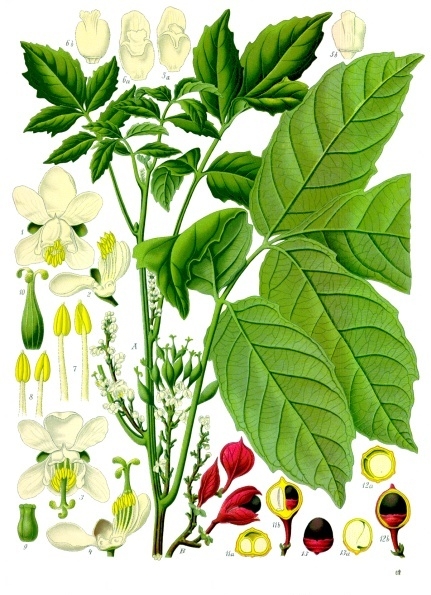


Botanical description
Guarana plants develop pinnate leaves and produce clusters of small, inconspicuous flowers that develop into rounded fruits. The ripe fruit is typically orange to red; each fruit commonly encloses one hard seed that is partially covered by a white aril. The contrast of the dark seed against the white aril has been likened to an eye and is a striking field characteristic. Seeds are the primary harvested product and are usually processed by roasting and grinding or by extraction.
Chemistry and pharmacological properties
The seeds are notable for their high concentration of stimulant xanthines, principally caffeine (historically also called guaranine in older literature), together with related compounds such as theobromine and traces of theophylline. Tannins and other polyphenols are also present and influence taste and extraction. Traditional accounts and some modern sources describe the seeds as a stimulant with mild thermogenic and diuretic properties. Because of the concentrated stimulant content, guarana-based products can have strong effects on alertness and should be used with care, particularly by sensitive individuals.
Traditional and cultural significance
Guarana plays a prominent role in the folklore and subsistence practices of indigenous Amazonian peoples, especially Tupi and Guaraní groups. The common name derives from a Tupi–Guaraní word and the plant is associated with healing and vitality. Indigenous accounts record its use as a tonic, a remedy for digestive complaints and a restorative after exertion. A well-known origin myth tells of a divine child whose eyes became the seeds of the plant, an image that underlines its perceived sacred or magical qualities to the communities that stewarded the species for generations; local traditions and preparation methods vary among the tribes that used it.
Cultivation, harvest and processing
Guarana is cultivated in agroforestry and plantation settings as well as gathered from wild stands. Mature seeds are extracted from ripe fruit, then traditionally roasted and ground into a paste or powder for beverages and pastes. Modern processing also yields dry powders, concentrated extracts and standardized preparations for commercial use. Seed processing influences flavor, caffeine content in finished products and suitability for different uses such as beverages, supplements or pharmaceutical preparations.
Contemporary uses
Commercially, guarana appears in several product categories. In Brazil it is a familiar flavor and stimulant in soft drinks and is widely used in energy drinks worldwide. Dietary supplements often include guarana extract for temporary relief of fatigue and to support alertness. Traditional pastes and decoctions remain in regional culinary and medicinal practice. For more on the plant parts, see resources focused on the seed and fruit.
Safety and research
Scientific interest in guarana covers its stimulant actions, potential effects on cognition and metabolism, and safety in consumer products. Clinical evidence is mixed and usually limited by small studies or variable preparations; some trials suggest short‑term improvements in alertness and mild metabolic effects, while long‑term benefits are not well established. Known safety considerations derive largely from its caffeine content: excessive intake can cause insomnia, palpitations, nervousness and may interact with certain medications. Caution is generally advised for pregnant or nursing people, children and those with cardiovascular conditions.
Economic and conservation notes
Guarana is an economically important crop in parts of Brazil and supports local economies through both traditional processing and industrial production. Cultivation practices range from smallholder and agroforestry systems to more intensive operations. Like many Amazonian crops, responsible management and attention to habitat are relevant to conserving genetic diversity and maintaining the cultural contexts in which the plant is used.
Further reading
- Ethnobotanical accounts and regional floras for cultivation and traditional uses.
- Phytochemical reviews that summarize caffeine and related compounds found in seeds.
- Clinical and toxicological literature assessing stimulant effects and safety considerations.
Guarana remains a distinctive Amazonian resource with a blend of botanical interest, cultural history and modern commercial application. For general reference on the plant's common descriptions, see notes that describe it as a shrub, small tree or woody climber, and consult botanical treatments in the Sapindaceae literature for formal taxonomy. Cultural narratives and traditional preparation methods can be explored through ethnographic work on indigenous tribes and regional histories.
Questions and answers
Q: What is Guarana?
A: Guarana (Paullinia cupana) is a shrub or small tree in the Sapindaceae family native to Venezuela and northern Brazil.
Q: What are the properties of the guarana fruit's seed?
A: The seed of the guarana fruit has stimulant, thermogenic, and diuretic properties.
Q: How does the guarana fruit look?
A: The guarana fruit ranges from orange to red in color and contains black seeds which are partly covered by white arils. When split open, it has been likened to eyeballs.
Q: What role does guarana play in Tupi and Guaraní Brazilian culture?
A: In Tupi and Guaraní Brazilian culture, guarana plays an important role as it was believed to be magical with curative powers for bowel complaints and a way to regain strength.
Q: Where does the name 'guaraná' come from?
A: The name 'guaraná' comes from the Tupi-Guarani word wara'ná.
Q: Is there a myth associated with this plant?
A: Yes, there is a myth that tells of a 'Divine Child' that was killed by a serpent whose eyes gave birth to this plant.
Related articles
Author
AlegsaOnline.com Guarana (Paullinia cupana): botanical profile, uses, and cultural significance Leandro Alegsa
URL: https://en.alegsaonline.com/art/41173
Sources
- s-t.com : s-t.com/daily/07-99/07-11-99/b03bu068.htm
- ncbi.nlm.nih.gov : PMID 16533867
- doi.org : "Weight loss and delayed gastric emptying following a South American herbal preparation in overweight patients"
- rxresearchgroup.com : "An aqueous extract of guarana (Paullinia cupana) decreases platelet thromboxane synthesis"
- ncbi.nlm.nih.gov : PMID 383648
- moodfoods.com : "Pharmacological activity of Guarana (Paullinia cupana Mart.) in laboratory animals"
- nemhaupt.de : "The Decrease in Body Fat in Mice Fed Conjugated Linoleic Acid Is Due to Increases in Energy Expenditure and Energy Loss in the Excreta"
- drugs.com : Guarana Uses, Side Effects & Warnings - Drugs.com
- sun.ars-grin.gov : sun.ars-grin.gov/npgspub/xsql/duke/plantdisp.xsql?taxon=703