
Guantanamo Bay Naval Base (Gitmo): history, purpose, and controversies
United States naval base at Guantánamo Bay, Cuba: origins in a 1903 lease, roles as a strategic station and detention site, and the diplomatic and legal disputes surrounding its operation.
Guantánamo Bay is a coastal inlet on the southern shore of the island of Cuba. A portion of the bay and its adjacent land has been occupied and administered by the United States since a leasing arrangement formalized in 1903 by a bilateral treaty. The naval installation that occupies the southern reaches of the bay is commonly called the Guantánamo Bay Naval Base or simply GTMO or "Gitmo." The site combines traditional naval functions with other tasks tied to regional security and migration control.
Image gallery
10 Images

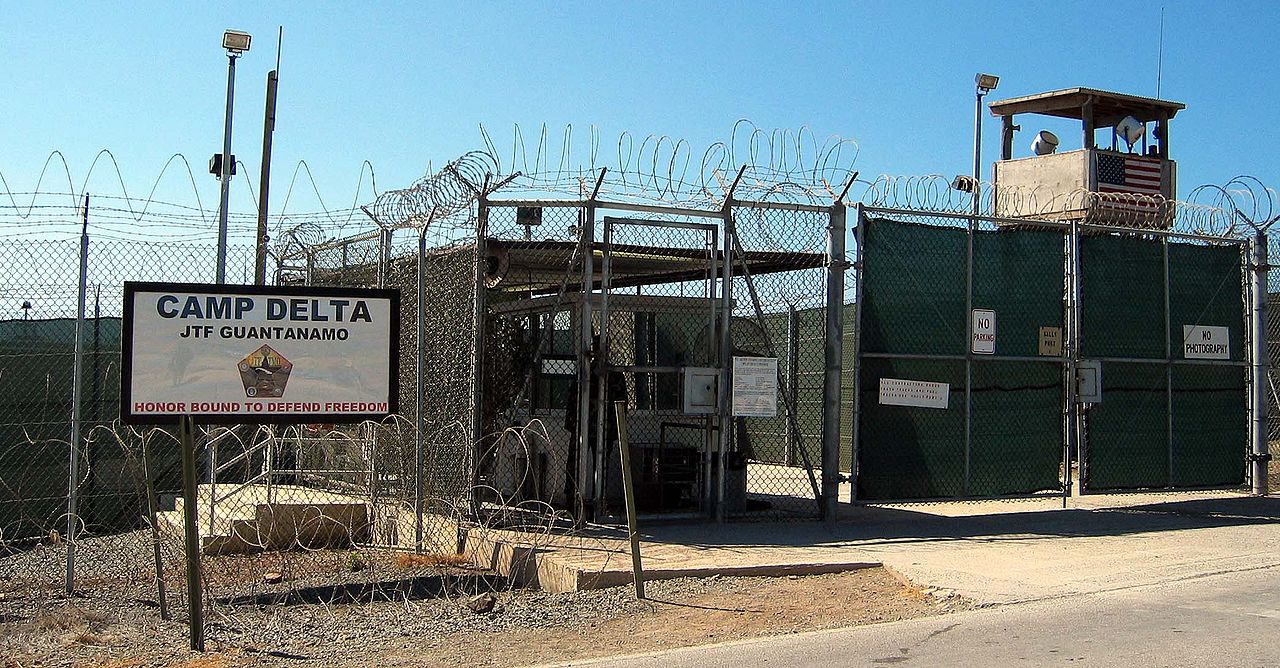


Characteristics and facilities
The base includes a naval station, airfield and support facilities that enable operations in the Caribbean and Atlantic. It serves as a logistics hub and a port of call for surface and air forces, and it has been used for humanitarian assistance, search-and-rescue, and Coast Guard cooperation against illicit trafficking. In the early 21st century parts of the installation were adapted to hold detainees taken during combat operations in places such as Afghanistan and Iraq, and to process individuals interdicted at sea or intercepted while attempting to reach the United States by boat. The base’s stated missions include counter-narcotics efforts, migrant interdiction and maritime security alongside traditional naval support roles (navy, station, counter-terrorism, drug, crime).
Historical context and sovereignty dispute
The United States established a presence at Guantánamo following the Spanish–American War and the political arrangements that followed. The 1903 agreement that granted the United States the right to occupy and use the area has been a persistent source of diplomatic friction. Successive Cuban governments have taken different positions on the arrangement; the current Cuban government regards the continued U.S. control as illegitimate and has argued that the terms violate principles of international law, citing instruments such as the Vienna Convention on the Law of Treaties of 1969 and other legal norms (Cuban government, international law, 1969). The disagreement contributes to broader U.S.–Cuba tensions over sovereignty and bilateral relations.
Detention operations and legal controversies
Beginning in the early 2000s, the U.S. established a detention facility at Guantánamo Bay to hold individuals captured during counterterrorism operations. The camp attracted global attention because of questions about the legal status of detainees, access to counsel, and the applicability of the Geneva Conventions. Human rights organizations and some governments contended that detainees were denied protections they were owed, raising concerns under treaties and domestic law (rights, prisoners, Geneva Conventions). Allegations of ill treatment and torture, and the practice of extraordinary rendition and overseas interrogation flights, prompted investigations and sustained debate about accountability and oversight (laws, human rights groups, prisoners, torture). Reports that some European nationals were rendered and later released further internationalized the issue (European reports). Over time, national courts and international bodies have considered and, in some cases, imposed limits on detention practices and affirmed certain judicial rights for detainees.
Strategic importance and contemporary role
Beyond the detention facility, Guantánamo Bay remains significant for its strategic location, enabling naval presence and regional response capacity. It has been used to support disaster relief, medical evacuations and cooperative security activities in the Caribbean. At the same time, the detention-related controversies have shaped public perceptions, diplomatic engagements and U.S. policy debates about detention law, interrogation methods, and closure or repurposing of facilities. Proposals to change the base’s mission or to transfer detainees have repeatedly surfaced in political and legal discussions.
Notable distinctions and related topics
Guantánamo Bay is distinctive because it combines a longstanding foreign lease with modern debates about human rights, military detention and international law. The site illustrates how long-standing strategic arrangements can become focal points for wider legal and ethical questions. For further reading and related subjects, see the list below.
- Guantánamo Bay geography
- Cuba
- United States
- 1903
- Treaty arrangements
- Cuban government position
- International law issues
- Vienna Convention
- Historical treaties
- Naval operations
- Naval station
- Counter-terrorism
- Drug interdiction
- Crime prevention
- Afghanistan operations
- Iraq operations
- Allied detentions
- Prisoner rights
- Prisoner of war status
- Geneva Conventions
- Applicable laws
- Human rights groups
- Individual detainees
- Allegations of torture
- Extraordinary rendition reports
For a balanced understanding, consider primary treaty texts, official statements from involved governments, judicial rulings, and reports by independent observers. The Guantánamo Bay installation remains a complex intersection of military utility, diplomatic contention and human rights concerns.
Questions and answers
Q: What is Guantanamo Bay?
A: Guantanamo Bay is a bay in the south of the island of Cuba. Part of it is controlled by the United States.
Q: How did the US gain control of Guantanamo Bay?
A: The United States took control of it in 1903, under a treaty between the United States and Cuba. The current government of Cuba does not see this treaty as legal. They say it violates International law (more specifically, the Vienna Convention on the Law of Treaties of 1969).
Q: What is GTMO?
A: GTMO stands for "Guantanamo" and is sometimes used as shorthand for "Gitmo", which refers to the navy station that surrounds part of southern bay.
Q: What is the mission at Gitmo?
A: The mission at Gitmo includes preventing terrorism, helping people who are fleeing Cuba, and stopping drug crime. It has also been used to detain people captured by American forces from Afghanistan and Iraq, as well as some prisoners taken from other countries like Britain and France.
Q: Do prisoners held at Gitmo have rights according to international law?
A: Some people say that these people do not get the rights that they should get as prisoners of war under the Geneva Conventions due to laws in place within the United States not applying to them.
Q: Has there been any reports about mistreatment or torture at Gitmo?
A: According to some well-known human rights groups, some prisoners have been tortured and others may have been badly treated according an FBI Inquiry. This has also been reported by some Europeans who were taken by CIA "torture flights" and have now been released.
Related articles
Author
AlegsaOnline.com Guantanamo Bay Naval Base (Gitmo): history, purpose, and controversies Leandro Alegsa
URL: https://en.alegsaonline.com/art/41168
Sources
- nsgtmo.navy.mil : US Navy Base GTMO Mission
- web.amnesty.org : Amnesy International: Guantánamo Bay - a human rights scandal
- foia.fbi.gov : Federal Bureau of Investigation Guantanamo Bay Inquiry
- news.independent.co.uk : The Independent reports on CIA torture flights and Guantanamo bay
- counterpunch.org : CounterPunch - America's Best Political Newsletter: Inside America's Concentration Camp
- robmarris.org.uk : British Member of Parliament: "The Guantanamo Bay concentration camp"
- globalsecurity.org : GlobalSecurity.org List of Detainees
- amnesty.org.uk : Testimonies from detainees
- defenselink.mil : U.S. Defense Department - Military Proceedings at Guatanamo Bay
- cjrdaily.org : Columbia Journalism Review - Untold Stories from Guantanamo Bay
- wikidata.org : wikidata.org/wiki/Q762570
- id.loc.gov : n84038876
- musicbrainz.org : b55e60aa-3e9d-4572-b9b1-8e3bbaccc79f
- aleph.nkp.cz : ge419945
- viaf.org : 126715870