
Grumman F-14 Tomcat
Twin-seat, variable-sweep US Navy fighter introduced around 1970. Known for fleet air defense with long-range AIM-54 missiles; retired by the USN in 2006. Some remain in Iranian service.
The Grumman F-14 Tomcat is a carrier-capable, twin-seat fighter aircraft developed for the United States Navy. Designed in the late 1960s, it first flew in 1970 and entered operational service during the 1970s as a replacement for earlier fleet defenders such as the F-4 Phantom II. The Tomcat combined high speed, long range and advanced avionics for its era to perform fleet air defense, air superiority and tactical reconnaissance roles. The type became widely known both for its combat capabilities and for appearances in popular culture.
Image gallery
10 Images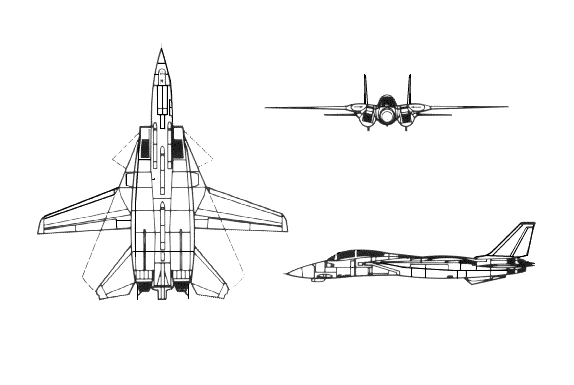


Design and key characteristics
The F-14 features a variable-sweep wing that permitted efficient cruise and high-speed dash performance, a crew of two (pilot and Radar Intercept Officer), and twin engines for redundancy and thrust. It incorporated a powerful radar system and a weapons suite optimized for long-range interception. For close-in combat it also carried shorter-range missiles and an internal cannon. Its combination of radar, long-range missiles and carrier compatibility made it a primary element of US fleet air defense for several decades.
Weapons and avionics
- Long-range air-to-air capability centered on the AIM-54 Phoenix missile, carried to engage targets at extended distances; detailed information can be found at AIM-54 resources.
- Short-range air-to-air missiles such as the AIM-9 Sidewinder for dogfighting and visual-range engagements.
- An internal rotary cannon for close combat and strafing.
Operational history
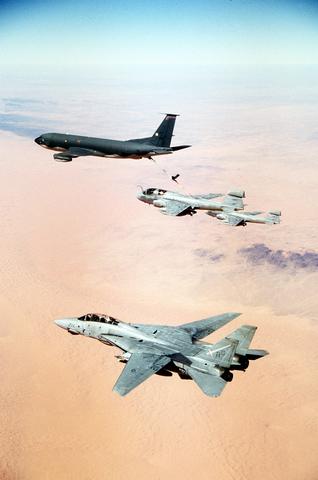
The Tomcat served as the Navy's principal fleet defender through the Cold War and into the post‑Cold War era. It saw operational use in several conflicts where US Navy air power was employed and performed reconnaissance missions when fitted with appropriate pods. By the early 2000s the type was retired from US Navy service—official retirement occurred in 2006—largely for reasons of age, maintenance complexity and the introduction of newer multirole fighters such as the F/A-18E/F Super Hornet.
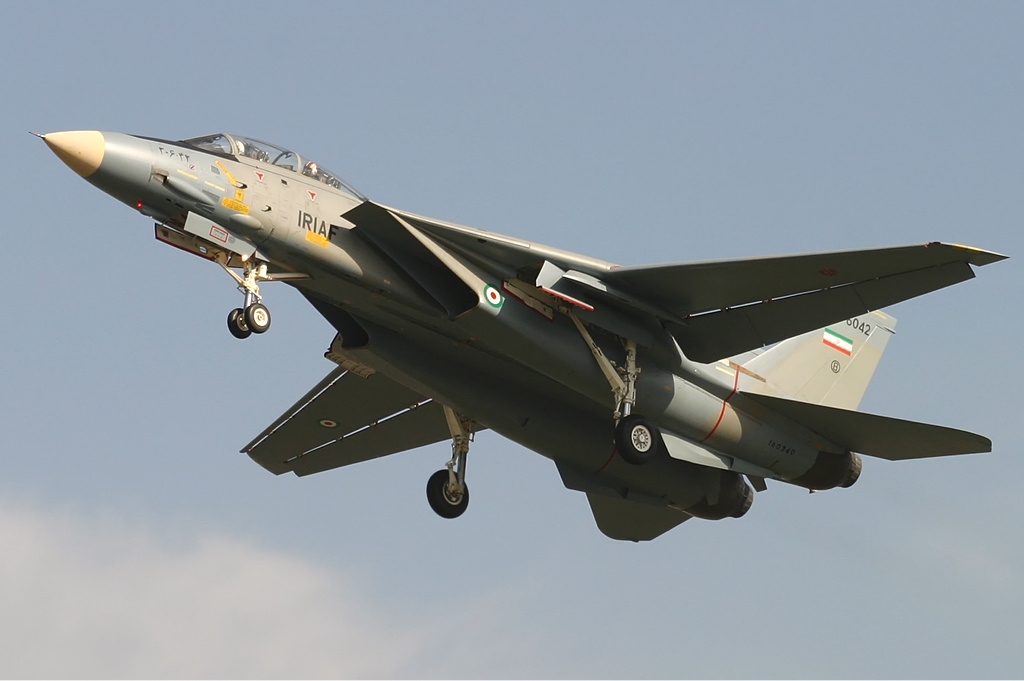
After the 1979 Iranian Revolution, Iran retained examples of the F-14 acquired earlier and has operated a small fleet since then. These aircraft have been reported to remain in Iranian service in limited numbers, though their condition and operational readiness have been subject to varying accounts and uncertainty; for more on Iranian use see reports on foreign operators.
Legacy
The F-14 Tomcat is remembered for its role as a long-range fleet defense fighter and for being one of the more technologically advanced carrier fighters of its time. Its distinctive variable-sweep wings and two-seat arrangement, combined with its prominent public profile, have left a lasting impression on both aviation enthusiasts and the general public.
Questions and answers
Q: What is the F-14 Tomcat?
A: The F-14 Tomcat is a fighter plane made for the American Navy.
Q: When did the F-14 Tomcat first fly?
A: The F-14 Tomcat first flew in 1970.
Q: What did the F-14 Tomcat replace?
A: The F-14 Tomcat started to replace the F-4 Phantom II in 1973.
Q: How many AIM-54 Phoenix missiles could the F-14 Tomcat carry?
A: The F-14 Tomcat could carry 6 of AIM-54 Phoenix missiles.
Q: What other missiles could the F-14 Tomcat carry?
A: The F-14 Tomcat could carry two AIM-9 Sidewinders.
Q: What is the speed of the F-14 Tomcat?
A: The F-14 Tomcat is supersonic.
Q: Who currently uses the F-14 Tomcat and what is their reported condition?
A: Iran uses the F-14, but they are rumored to be in bad condition.
Author
AlegsaOnline.com Grumman F-14 Tomcat Leandro Alegsa
URL: https://en.alegsaonline.com/art/41088