
GRU (Main Intelligence Directorate) — Russian Military Intelligence
The GRU is Russia's military intelligence directorate: responsible for military reconnaissance, foreign intelligence, special operations and control of Spetsnaz units; historically distinct from civilian services.
Overview
The GRU, an English rendering of the Russian acronym acronym ГРУ, stands for the Main Intelligence Directorate. It is the principal military intelligence organ of the Russian Armed Forces and is commonly described as the state's principal agency for military reconnaissance and foreign military intelligence. The service is often contrasted with civilian foreign intelligence organizations and operates under military command rather than as a civilian bureaucracy.
Image gallery
10 Images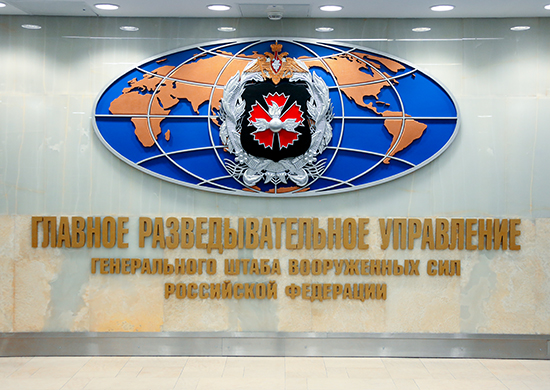





Functions and structure
The GRU's core responsibilities cover tactical and strategic military reconnaissance, human intelligence (HUMINT), signals intelligence, electronic warfare, and covert special operations. It traditionally exercises command or close control over special-purpose forces (Spetsnaz) and units tasked with sabotage, reconnaissance behind enemy lines, and protection of military facilities. Key functions include:
- Collecting and analyzing military and technical intelligence abroad.
- Conducting clandestine operations and counterintelligence in conflict zones.
- Supporting battlefield commanders with targeting and electronic support.
- Training and directing special forces for mission-specific deployments.
History and development
The organization traces its roots to intelligence formations in the early 20th century and was formalized under Soviet structures after the formation of the Red Army. Historically it served as the military's intelligence arm during the Red Army era and across the period of the Soviet Union. After the Soviet collapse the GRU remained the armed forces' intelligence directorate within the Russian Federation and continued to adapt to new geopolitical and technological challenges.
Comparisons and notable facts
The GRU is distinct from Russia's civilian foreign intelligence agency (the SVR), which succeeded the foreign operations arm of the KGB. In the 1990s observers noted that the GRU maintained extensive human networks and often had greater overseas reach in military-related areas than the civilian service; reports from that period suggested the GRU deployed a substantial number of Spetsnaz troops and maintained large agent networks, reflecting its emphasis on operational capacity rather than diplomatic tradecraft.
Operations, methods and public perception
Operationally the GRU employs a mix of overt military reconnaissance and covert action. Its methods include long-term human intelligence cultivation, liaison with foreign military counterparts, cyber and signals exploitation, and use of paramilitary units for deniable missions. Public reporting and official statements treat the agency as a central actor in Russian defense and security policy; its activities are frequently discussed in analyses of modern intelligence, military reform, and international incidents.
For further context about military intelligence services and historical roles, see materials on the wider military intelligence service, language references for the English and Russian designations, and comparative studies of successor agencies to the KGB.
Questions and answers
Q: What does GRU stand for?
A: GRU is the English version of the Russian acronym ГРУ, which means Main Intelligence Directorate.
Q: What is GRU?
A: GRU is the military intelligence service of the Russian Federation, formerly the Red Army of the Soviet Union.
Q: What is the role of the GRU?
A: The GRU is Russia's largest foreign intelligence agency, with the responsibility of gathering intelligence overseas.
Q: How many agents did the GRU have in foreign countries in 1997?
A: In 1997, the GRU had six times as many agents in foreign countries as the SVR (the successor to the KGB's foreign operations directorate).
Q: What is the difference between GRU and SVR?
A: GRU is a military intelligence agency while SVR is a civilian intelligence agency.
Q: How many Spetsnaz troops did the GRU command in 1997?
A: In 1997, the GRU commanded 25,000 Spetsnaz ('special') troops.
Q: What is the significance of the GRU's Spetsnaz troops?
A: The Spetsnaz troops are highly trained special forces soldiers that the GRU uses for covert operations and intelligence gathering.
Related articles
Author
AlegsaOnline.com GRU (Main Intelligence Directorate) — Russian Military Intelligence Leandro Alegsa
URL: https://en.alegsaonline.com/art/41081
Sources
- reuters.com : Reuters factbox on Russian military intelligence by Dmitry Solovyov
- reuters.com : "PRESS DIGEST – Russia – Dec 27"
- reuters.com : Reuters Russia's Medvedev sacks military spy chief by Dmitry Solovyov Fri Apr 24, 2009
- wikidata.org : wikidata.org/wiki/Q115782
- d-nb.info : 2082723-4
- id.loc.gov : n83201173
- viaf.org : 136709314
- worldcat.org : lccn-n83201173