
Ground sloth — extinct large sloths of the Americas
Extinct group of large, often heavy-built sloths (Xenarthra) that evolved in South America, spread into North America and the Caribbean, and mostly disappeared in the late Quaternary amid climate change and human arrival.
Overview
Ground sloths are an informal term for a varied assemblage of extinct sloths within the mammal group often placed in the superorder Xenarthra. They evolved primarily in South America and ranged from moderately sized herbivores to very large, sometimes elephant-sized forms. Unlike the small arboreal species commonly called tree sloths, these animals were principally terrestrial. Fossils are known from South America, North America and the Caribbean, and their diversity and wide distribution make them a prominent subject in studies of Cenozoic faunas and biogeography (Great American Biotic Interchange).
Image gallery
8 Images


Anatomy and adaptations
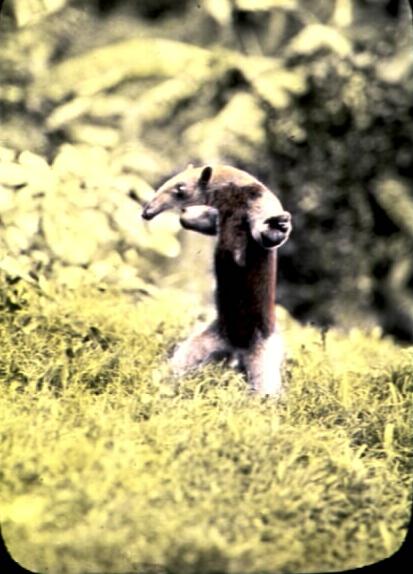
Most ground sloths had robust, heavy skeletons with strong limb bones, long claws and reduced dentition lacking enamel. Their teeth are generally simple, peg-like structures suited to grinding and processing plant matter. Many species could adopt a tripod stance, rearing onto the hind limbs and tail to reach higher vegetation; this posture is inferred from limb proportions and pelvic morphology. Some genera show evidence of dermal ossifications and thickened skin, and muscle attachment sites indicate powerful forelimbs for digging, pulling down branches or defense.
Diet and ecology
Ground sloths were herbivores with diets inferred from tooth wear, isotopic studies and associated plant remains to include leaves, branches and other coarse vegetation. Larger genera may have been capable of processing large amounts of low-quality plant material through slow gut fermentation, a strategy similar in principle to that of many modern large herbivores. Their ecological roles included browsing and likely shaping vegetation structure in many habitats, from forested regions to more open environments.
Locomotion and behaviour
Although often portrayed as slow, ground sloths were well suited to their terrestrial lifestyle: limb proportions show adaptations for weight support and for forceful forelimb movements. Some smaller forms may have been more agile. Evidence from trackways and skeletal joints suggests a range of gaits and the capacity for both steady walking and occasional rearing. Reproductive and social behavior is poorly known; comparisons with living xenarthrans suggest low reproductive rates and extended parental investment may have been common.
Evolution and biogeography
Ground sloth diversification occurred largely during the Tertiary in South America while the continent was relatively isolated. During the Miocene and later episodes of changing connections between the Americas, several lineages dispersed northward. The formation of land connections and island chains allowed genera to reach Central and North America as well as Caribbean islands. Fossils assigned to various genera have been reported from localities as far north as parts of North America, reflecting their capacity to occupy diverse climates and regions.
Dispersal and notable genera
- Megatherium — one of the best-known giant ground sloths, with very large body size and robust forelimbs.
- Eremotherium — widespread in North and South America during the Pleistocene.
- Mylodon — known from South American deposits and sometimes associated with preserved skin and hair.
- Nothrotheriops — a smaller Pleistocene ground sloth recorded in arid and cave deposits.
- Megalonyx — a North American genus represented in multiple fossil sites.
- Megalocnus — an example of island-endemic sloths from the Caribbean.
- Other taxa and regional names are documented in taxonomic and paleontological literature (sloth overview, taxonomic reviews).
Fossil record and preservation
Ground sloth remains are recovered from a variety of depositional settings, including caves, river deposits and tar seeps. Some sites have produced exceptionally preserved material such as skin, hair and dung, which provide direct insight into diet, appearance and environment. Radiocarbon dating and stratigraphic correlations help constrain the timing of occurrences, while isotopic and microwear analyses inform dietary reconstructions. Important research repositories and overviews are provided by museum collections and specialized publications (Caribbean faunas, North American records).
Extinction and human interactions
Most ground sloths disappeared from continental North and South America near the end of the Pleistocene, a period that saw extinctions of many large mammal species. Explanations for these losses emphasize a combination of factors: rapid climatic and environmental change, habitat alteration, and increasing pressures from human hunting and other activities. On some Caribbean islands, endemic ground sloths appear to have persisted into the Holocene, surviving longer than their mainland counterparts; for instance, Cuban forms are known from relatively recent deposits and archaeological contexts (Megalocnus). The relative importance of humans versus climate remains debated, and evidence varies by region.
Scientific importance and ongoing research
Ground sloths are important for understanding past ecosystems, biogeographic processes such as the Great American Biotic Interchange, and the dynamics of Quaternary extinctions. Ongoing studies combine field paleontology with modern analytical techniques—ancient DNA, isotopic chemistry and biomechanical modeling—to refine phylogenetic relationships and life history interpretations. Review articles and databases compiled by research centers remain useful starting points for further study (Eremotherium studies, megafauna research).
Further reading and resources
Summaries for general audiences and specialized reviews can be found through institutional overviews and paleontological syntheses; key topics include taxonomy, paleoecology and extinction chronologies. For curated collections and taxonomic notes consult museum pages and academic guides (Megalocnus reports, Mylodon accounts, Nothrotheriops notes). These resources provide gateways to primary literature and specimen databases for researchers and interested readers.
Questions and answers
Q: What are ground sloths?
A: Ground sloths are a group of extinct large sloths in the mammalian superorder Xenarthra. The much smaller living sloths are called "tree sloths".
Q: When did the last surviving ground sloth live?
A: The last surviving ground sloth lived in the Caribbean Antilles, with Megalocnus possibly surviving until about the third century BC in Cuba.
Q: Why were some island populations able to survive longer than their continental mainland relatives?
A: Some island populations were able to survive longer because humans got to the islands much later, allowing them more time before they were hunted or otherwise affected by humans.
Q: When did most of the ground sloth evolution take place?
A: Most of the ground sloth evolution took place during the mid to late Tertiary of South America while it was isolated from other continents.
Q: How did some species get into North America?
A: The presence of islands between American continents in Miocene allowed some species to get into North America.
Q: Were xenarthrans successful during Great American Biotic Interchange?
A: Yes, xenarthrans as a whole were one of the more successful South American groups during this period, with at least five genera identified in North American fossils as evidence for successful migration northward.
Related articles
Author
AlegsaOnline.com Ground sloth — extinct large sloths of the Americas Leandro Alegsa
URL: https://en.alegsaonline.com/art/41034
Sources
- caribjsci.org : "Prehistoric sloth extinctions in Cuba: implications of a new "last" appearance date"
- springerlink.com : "Sudden deaths: the chronology of terminal Pleistocene megafaunal extinction"
- springerlink.com : American Megafaunal Extinctions at the End of the Pleistocene
- doi.org : 10.1007/978-1-4020-8793-6_2
- pnas.org : "Asynchronous extinction of late Quaternary sloths on continents and islands"
- doi.org : 10.1073/pnas.0502777102
- ncbi.nlm.nih.gov : 1187974
- pubmed.ncbi.nlm.nih.gov : 16085711
- megalithic.co.uk : Cueva del Milodon, Megalithic Portal
- doi.org : 10.1126/science.95.2474.552
- pubmed.ncbi.nlm.nih.gov : 17790868
- pubs.aina.ucalgary.ca : "The ground sloth Megalonyx from Pleistocene deposits of the Old Crow Basin, Yukon, Canada"
- doi.org : 10.14430/arctic852