
Greyfriars Bobby — the loyal Skye terrier of Edinburgh
An encyclopedic overview of Greyfriars Bobby, the 19th‑century Skye terrier famed for guarding his master's grave in Edinburgh, and the memorials, cultural legacy and historical discussion surrounding the tale.
Overview
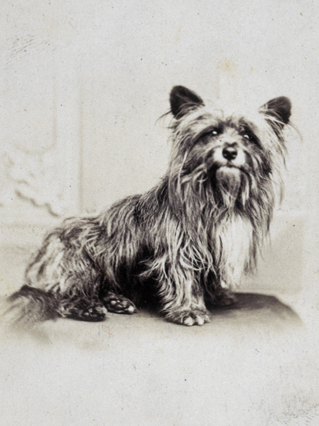
Greyfriars Bobby is the popular name given to a Skye terrier reputed to have guarded the grave of his owner in Edinburgh in the mid‑19th century. The basic outline commonly reported is that the dog belonged to John Gray and that, after Gray's death, Bobby remained closely associated with Greyfriars Kirkyard for many years until his own death in 1872. Over time the animal came to be celebrated locally and nationally as an emblem of canine fidelity; the story has been retold in books, on film and in public commemorations.
Image gallery
7 Images




Origins of the story
According to contemporary and later accounts, the dog was born in 1855 and became the companion of John Gray, a policeman in Edinburgh. When Gray died a few years later he was buried in Greyfriars Kirkyard, and observers reported that the terrier routinely visited and often kept vigil at the grave. The core facts commonly cited are the animal's lifespan, the name of the owner and the grave site; beyond that, accounts vary in emphasis and detail. For background on the breed see references to the Skye terrier, and for the named owner see entries on John Gray.
Burial, marker and public memorial
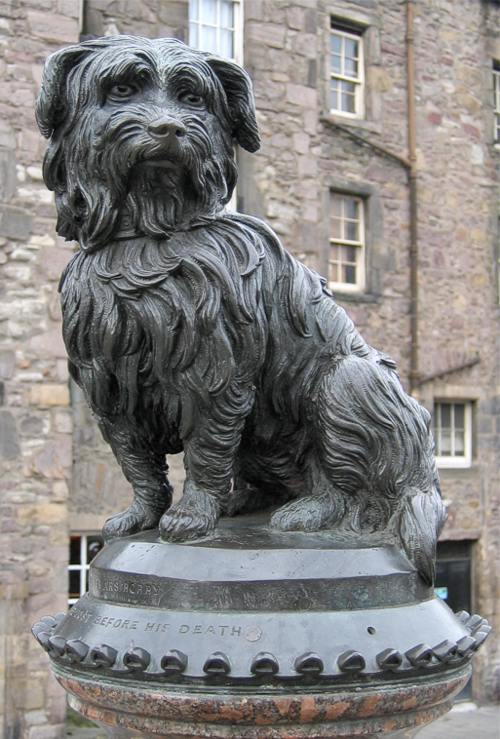
When the dog died in 1872 he was buried close to the entrance of the kirkyard. A small polished pink granite stone or tablet marks what is commonly described as Bobby's grave, and visitors often pass by the site when they visit the historic cemetery. In 1873 the philanthropist Lady Angela Burdett‑Coutts provided funds for a public drinking fountain erected in memory of the dog. The fountain is topped by a small bronze statue by the sculptor William Brodie and stands on a short column of local granite. The base of the monument contains an octagonal drinking basin intended for dogs and a separate spout for people. For health and maintenance reasons the fountain's water supply was later discontinued, but the monument remains a familiar landmark in the Old Town.
Cultural legacy: literature, film and civic memory
The tale of Greyfriars Bobby entered popular culture in the late 19th and early 20th centuries. A well‑known children’s novel about the dog was published in 1912 and has seen continued readership; the story has been adapted for film as well. These retellings helped to fix the basic narrative in the public imagination and to encourage visitors to the kirkyard and to the fountain site. Material objects associated with Bobby, such as a collar and a drinking bowl attributed to him, have been preserved and displayed in local museum collections as part of Edinburgh’s social history.
Historical discussion and varying accounts
While the broad outline of the story is widely accepted and celebrated, historians and local researchers caution that the popular narrative mixes documented fact with elements of folklore. Contemporary newspaper reports, municipal records and later reminiscences do not always agree on every detail: some accounts emphasise the dog's constancy, others note that Bobby had human carers who fed him or that he frequented nearby streets and lodgings. Rather than undermining the story, such discrepancies illustrate how the memory of an event can be shaped by storytelling, civic pride and the interests of collectors and writers.
Commemoration and tourism
The fountain and statue commissioned in the 1870s remain a focal point for residents and visitors interested in the city's historic narratives. The grave marker near Greyfriars Kirkyard is also a point of interest on walking tours of the Old Town. Institutions display items associated with the tale, and guidebooks commonly include the story in discussions of Edinburgh’s Victorian era and its commemorative culture. Those planning a visit should note the locations of the memorials and the kirkyard entrance, and may consult local guides for access and opening information.
Public objects and museum displays
Objects said to have belonged to the dog, notably a collar and a drinking bowl, have been cited as part of museum holdings and local exhibits; these tangible items contribute to the narrative's persistence by linking the story to physical evidence. The fountain, the bronze figure and the small granite grave marker together form a modest ensemble of civic memory that illustrates how communities create visible reminders of stories that resonate with local identity.
Further reading and references
- For the breed: Skye terrier
- Owner and contemporary references: John Gray
- Grave site: Greyfriars Kirkyard
- Contemporary funeral and kirkyard references: funeral site
- Grave marker material: granite
- Patron of the fountain: Lady Angela Burdett‑Coutts
- Statue medium: bronze
- Column material: granite column
- Dog basin and fountain detail: octagonal basin
Greyfriars Bobby continues to be cited as an emblematic example of animal loyalty and as a case study in how local incidents may be transformed into enduring public memory. The story’s mixture of verifiable detail and folkloric elaboration makes it useful for students of cultural history, folklore, tourism and the politics of commemoration.
Questions and answers
Q: Who was Greyfriars Bobby?
A: Greyfriars Bobby was a Skye terrier who belonged to a policeman in Edinburgh named John Gray.
Q: When did Mr. Gray die?
A: Mr. Gray died in 1858.
Q: Where was he buried?
A: He was buried in Greyfriars Kirkyard.
Q: What happened after the funeral?
A: After the funeral, Bobby stayed near the grave of Mr. Gray and refused to leave, so he came to be called Greyfriars Bobby and stayed at the grave for the rest of his life until he died in 1872.
Q: What is displayed in the Museum of Edinburgh?
A: Bobby's collar and bowl are displayed in the Museum of Edinburgh.
Q: Who erected a drinking fountain to commemorate Bobby?
A: Lady Angela Burdett-Coutts erected a drinking fountain to commemorate Greyfriars Bobby in 1873.
Q: What movie is based on his story?
A: A movie based on Eleanor Stackhouse Atkinson's book about Bobby, which was released in 1912, was made in 1961 starring Tam O'Shanter as Bobby and is described as "a tearjerker, one that saddens and lifts the spirit at the same time."
Related articles
Author
AlegsaOnline.com Greyfriars Bobby — the loyal Skye terrier of Edinburgh Leandro Alegsa
URL: https://en.alegsaonline.com/art/40888
Sources
- edinburghmuseums.org.uk : "Greyfriars Bobby"