
Gregory the Illuminator (Grigor Lusavorich)
Founder and patron saint of the Armenian Apostolic Church, credited with converting Armenia to Christianity and serving as its first head; a central figure in Armenian religious history.
Overview
Gregory the Illuminator (Armenian: Grigor Lusavorich; Greek: Gregorios Phoster) is venerated as the founder and patron saint of the Armenian Apostolic Church. Traditionally regarded as the person who brought Christianity to the Armenian people, his life and deeds mark a turning point in Armenian religious and cultural history.
Image gallery
10 Images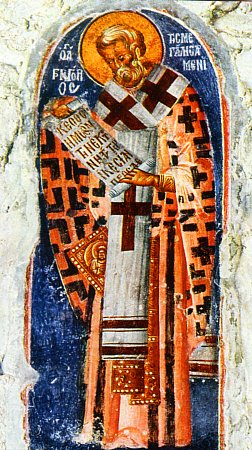


Origins and early life
According to tradition, Gregory was born in the late 3rd century into a family with connections to the Parthian-Arsacid aristocracy. His father, Anak, is said to have been implicated in the assassination of a king of Armenia, an act that led to the near destruction of Anak's household. Gregory survived and was raised outside Armenia, where he became a Christian and received a religious education.
Return to Armenia and conversion
Later accounts describe Gregory returning to Armenia and coming into conflict with the ruling dynasty. He was imprisoned for a long period—classical narratives place this confinement in a deep pit—until a crisis involving the Armenian king produced Gregory's release. According to tradition, Gregory converted King Tiridates III and members of the court, after which the king proclaimed Christianity as the state religion. This event is often dated by Armenian sources to the early 4th century and is cited as the first official adoption of Christianity by any nation.
Role in church organization and legacy
After the conversion, Gregory was recognized as the chief ecclesiastical authority and is traditionally listed as the first Catholicos (head) of the Armenian Church, which later developed into the independent Armenian Apostolic Church (see church). He established bishoprics and monastic communities, laying institutional foundations that endured through later reorganizations. His epithet "the Illuminator" ("Lusavorich") reflects his importance as a symbolic bringer of the Christian faith to the Armenian people.
Veneration and historical significance
Gregory remains a central saint in Armenian Christianity and is commemorated in the liturgical calendar and in popular devotion. His story has been preserved in Armenian hagiography and chronicles, where it is woven together with national and dynastic history, including references to the Arsacid house (Arsacid Dynasty) and the violent events tied to his family, such as the assassination attributed to his father (related episode). Scholars treat parts of the narrative as a combination of historical core events and later embellishment, but his role in shaping Armenian religious identity is widely acknowledged.
Key facts
- Names: Gregory the Illuminator, Grigor Lusavorich.
- Traditionally credited with converting Armenia to Christianity in the early 4th century.
- Regarded as the first Catholicos and patron saint of the Armenian Church.
- Venerated in Armenian liturgy and art; his life combines historical elements with hagiographical tradition.
For further reading on Armenian Christian origins and the institutional development that followed Gregory's era, consult modern histories and the primary Armenian chronicles that preserve his legend and its role in the nation's religious memory.
Questions and answers
Q: Who is Saint Gregory the Illuminator?
A: Saint Gregory the Illuminator, also known as Saint Gregory the Enlightener, is the founder and patron saint of the Armenian Apostolic Church.
Q: When was Saint Gregory the Illuminator born?
A: Saint Gregory the Illuminator was born around 257.
Q: What was Saint Gregory's family background?
A: Saint Gregory belonged to the royal line of the Arsacid Dynasty and was the son of a Parthian named Anak.
Q: What did Anak do that brought ruin on himself and his family?
A: Anak assassinated Chosroes I of Armenia, which brought ruin on himself and his family.
Q: What is the Armenian Apostolic Church?
A: The Armenian Apostolic Church is a national church of Armenia and the oldest national church in the world.
Q: What is the significance of Saint Gregory the Illuminator to the Armenian Apostolic Church?
A: Saint Gregory the Illuminator is the founder and patron saint of the Armenian Apostolic Church. He played a significant role in converting Armenia to Christianity in the early fourth century.
Q: What are the different names that Saint Gregory the Illuminator is known by?
A: Saint Gregory the Illuminator is also known as Saint Gregory the Enlightener, Grigor Lusavorich in Armenian, and Gregorios Phoster or Photistes in Greek.
Related articles
Author
AlegsaOnline.com Gregory the Illuminator (Grigor Lusavorich) Leandro Alegsa
URL: https://en.alegsaonline.com/art/40826