
Greenhouse effect: how atmospheric gases warm the planet and why it matters
The greenhouse effect is the process by which certain atmospheric gases trap outgoing infrared radiation, keeping Earth habitable. Human emissions have strengthened it, driving climate change and global impacts.
Overview
The greenhouse effect describes the capture of outgoing infrared radiation by particular gases in the atmosphere surrounding the Earth. Incoming sunlight warms the surface; some of that energy is re‑radiated as longwave (infrared) radiation. Greenhouse gases absorb and re‑emit a portion of that infrared energy, reducing the net loss of heat to space and raising the planet's average temperature. The effect is analogous to the way a glass greenhouse traps heat, though the physical mechanisms are different.
Image gallery
7 Images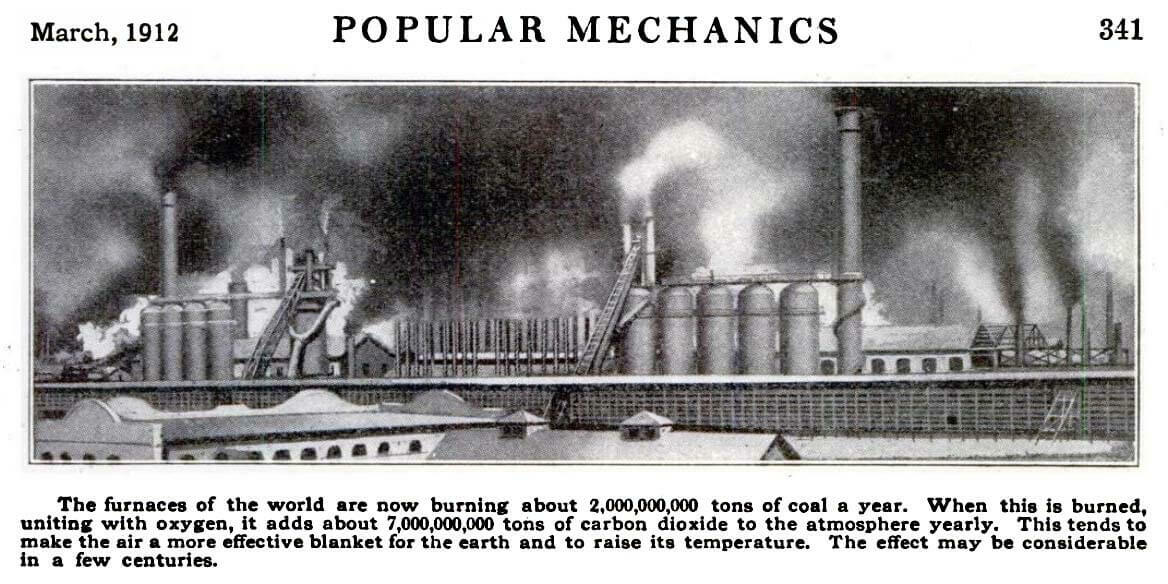



Key components and characteristics
Major contributors to the greenhouse effect include water vapor, carbon dioxide, methane and others. These are often referred to collectively as greenhouse gases. Water vapor (H2O) amplifies warming through feedbacks rather than direct long‑term forcing because its concentration varies with temperature. Carbon dioxide (CO2) and methane (CH4) are longer‑lived and are central to human‑driven changes. When atmospheric concentrations of these gases increase, the atmosphere retains more heat, a fundamental cause of modern climate change and global warming.
Mechanism in more detail
Solar energy penetrates the atmosphere and is absorbed by land and oceans. The warmed surface emits infrared radiation. Greenhouse gases absorb specific wavelengths of this radiation and then re‑emit it in all directions, including back toward the surface. This process raises the equilibrium temperature of the surface and lower atmosphere compared to a planet with no greenhouse gases. Without the natural greenhouse effect, global average temperatures would be far lower (commonly cited estimates are around −18 to −19 °C), conditions that would make much of Earth's environment inhospitable and could resemble a deep ice age state.
History, measurement and planetary comparisons
The basic idea that an atmosphere can influence planetary temperature dates back to early 19th‑century studies by Joseph Fourier. Quantitative recognition that increases in atmospheric CO2 could alter climate was developed by scientists such as Svante Arrhenius. Today, concentrations of CO2 are known from direct measurements and ice‑core records: preindustrial values were roughly 260–280 parts per million (ppm), while contemporary readings exceed 400 ppm. Other planets with atmospheres also exhibit greenhouse effects: Mars has a thin effect, whereas Venus has an extreme greenhouse state driven by its dense CO2 atmosphere, making it hotter than Mercury despite being farther from the Sun.
Human influence and consequences
Human activities — especially the combustion of fossil fuels, land‑use change, and certain industrial processes — have increased concentrations of long‑lived greenhouse gases. The enhanced greenhouse effect contributes to observed warming of the atmosphere and oceans, shifts in precipitation, more frequent heat extremes, sea‑level rise, and ecological stress. Many scientists and policy analysts point to a target of about 350 ppm CO2 as a level associated with fewer risks, while higher concentrations put additional pressure on species, ecosystems and human communities. Ocean warming and increased CO2 absorption also drive ocean acidification, which affects marine life and fisheries.
Impacts, mitigation and notable facts
- Primary greenhouse gases include water vapor, carbon dioxide, methane, nitrous oxide and fluorinated gases; each differs in strength and atmospheric lifetime.
- Mitigation focuses on reducing emissions, improving energy efficiency, switching to low‑carbon energy, and enhancing sinks such as forests and soils.
- Some warming is already locked in due to past emissions; policy and technological decisions determine the magnitude and pace of future change.
The greenhouse effect is fundamental to Earth's climate system: it makes the planet habitable while also being sensitive to changes in atmospheric composition. Understanding its mechanisms, historical context and potential future trajectories is essential for preparing societies and ecosystems for a changing climate.
Questions and answers
Q: What is the greenhouse effect?
A: The greenhouse effect occurs when certain gases in the Earth's atmosphere trap infrared radiation, making the planet become warmer, similar to the way a greenhouse becomes warmer.
Q: What are some of the most important greenhouse gases in Earth's atmosphere?
A: The most important greenhouse gases in Earth's atmosphere are water vapor, carbon dioxide (CO2), and methane.
Q: How does an increase in greenhouse gas levels affect climate change and global warming?
A: When there is more greenhouse gas in the air, it holds more heat which causes climate change and global warming.
Q: What would happen if there was no natural greenhouse effect on Earth?
A: Without the natural greenhouse effect on Earth, its average temperature would be around -18 or -19 degrees Celsius (0 or 1 degree Fahrenheit) and it would be locked in an ice age.
Q: How has human activity contributed to changes in atmospheric CO2 levels?
A: Humans have been burning large amounts of fossil fuels which releases carbon dioxide into the atmosphere. This has caused an increase in atmospheric CO2 levels over the past 150 years.
Q: Who first proposed that increased CO2 could cause global warming?
A: Nobel Prize winner Svante Arrhenius was first to predict that carbon dioxide from burning of fossil fuels (and other combustion processes) could cause global warming.
Related articles
Author
AlegsaOnline.com Greenhouse effect: how atmospheric gases warm the planet and why it matters Leandro Alegsa
URL: https://en.alegsaonline.com/art/40742
Sources
- ipcc.ch : Annex III: Glossary
- books.google.com : The Earth's Biosphere: Evolution, Dynamics, and Change