
Green Party (Norway) — Miljøpartiet De Grønne
Miljøpartiet De Grønne (Green Party) is a Norwegian political party focused on environmental protection, climate action and sustainability; entered the Storting in 2013 and won three seats in 2021.
Green Party (Norway) (Norwegian: Miljøpartiet De Grønne) is a political party in Norway that centres its platform on environmental protection, climate policy and long-term sustainability. It is commonly placed within the broader green movement and advocates a policy mix that aims to reconcile ecological limits with social equity and economic transition.
Image gallery
4 Images


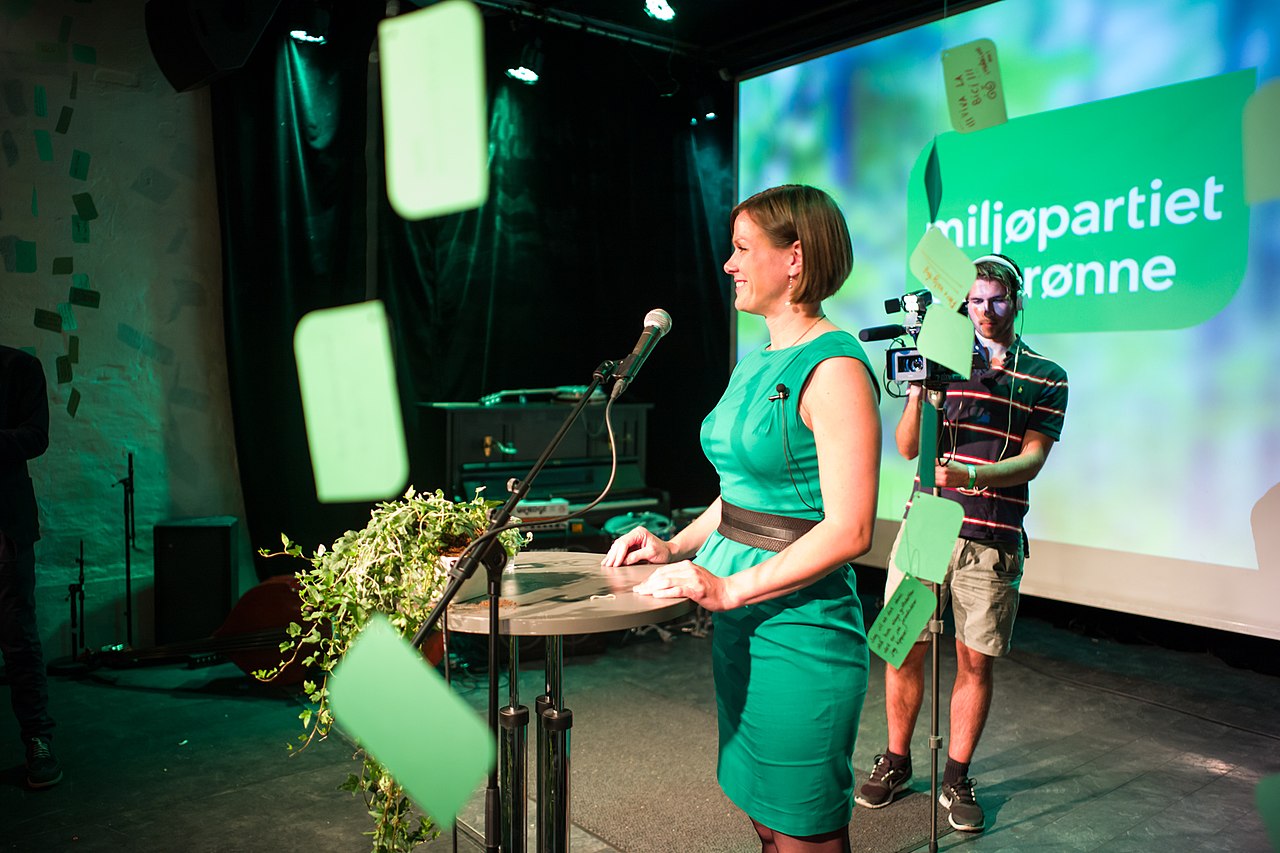
Ideology and priorities
The party emphasises urgent action on climate change, protection of biodiversity and a shift away from fossil-fuel dependence. Core priorities include reducing greenhouse gas emissions, conserving natural habitats, promoting sustainable land use and encouraging public and active transport. Economic measures supported by the party often favour circular economy principles, green taxation to internalise environmental costs, and investments in renewable energy and public services to support a just transition.
History and development
Miljøpartiet De Grønne emerged from environmental activism and local green organising. It evolved into a national party contesting municipal, county and parliamentary elections. The party achieved its first national parliamentary representation in the 2013 elections, when it won a seat in the Storting; the elected representative was Rasmus Hansson, who also served as the party's spokesperson. In the 2021 parliamentary election the party increased its presence, winning three seats in the Storting. These milestones raised the party's profile in national debates on energy, transport and land use.
Organisation and leadership
The party traditionally uses spokespersons rather than a single executive leader, and it places weight on internal democracy and local decision-making. It maintains elected representatives in municipal and county councils across Norway and uses those local platforms to pilot green policies. Other prominent figures have included party spokespersons and elected officials who helped translate green ideas into municipal policy and national debate.
Electoral role and public impact
Although smaller than Norway's major parties, the Greens have influenced public discourse by emphasising climate urgency and the need to reconcile Norway's welfare model with environmental limits. The party's positions have created pressure on larger parties to consider stricter climate measures and to debate issues such as new oil exploration, transport planning and nature conservation. For information on the legislature and parliamentary duties see Stortinget.
Policy approach and cooperation
Miljøpartiet De Grønne combines environmental goals with concerns about social justice and decentralisation. It supports enhanced local democracy, sustainable urban planning, better public transport and measures to protect rural livelihoods while reducing emissions. The party cooperates with civic groups, environmental organisations and green parties abroad, and participates in transnational exchanges on climate and sustainability policy. For broader context on green politics and how such parties organise, see resources on green politics and on comparative political parties.
The party's development illustrates how environmental movements can move from activism into formal politics, seeking to shape policy both locally and nationally while navigating debates over economic interests tied to natural resources.
Questions and answers
Q: What is the Green Party in Norway?
A: The Green Party in Norway is a green political party.
Q: What is the name of the Green Party in Norway?
A: The name of the Green Party in Norway is Miljøpartiet de Grønne.
Q: How many representatives did the Green Party have in the Norwegian Parliament after the 2013 election?
A: The Green Party had one representative in the Norwegian Parliament after the 2013 election.
Q: Who was the spokesperson of the Green Party in Norway during the 2013 election?
A: Rasmus Hansson was the spokesperson of the Green Party in Norway during the 2013 election.
Q: How many seats did the Green Party win in the 2021 Norwegian parliamentary election?
A: The Green Party won three seats in the 2021 Norwegian parliamentary election.
Q: Has the Green Party in Norway ever had more than one representative in the Norwegian Parliament?
A: Yes, the Green Party in Norway won three seats in the 2021 Norwegian parliamentary election, indicating that they have had more than one representative in the Norwegian Parliament.
Q: What is the focus of the Green Party's political ideology?
A: The Green Party's political ideology focuses on promoting environmental issues and sustainability.
Related articles
Author
AlegsaOnline.com Green Party (Norway) — Miljøpartiet De Grønne Leandro Alegsa
URL: https://en.alegsaonline.com/art/40689
Sources
- mdg.no : "Politikere"
- mdg.no : "Politikk"
- mdg.no : "Om oss"
- stortinget.no : stortinget.no
- mdg.no : mdg.no