
Great Zimbabwe: ruined capital and dry-stone city of southern Africa
Great Zimbabwe is a major medieval stone settlement in southeastern Africa. Once the capital of a regional polity, its dry-stone architecture, crafts and trade links illuminate Iron Age southern African society.
Overview
Great Zimbabwe is the largest precolonial stone settlement in southern Africa and a key site for understanding later Iron Age societies on the plateau of the continent. The ruined city stands in the southeastern hills of present-day Zimbabwe, not far from the modern border with Mozambique, and is commonly cited in broader studies of African urbanism and state formation. Built and occupied between roughly the 11th and 15th centuries, it served as a regional centre for political authority, craft production and long-distance exchange.
Image gallery
10 Images


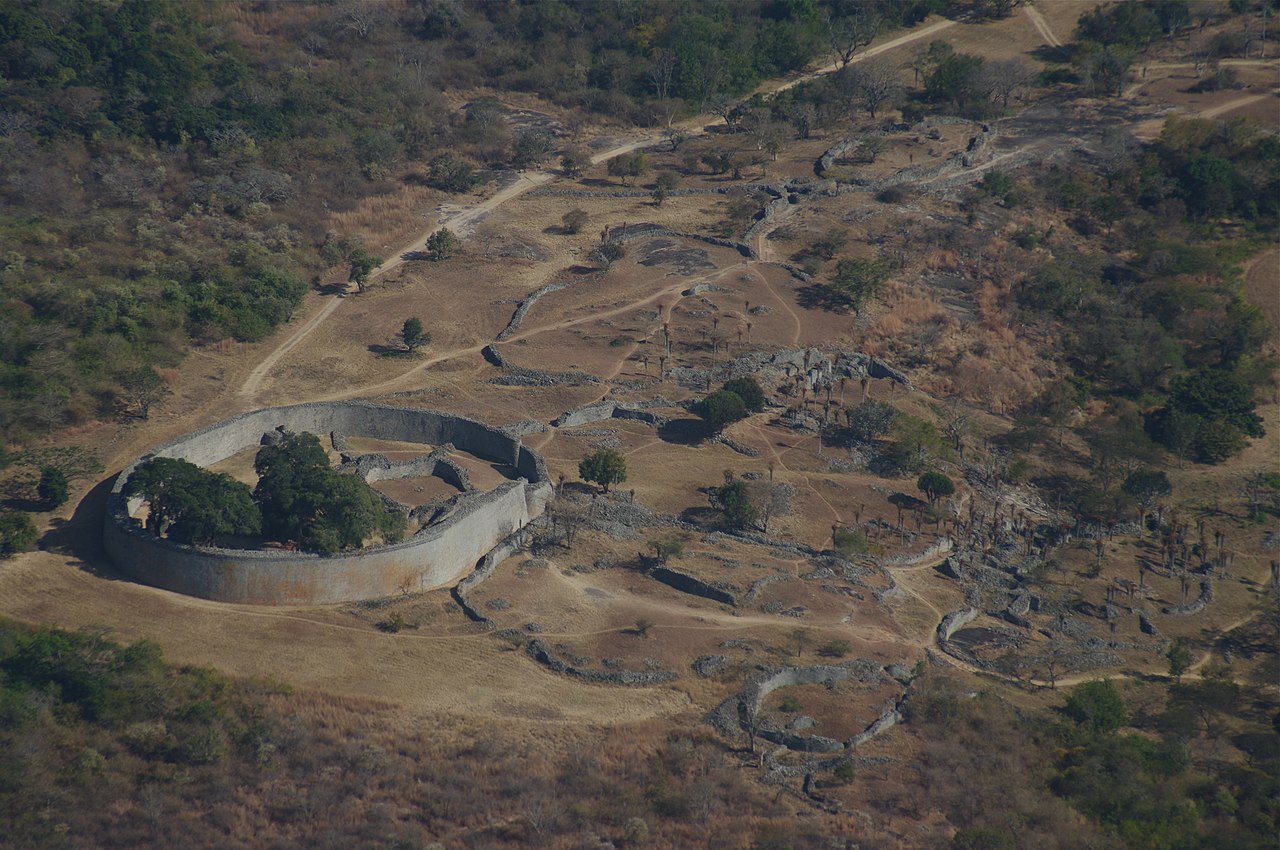


Site layout and architecture
Archaeologists divide the ruins into several major zones, notably the Hill Complex, the Great Enclosure and surrounding valley or ridge settlements. The most striking features are extensive dry-stone walls built without mortar: carefully dressed stone blocks were fitted together to form retaining walls, free-standing enclosures and terraces. Some walls reach heights of over five metres and display refined curving profiles and courses. Such mortarless masonry reflects local building traditions and substantial investment of labour and resources in monumental architecture; researchers often discuss these techniques under topics such as mortarless masonry.
Population and social organization
Estimates of the area enclosed by the stone works suggest the settlement and its associated habitations extended across several hundred hectares, with some reconstructions proposing a peak population in the thousands. The site appears to have contained elite or royal precincts, craft workshops, storage and domestic zones, and places with ritual or symbolic importance. Carved soapstone birds and other symbolic objects recovered at the site are frequently interpreted as expressions of local authority and identity.
Economy, resources and trade
Great Zimbabwe occupied a landscape rich in cattle pastures and mineral resources, notably gold, and its leaders seem to have controlled production and exchange. The site produced pottery, iron goods and evidence of gold-working, and it participated in long-distance commerce. Excavations have recovered imported beads, ceramics and other objects that indicate connections with coastal Swahili trading towns and, via Indian Ocean networks, items from distant regions including material whose origins suggest indirect links with places such as China. Control of inland-coast trade routes contributed to the polity's wealth and influence extending toward areas later described in colonial sources as near the Transvaal and Botswana.
History, dating and research
Construction at Great Zimbabwe began in the medieval period, commonly dated from about the 11th century and continuing through at least the 14th century. The polity centered on the site is often called the Kingdom of Zimbabwe in modern scholarship. European awareness of the ruins appears in early Portuguese accounts; a 1531 Portuguese notice recorded the place under a form of the name, and nineteenth-century explorers and colonial scholars later undertook more detailed description and excavation. Early colonial interpretations often promoted non-African authorship for the stonework, but subsequent systematic excavations and improved dating and contextual research have demonstrated that local peoples associated with Shona cultural and linguistic traditions were the builders. Important documentary and interpretive traditions include early Portuguese references and later Portuguese and European accounts that shaped debate.
Rediscovery, interpretation and conservation
Investigations intensified from the late 19th century, and archaeological fieldwork in the 20th and 21st centuries has refined chronological sequences and interpretations. Scholars combine stratigraphic excavation, ceramic analysis, architectural study and limited absolute dating methods to chart growth, decline and functions of the site. Conservation and heritage management are important aspects of the site's modern life: Great Zimbabwe is protected as a national monument, forms a major component of national identity for Zimbabwe, and attracts both visitors and ongoing research attention. Interpretive materials and museum displays help present artifact assemblages and local perspectives to the public.
Significance and further study
Great Zimbabwe remains a central case for understanding indigenous state formation, craft production and long-distance exchange in southern Africa's medieval period. While specific details such as the site's maximum population, internal political structure and precise reasons for its decline continue to be studied, there is broad agreement that it was an indigenous, sophisticated centre. For broader context consult works on African Iron Age contexts, studies of regional trade networks, and technical analyses of building methods such as dry-stone construction. Regional histories and archaeological syntheses also situate Great Zimbabwe within long-term developments affecting southern Africa and the Indian Ocean world.
Readers seeking primary sources and early descriptions may refer to surviving accounts from Portuguese observers and later European travellers, and to contemporary archaeological reports that synthesise field evidence and scientific dating methods.
Questions and answers
Q: What is Great Zimbabwe?
A: Great Zimbabwe is a ruined city in the south-eastern hills of Zimbabwe. It was the capital of the Kingdom of Zimbabwe during the country’s later Iron Age and covered an area of 722 hectares (1,780 acres).
Q: When did construction at Great Zimbabwe begin?
A: Construction at Great Zimbabwe began in the 11th century and continued until the 14th century.
Q: What were some features of Great Zimbabwe?
A: Some features of Great Zimbabwe included its walls, which were constructed without mortar and could be up to five metres high. The city also controlled trade between the coast and inland Africa.
Q: How many people might have lived at Greater Zimbabwe?
A: Up to 18,000 people may have lived at Greater Zimbabwe.
Q: Where was Greater Zimbabwe located geographically?
A: Greater Zimbawe was located near Mozambique in southeast Africa, with its kingdom including parts of Botswana, Transvaal, and River Zambezi in the north.
Q: Who first wrote about Great Zimbawe?
A: Vicente Pegado, Captain of the Portuguese garrison of Sofala, recorded it as Symbaoe in 1531 - making him one of earliest known written mentions about it.
Q: When did Europeans first visit Great Zimbawe?
A: Europeans first visited Great Zimbawe in late 19th century with investigations beginning in 1871.
Related articles
Author
AlegsaOnline.com Great Zimbabwe: ruined capital and dry-stone city of southern Africa Leandro Alegsa
URL: https://en.alegsaonline.com/art/40573
Sources
- books.google.com : Mapungubwe Cultural Landscape