
Great Leap Forward (China, 1958–1961)
A Chinese campaign initiated by Mao Zedong to rapidly industrialize and collectivize the countryside; policy failures and disastrous harvests produced a famine that killed millions and reshaped Chinese policy.
The Great Leap Forward was a nationwide campaign launched in the People's Republic of China in 1958 with the aim of rapidly transforming the country’s agrarian economy into a modern, industrialized socialist society. It is commonly referred to by its Chinese name (大跃进) and its pinyin transcription. The movement was driven by Communist Party leadership under Mao Zedong and emphasized accelerated industrial output alongside large-scale agricultural collectivization intended to boost overall economic growth.
Image gallery
10 Images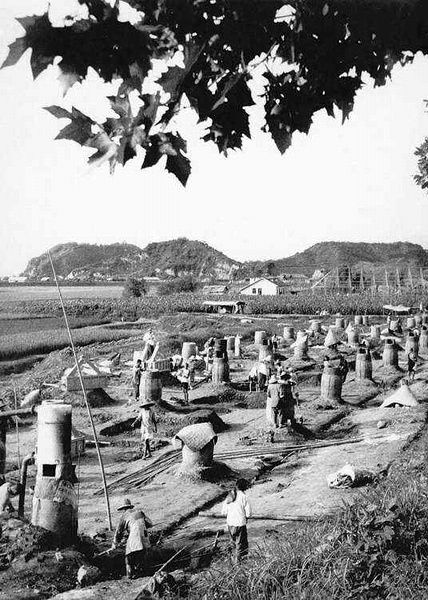




Core policies and characteristics
The Great Leap Forward combined political mobilization with structural change in rural and urban production. Major elements included:
- Formation of large people's communes that merged land, labor and resources and replaced earlier cooperative arrangements.
- Campaigns to increase steel production, notably the establishment of local "backyard furnaces" to melt down metal for rapid industrial output.
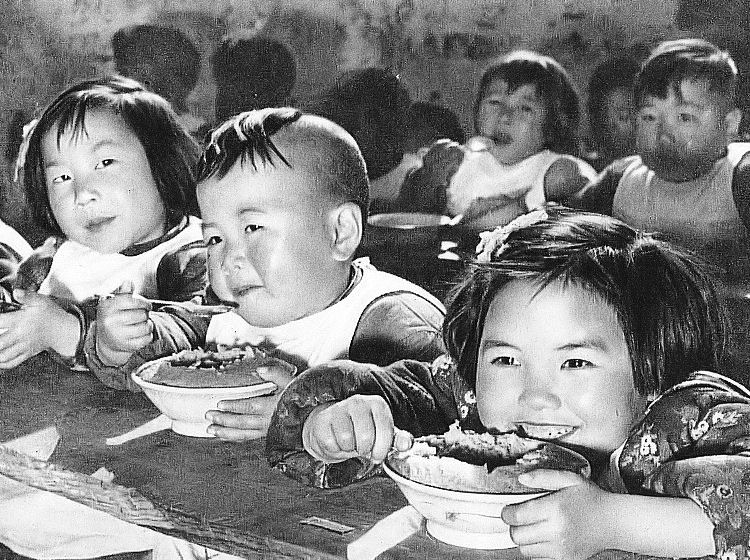
- Changes to agricultural practice, including communal dining, centralized procurement, and aggressive targets for grain and other crop yields.
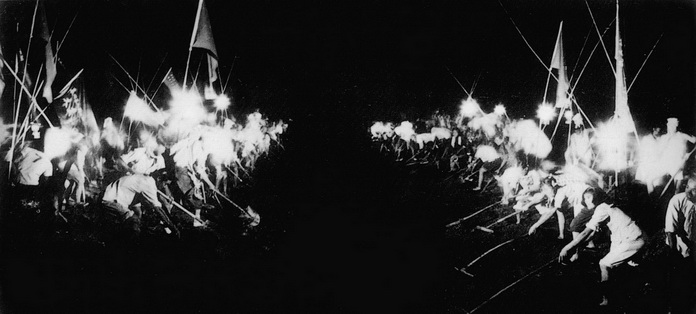
- Mass mobilization drives and political incentives that rewarded reported overachievement, sometimes encouraging inflated production figures.
Causes of the crisis
Policies of the Great Leap Forward interacted with environmental and administrative factors in ways that produced severe food shortages. Contributing elements included exaggerated production reports that led to excessive grain requisition, the disruption of traditional farming practices, poor quality industrial outputs that wasted labor, and weather problems in some regions. These dynamics, together with state procurement and distribution priorities, helped precipitate a widespread famine.
Consequences and legacy
The campaign was effectively curtailed by 1961 after widespread crop failures and economic dislocation. The resulting famine caused deaths on a very large scale; estimates vary and remain the subject of research and debate, but scholars agree that the human toll was severe. Politically, the failure weakened Mao’s standing for a time and contributed to policy reversals by other leaders who sought to restore agricultural production and stabilize the economy.
Historical assessment and debates
Historians and economists analyze the Great Leap Forward through several lenses: as a case of overambitious planning and flawed incentives, as an example of how political pressures can distort information flows and decision-making, and as a tragic episode in which policy and circumstance combined to create mass suffering. The event is a major point of study for understanding post‑1949 Chinese governance, rural transformation, and the limits of rapid industrialization campaigns.
For further reading on specific aspects—administrative organization, technical failures like the backyard furnaces, and regional variations in outcomes—see specialized studies and archival work that examine how local implementation and central directives interacted during the late 1950s and early 1960s.
Economy background • Industrial aims • Leadership • Famine studies
Questions and answers
Q: What was the Great Leap Forward?
A: The Great Leap Forward was a plan created by Chairman Mao Zedong to increase China's economy and industry.
Q: When did the Great Leap Forward start and end?
A: The Great Leap Forward started in 1958 and ended in 1961.
Q: Was the Great Leap Forward successful?
A: No, the Great Leap Forward failed to bring industrialization and resulted in a famine that killed millions of people.
Q: What is the significance of the Great Leap Forward in China's history?
A: The Great Leap Forward is significant because it had a devastating impact on China's economy and population. It led to one of the biggest famines in history.
Q: Who was responsible for starting the Great Leap Forward?
A: Chairman Mao Zedong was responsible for starting the Great Leap Forward.
Q: What was the purpose of the Great Leap Forward?
A: The purpose of the Great Leap Forward was to increase China's economy and industry.
Q: When did the Great Leap Forward famine occur?
A: The Great Leap Forward famine occurred during the period of 1958 to 1961 while the Great Leap Forward was being implemented.
Tags
Related articles
Author
AlegsaOnline.com Great Leap Forward (China, 1958–1961) Leandro Alegsa
URL: https://en.alegsaonline.com/art/40520
Sources
- chronicle.uchicago.edu : "China's Great Leap Forward"
- books.google.com : "China's past, China's future: energy, food, environment"
- sjsu.edu : "The Great Leap Forward Period in China, 1958-1960"
- countrystudies.us : "The Great Leap Forward, 1958 - 1960"