
Great crested newt (Triturus cristatus)
A large European amphibian with warty skin and a jagged dorsal crest. Lives terrestrially outside the breeding season and breeds in ponds; protected across much of its range due to habitat loss.
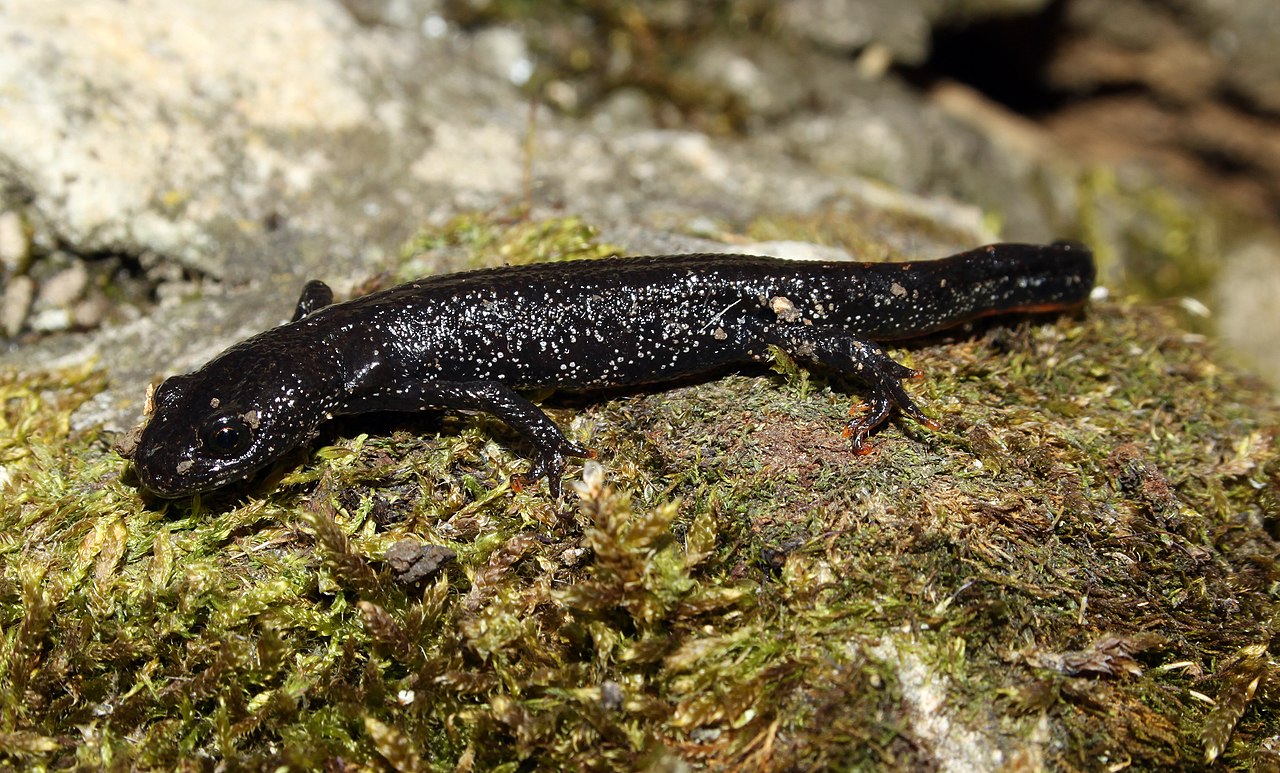
The great crested newt (Triturus cristatus) is a distinctive amphibian of the family Salamandridae. It is native to much of Europe, extending eastward toward the Ural Mountains. Recognizable by its rough, warty skin and the pronounced saw-toothed crest that males develop in the breeding season, the species is primarily aquatic during spring and early summer but otherwise leads a largely terrestrial life.
Image gallery
10 Images





Description and life cycle
Adults are comparatively large for newts, with many individuals reaching lengths of around 10–16 cm. Females are often as large as or larger than males. Males develop a conspicuous crest along the back and tail when in water, whereas females retain a smoother profile. The underside is frequently orange to red with irregular dark blotches, a useful field mark when handling is unavoidable for survey work.
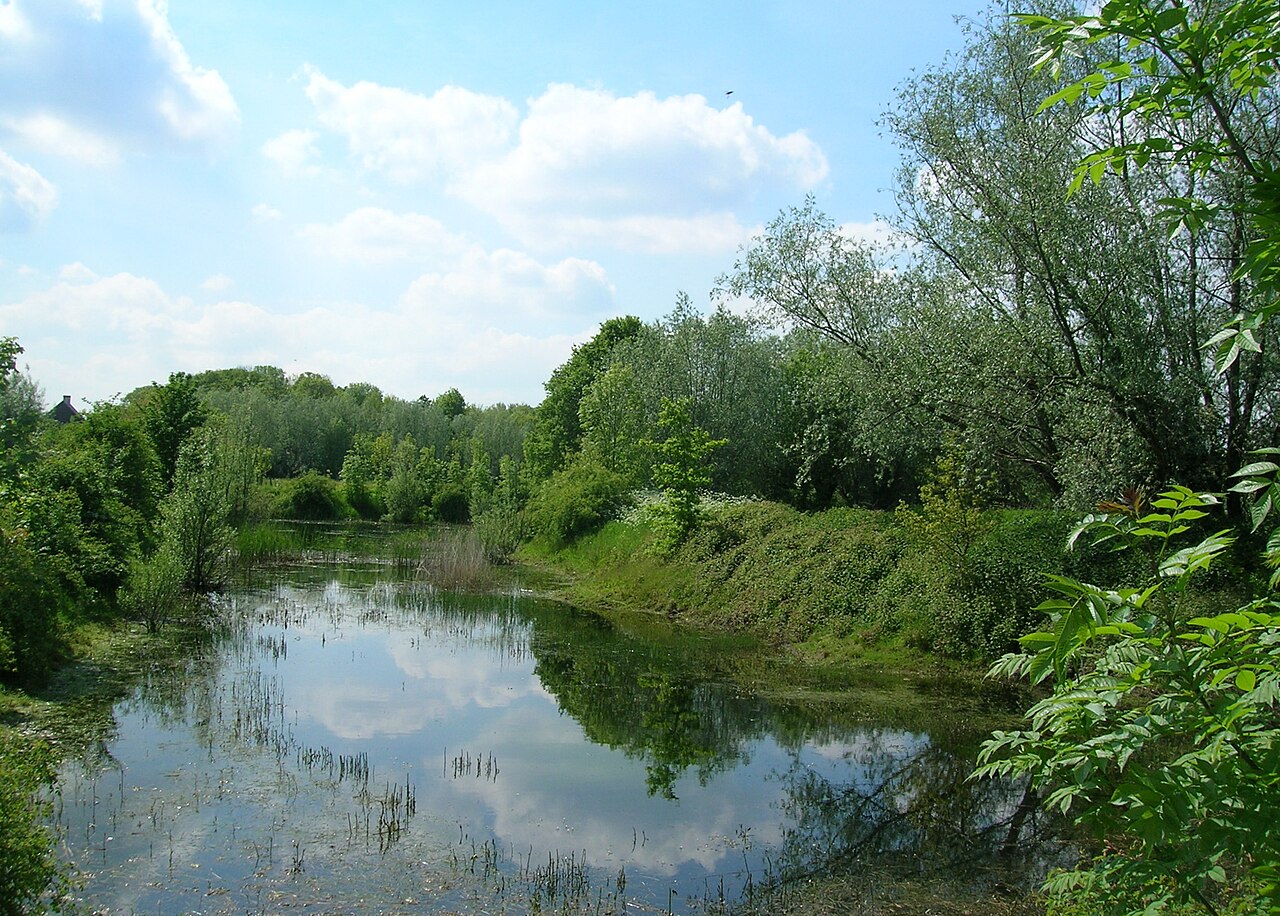
Breeding takes place in ponds, pools and slow-moving waterbodies. Courtship involves visual displays and the transfer of spermatophores; females lay single eggs, wrapping each one in a leaf of aquatic vegetation. Larvae hatch with external gills and remain aquatic until metamorphosis, after which young newts (efts) move onto land. Adults typically hibernate during cold months in terrestrial refuges such as logs, mammal burrows or root hollows.
Habitat and distribution
The species uses a mix of aquatic and terrestrial habitats. Suitable breeding sites are ponds with abundant submerged plants and without predatory fish; nearby terrestrial habitat of rough grassland, hedgerows, woodland edge and scrub provides feeding and shelter. Populations occur in a variety of landscapes across western, central and parts of eastern Europe, but local availability of both pond and good terrestrial habitat dictates where the species persists.
Threats and conservation
Populations have declined in many areas as a result of pond loss or degradation, intensive agriculture, urban development, habitat fragmentation and the introduction of fish that prey on eggs and larvae. Because of these pressures, the great crested newt is legally protected in many countries and under international agreements; developers and land managers often need to assess and mitigate impacts before altering known or potential habitat (protection and planning).
- Typical conservation measures: creation and restoration of fish-free ponds, maintenance of terrestrial habitat corridors, controlled grazing or scrub management, and amphibian-friendly road-crossing solutions.
- Monitoring: population surveys in spring using standard techniques help inform management and planning decisions.
Identification and similar species
Although unmistakable when the male crest is present, the great crested newt can be confused with other Triturus and Lissotriton species outside the breeding season. Key distinguishing features include its size, rough textured skin, bold belly coloration, and the high serrated crest of breeding males. Where ranges overlap, careful comparison of dorsal patterning and belly spotting, together with habitat and seasonal timing, aids correct identification.
Importance and notable facts
Beyond its intrinsic ecological role as an insectivore and prey item in wetland communities, the great crested newt is often regarded as an indicator of high-quality pond and terrestrial habitat. Its protected status has made it emblematic of wider efforts to conserve amphibian-rich landscapes and the small-scale waterbodies that sustain them. Practical conservation combines safeguarding breeding ponds with maintaining connected, sheltered terrestrial areas to support the full life cycle.
For further general information and guidance on survey and protection best practice, see resources provided by national and regional conservation bodies and amphibian organisations linked to species accounts and habitat guidance (species overview, family information, distribution notes, legal frameworks).
Questions and answers
Q: What is a great crested newt?
A: A great crested newt is a relatively large newt species found mainly across Europe.
Q: How big can female great crested newts grow?
A: Females can measure up to 16 cm, and are larger than males, which are 14 to 15 cm long.
Q: Why is the great crested newt considered a protected species?
A: The great crested newt is considered a protected species in the UK and Europe due to land development, population growth, and agriculture disturbing their natural habitat, and their rarity.
Q: Where do great crested newts breed?
A: The great crested newt breeds in ponds and pools but generally lives on land.
Q: What do great crested newt larvae eat?
A: Great crested newt larvae eat small invertebrates and eventually turn into air-breathing young efts and move onto land.
Q: How do great crested newts survive the winter?
A: Great crested newts hibernate through the winter.
Q: What other names are the great crested newt known as?
A: The great crested newt is also known as the northern crested newt or warty newt (Triturus cristatus).
Related articles
Author
AlegsaOnline.com Great crested newt (Triturus cristatus) Leandro Alegsa
URL: https://en.alegsaonline.com/art/40486
Sources
- iucnredlist.org : "Triturus cristatus (Great Crested Newt, Northern Crested Newt)" · web.archive.org