
Grade (slope) of a road or railway
The grade (or gradient) measures how steep a road, track or terrain is. Presented as a percentage, ratio, per mille or angle, it affects design, safety and vehicle performance.
Overview
The grade, often called the gradient or slope, quantifies how quickly a surface rises or falls over a horizontal distance. It is a fundamental concept in civil engineering, transport planning and geography. The term appears in contexts ranging from highways and local streets to railway lines and trails. For other meanings and broader uses see the gradient disambiguation page.
Image gallery
10 Images


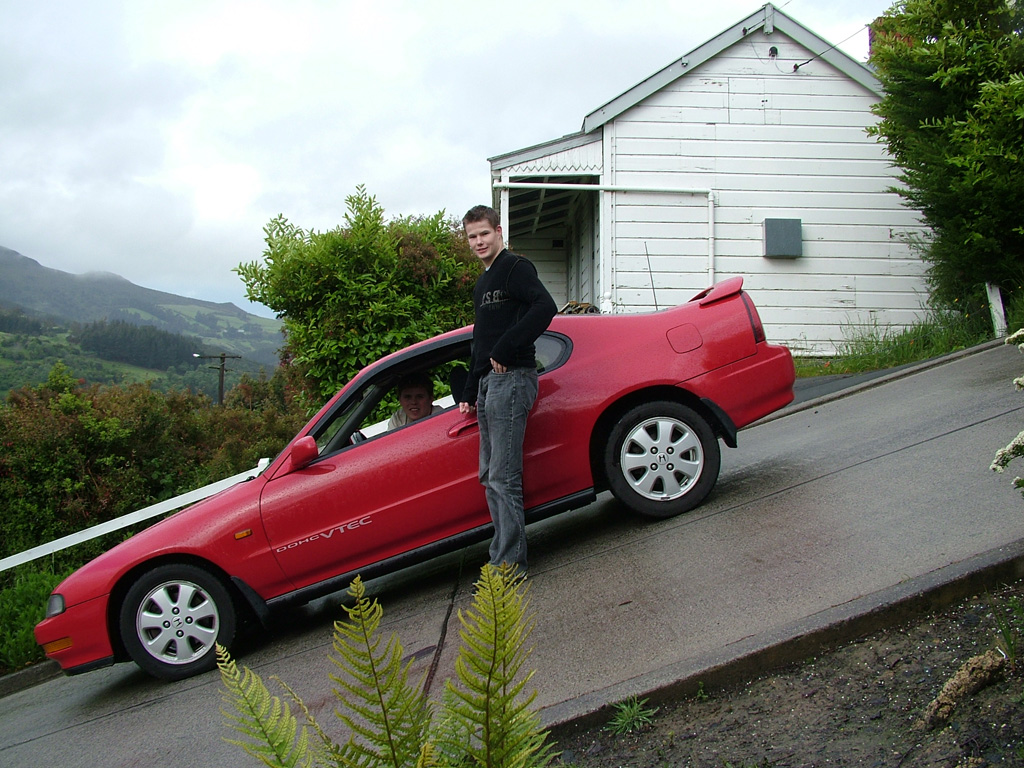

How grade is expressed
Grade can be reported in several equivalent ways:
- Percent: rise divided by run times 100 (for example, a 1% grade rises 1 unit for every 100 units traveled horizontally).
- Ratio or "1 in n": written as 1 in 100 for a 1% incline, indicating one unit of vertical change per 100 units horizontal.
- Per mille (‰): common in some railway and engineering documents; 10‰ equals 1%.
- Angle: the slope may be given in degrees, where the angle θ satisfies tan(θ) = rise/run (a 1% grade corresponds to about 0.57°).
Applications and practical importance
On roads, grade affects vehicle speed, braking distances, fuel consumption and drainage design. Road designers try to limit sustained steepness to improve safety and accessibility, although short, steep sections occur in hilly urban areas. Warning signs, lower-gear recommendations and emergency escape ramps for heavy vehicles are common measures on steep stretches. For railways, gradients are particularly critical because steel wheel on steel rail provides limited traction; conventional adhesion railways therefore keep grades low, while rack railways, funiculars or cable systems are used where much steeper climbs are required.
Design, measurement and examples
Engineers measure grade with surveying instruments, digital elevation models, GPS and lidar. In road design, transient steepness, sight distance and drainage must be balanced against cut-and-fill earthworks and cost. Typical maximums vary by system: major highways generally use gentler grades than local streets; railways normally use very small percentages unless special systems are employed. Long-term maintenance and pavement wear are also influenced by repeated heavy braking and acceleration on steep grades.
Distinctions and notable facts
The words "slope," "grade," and "gradient" are often used interchangeably, but usage can differ by discipline—"grade" is common in transport engineering, while "slope" and "gradient" appear in mathematics and geology. Converting between representations is straightforward: percent = (rise/run) × 100 and angle = arctan(rise/run). Understanding grade is essential for route planning, safety assessments and any project where elevation change interacts with movement or water flow.
For further technical standards and examples specific to highways, railways and trail design, consult engineering references or regional guidelines available through transport authorities and professional publications.
Questions and answers
Q: What is the grade or slope of a road or railway line?
A: The grade or slope of a road or railway line is a measure of its steepness.
Q: How can the grade or slope of a road or railway line be expressed?
A: The grade or slope of a road or railway line can be expressed as a percentage or in other ways.
Q: What is an example of expressing the gradient of a road or railway line?
A: An example of expressing the gradient of a road or railway line is a gradient of 1%, which can also be expressed as 1 in 100.
Q: What does a gradient of 1 in 100 mean?
A: A gradient of 1 in 100 means that the road rises or falls by 1 metre for every 100 metres of forward travel.
Q: How is the steepness of a road or railway line measured?
A: The steepness of a road or railway line is measured by the grade or slope.
Q: What is another name for the term "grade"?
A: Another name for the term "grade" is "gradient".
Q: Does the term "grade" have any other meanings?
A: Yes, the term "grade" can have other meanings, for which the term "Gradient (disambiguation)" is used.
Related articles
Author
AlegsaOnline.com Grade (slope) of a road or railway Leandro Alegsa
URL: https://en.alegsaonline.com/art/40059