
Governor of New South Wales: history, role and contemporary practice
Comprehensive overview of the Governor of New South Wales: origins from 1788, constitutional and ceremonial functions, reserve powers, residence, appointment, and notable holders up to modern practice.

The Governor of New South Wales is the monarch's representative in the Australian state of New South Wales and one of the oldest continuous vice‑regal offices in Australia. Established with the arrival of the First Fleet in 1788, the office has evolved from a colonial governorship with broad executive authority into a constitutional and ceremonial role that ordinarily acts on ministerial advice while retaining limited reserve powers for exceptional circumstances. The office is central to the state's constitutional arrangements and public life, combining legal duties with ceremonial, community and symbolic responsibilities.
Image gallery
10 Images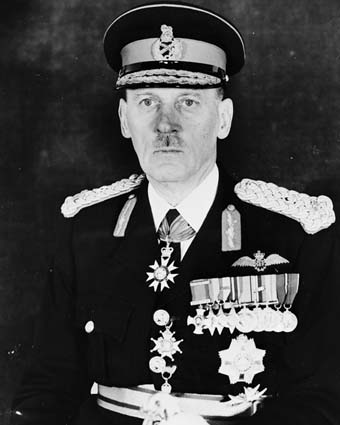




Origins and early development
The office began when Captain Arthur Phillip RN became the first governor on 7 February 1788 following the foundation of the Colony of New South Wales. In the early decades the governor exercised extensive powers across executive, judicial and administrative spheres because slow communications with Great Britain made immediate oversight impractical. As the colony grew, institutions developed to moderate and share authority: an appointed New South Wales Legislative Council was established in 1824 to advise and assist the governor, an early step toward representative government and part of what has been described as one of Australia's first legislatures.
Throughout the 19th century the vice‑regal role adapted to changing imperial and colonial arrangements. For a period in the mid‑19th century the title was sometimes styled Governor‑General in relation to inter‑colonial administration. As other colonies such as South Australia, Tasmania and Victoria established their own gubernatorial appointments, the modern pattern of separately appointed state governors emerged and the office became embedded in local constitutional practice.
Constitutional role and functions
Constitutionally, the governor is the formal source of executive power in New South Wales and performs legal acts in the name of the Crown. In practice, almost all powers are exercised on the advice of the elected government led by the Premier of New South Wales. Routine functions include giving royal assent to legislation, appointing ministers and judges, issuing writs for elections, opening and proroguing parliament and presiding over Executive Council meetings. The appointment of a governor is made by the sovereign on the advice of the state government; conventions guide nomination and term arrangements, which are usually for a fixed period agreed at appointment.
The office also preserves so‑called reserve powers, discretionary authorities that may be used without or contrary to ministerial advice in highly exceptional situations to protect constitutional government. The most notable use of reserve powers in New South Wales occurred in 1932, when the governor dismissed the premier during a serious constitutional and financial crisis; that event remains a significant precedent and is frequently cited in discussions about the limits of vice‑regal discretion. The exercise of such powers is rare and controversial because it can override ordinary democratic processes.
Appointment, tenure and the lieutenant‑governor
Governors are formally appointed by the sovereign on the advice of the state premier. While the sovereign remains the legal source of authority, selection and dismissal are managed locally in line with constitutional convention. Terms are normally for a specified period and may be renewed by agreement. If the governor dies, resigns or is unavailable, the duties are performed by the lieutenant‑governor or an administrator appointed for that purpose; this ensures continuity of constitutional government.
Residence, office and official life
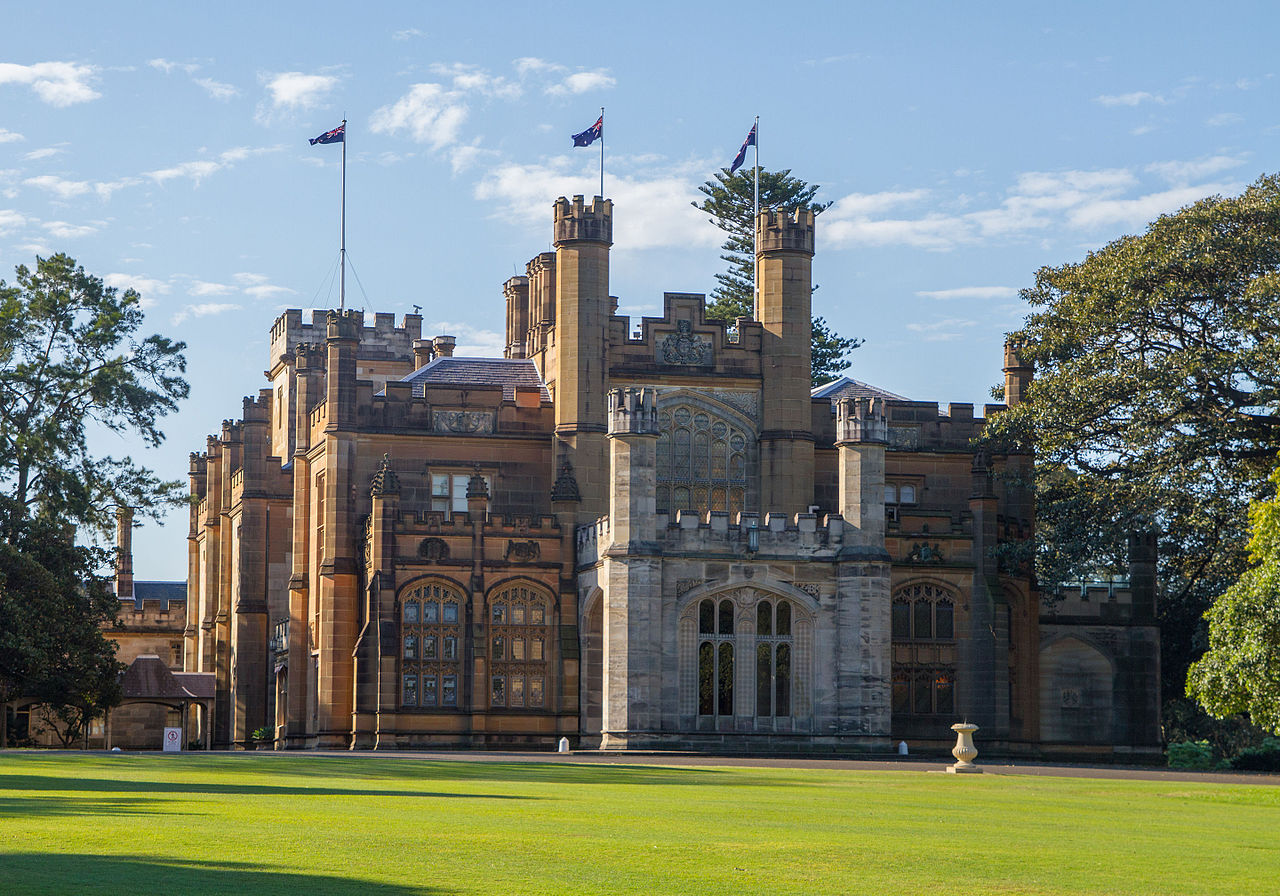
Government House has traditionally served as the principal vice‑regal residence and venue for official receptions. In recent decades administrative arrangements have sometimes located parts of the vice‑regal staff and offices in other heritage buildings — notably the Chief Secretary’s Building on Macquarie Street — while Government House continued as the symbolic home of the office. In 2011 the state premier at the time, Barry O'Farrell, announced plans to re‑establish Government House as an active vice‑regal residence and venue for official functions, reaffirming its ceremonial and representational role.
Day‑to‑day the governor undertakes ceremonial duties, acts as patron to charities and community organisations, hosts visiting dignitaries, presents honours and awards, and represents New South Wales at national and international events. Vice‑regal insignia such as a governor's flag, formal uniforms on ceremonial occasions and official banners continue to mark the office's distinctive status.
Notable holders and historical notes
Arthur Phillip's appointment in 1788 makes the office one of the oldest continuous political institutions in Australia. The first Australian‑born person to serve as governor of any Australian state was Lieutenant General Sir John Northcott in 1946. Since that time most governors of New South Wales have been Australian‑born; exceptions include individuals such as Gordon Samuels, who was born overseas but lived most of his life in Australia. Lieutenant General Sir Eric Woodward, appointed in the 1950s, was the first governor born in New South Wales.
The lieutenant‑governor or an appointed administrator performs the governor's duties if the office is vacant or the incumbent is unable to act. Over more than two centuries the office has adapted from a powerful colonial governorship to a constitutional and ceremonial role within a modern parliamentary democracy, preserving conventions and occasionally prompting debate about the balance between legal authority and democratic accountability.
Further reading and resources
For more detailed discussion of constitutional conventions, historical episodes and the vice‑regal wardrobe of practices see dedicated archival collections and constitutional analyses. A selection of entries and resources that provide context and primary documents can be found via the linked references and institutional archives, including contemporary commentaries and historical records: early office overview, imperial context, legislative origins, parliamentary history, inter‑colonial relations, Tasmanian developments, Victorian arrangements, office of the premier, recent residential changes and the archival index entry colony foundation material. For reference purposes one archival identifier appears in some catalogues as 77782.
Questions and answers
Q: Who was the first Governor of New South Wales?
A: Captain Arthur Phillip RN became the first Governor of New South Wales on 7 February 1788.
Q: What was the title of the first legislature in Australia?
A: The first legislature in Australia was called the New South Wales Legislative Council.
Q: When did other colonies replace their Lieutenant-Governors with Governors?
A: Other colonies replaced their Lieutenant-Governors with Governors when they became independent - South Australia in 1836, Tasmania January 1855 and Victoria May 1855.
Q: How long did Sir William Denison keep the title of Governor-General?
A: Sir William Denison kept the title of Governor-General until his retirement.
Q: What is the role of the Premier of New South Wales?
A: The Governor acts on the advice of the head of the elected government, which is known as the Premier of New South Wales.
Q: When was Government House used as a home, office and official reception space by governors? A: Government House was used as a home, office and official reception space by governors until 1996.
Q: Who was Australia's first Australian-born governor? A: The first Australian-born governor (or any Australian state) was Lieutenant General Sir John Northcott in 1946.
Related articles
Author
AlegsaOnline.com Governor of New South Wales: history, role and contemporary practice Leandro Alegsa
URL: https://en.alegsaonline.com/art/39993
Sources
- parliament.nsw.gov.au : History of the Legislative Council
- federationpress.com.au : The chameleon Crown: The Queen and her Australian governors
- dailytelegraph.com.au : "Governor Marie Bashir makes a grand return home to Government House"
- meme.com : "Meme.com | The Meme Factory -- Software Design Company"