
Government Communications Headquarters (GCHQ)
GCHQ is the United Kingdom's signals intelligence and cybersecurity agency, responsible for interception and analysis of communications, cryptanalysis, secure communications, and national cyber defence.
The Government Communications Headquarters (GCHQ) is the United Kingdom’s principal organisation for signals intelligence and information assurance. Established in the aftermath of the First World War and developed through the Second World War era, GCHQ continues a technical tradition linked to Bletchley Park — the wartime centre for codebreaking and cryptanalysis — which it now commemorates in public history and institutional continuity. GCHQ is often described in public sources as a signals intelligence agency, while also performing roles in cybersecurity, research and advice to government and industry.
Image gallery
3 Images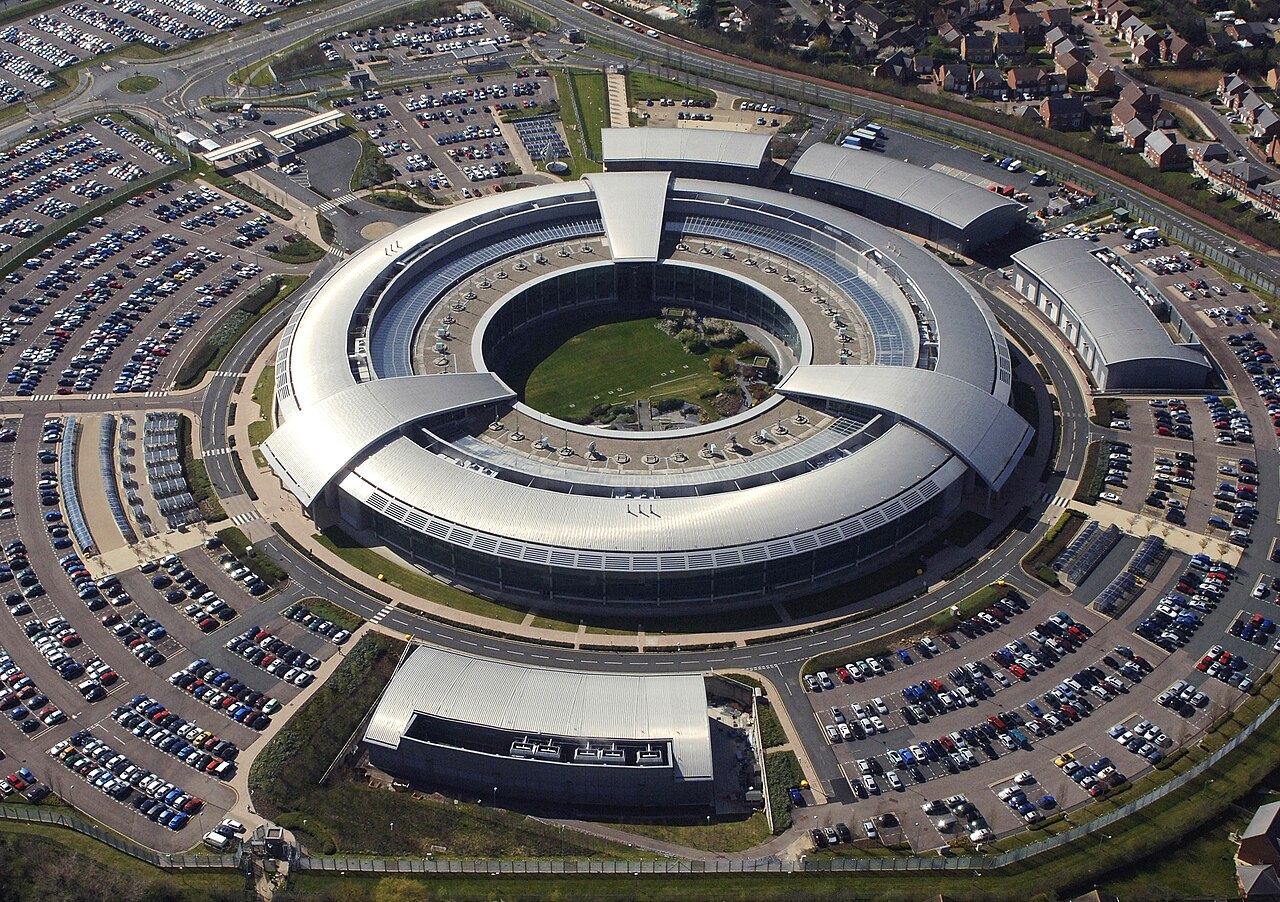


Primary functions
GCHQ’s work can be grouped into several technical and advisory areas. Broadly speaking, the organisation is responsible for collecting and analysing electronic communications and other signal-borne information, providing intelligence to support national security and defence, and helping to protect UK communications infrastructure.
- Signals intelligence (SIGINT): Interception, processing and analysis of communications and electronic signals to produce intelligence on threats, foreign policy and military activities.
- Cryptanalysis and cryptography: Research and operational effort to break foreign codes and ciphers and to design or advise on secure communications systems. Historically this role follows the work of wartime codebreakers at Bletchley Park.
- Cybersecurity and information assurance: Operational response to cyber incidents, defensive guidance for government and industry, and national-level cyber resilience advice; the former Communications-Electronics Security Group (CESG) became part of the National Cyber Security Centre in 2016.
- Technical research: Long-term investment in mathematics, computer science and engineering to sustain cryptanalytic and signals analysis capabilities.
Methods and tools
GCHQ employs automated systems to filter and analyse large volumes of data, using keyword detection, pattern recognition, and advanced analytics to flag material of interest. Human analysts then assess and contextualise results. The organisation studies both visible, free-to-air broadcasts and covert communications, applying cryptographic techniques to decrypt or secure information. Historically the distinction between cyphers and codes was significant in cryptanalysis, with modern practice encompassing a broader set of cryptographic protocols and implementations. The agency also develops secure systems and guidance to protect sensitive government communications and networks, drawing on expertise in cryptography.
History and partnerships
GCHQ traces its origins to early 20th-century wartime code units and gained public prominence through the achievements of Bletchley Park during the Second World War. Since then it has evolved into a technical intelligence service integrated with the UK’s wider intelligence community. GCHQ collaborates closely with allied agencies and participates in multinational intelligence-sharing arrangements; these partnerships extend to tactical cooperation on cyber incidents, shared research programmes and combined operational activity in support of common security objectives.
Oversight, law and controversies
As a state intelligence service, GCHQ operates under statutory frameworks and parliamentary oversight intended to balance national security needs with civil liberties. Domestic and international debates have periodically focused on the scope of interception powers, data retention and privacy — particularly since public disclosures about global surveillance programmes in the 2010s. Legislative instruments and oversight bodies aim to provide legal authorisation and independent review of intrusive capabilities.
Today GCHQ presents a mix of traditional signals intelligence, front-line cyber defence and advanced technical research. Its activities affect military planning, diplomatic intelligence, law enforcement support and national infrastructure protection. While the balance between secrecy and public accountability remains a recurring theme, GCHQ’s role as a technical hub for cryptanalysis and cyber expertise is a defining feature of the modern UK intelligence landscape.
Further reading and official materials may be found through agency publications and government information portals; for institutional and historical summaries see primary sources and curated archives. Official overview, historical context, and technical introductions are commonly available from government and educational resources. For partnerships and international frameworks consult relevant public statements by allied services and oversight bodies. Cypher history, codebreaking case studies, and cryptography primers provide accessible background on the technical subjects central to GCHQ's mission.
Questions and answers
Q: What is GCHQ?
A: GCHQ is a British intelligence agency.
Q: What does GCHQ do?
A: GCHQ collects, analyses and passes on signals from around the world, as well as cracking cyphers and arranging secure transmissions.
Q: What is "signals intelligence"?
A: Signals intelligence (SIGINT) is the collection of all forms of free-to-air signals and many interceptions of covert communication.
Q: How does GCHQ scan signals?
A: GCHQ uses computers to scan the signals for key words or phrases, and flags any which contain key words.
Q: What is cryptography?
A: Cryptography is the ways and means of getting into other people's secrets, and keeping our secrets secure.
Q: Who is responsible for secure coding of transmissions?
A: The Communications-Electronics Security Group (CESG) is responsible for secure coding of transmissions.
Q: Who guides GCHQ as an organisation?
A: GCHQ is under the guidance of the Joint Intelligence Committee (JIC) as an organisation.
Related articles
Author
AlegsaOnline.com Government Communications Headquarters (GCHQ) Leandro Alegsa
URL: https://en.alegsaonline.com/art/39937
Sources
- official-documents.gov.uk : Intelligence and Security Committee of Parliament Annual Report 2012–2013