
Andrei Sakharov: Soviet Physicist, Dissident, and Human Rights Advocate
Overview of Andrei D. Sakharov (1921–1989): his scientific work on thermonuclear weapons and cosmology, evolution into a leading Soviet dissident, Nobel Prize, exile, and enduring legacy.
Andrei Dmitrievich Sakharov (Russian: Андре́й Дми́триевич Са́харов) was a Soviet scientist and public figure whose career spanned major contributions to physics and an influential role in human rights and political reform. Born in 1921 (May 21, 1921) and dying in 1989 (December 14, 1989), Sakharov became widely known both as a nuclear physicist in the Soviet research establishment and later as a dissident critic of Soviet policy.
Image gallery
9 Images





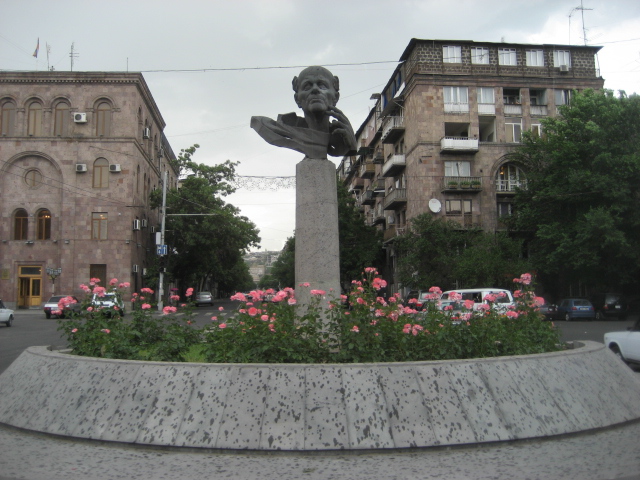

Scientific contributions
Sakharov trained and worked as a nuclear physicist and played a central role in the Soviet thermonuclear weapons program in the 1940s and 1950s. His technical leadership helped advance the design of fusion-based devices, and his name is associated with several theoretical and practical innovations. Beyond weapons work, Sakharov made contributions to particle physics and cosmology; he proposed ideas about baryon asymmetry in the early universe that remain influential in theoretical physics.
From scientist to dissident
In the 1960s and 1970s Sakharov became increasingly outspoken about the moral and political implications of scientific work and state power. He criticized nuclear proliferation and called for nuclear disarmament, and he pushed for greater transparency and legal protections for citizens. As his public stance hardened, he was identified as a prominent dissident and a leading voice for human rights in the Soviet context. His advocacy extended to issues of civil liberties and political reform, and he published essays and open letters that circulated among Western and Soviet audiences.
Persecution, exile, and recognition
Sakharov's dissent led to state reprisals: he faced surveillance, professional restrictions, and in 1980 was sent into internal exile. During that period he remained a symbol for the international human rights movement and received global recognition, including the Nobel Peace Prize. His case became a focal point for campaigns by colleagues, family, and international organizations pressing for his release and for broader reforms in the Soviet system.
Legacy and importance
Sakharov returned from exile in the mid-1980s as political reforms accelerated in the Soviet Union. He continued to speak for democratic change and an open society until his death. His legacy is multifaceted: he is remembered as a brilliant scientist who later applied moral reflection to public life, as a catalyst for the human rights movement inside and outside the Soviet Union, and as a symbol of the ethical responsibilities of scientists. Institutions, awards, and public commemorations in many countries keep his memory alive.
Notable facts and further reading
- Often described as a founder of the Soviet hydrogen-bomb project and later a leading advocate for disarmament and reform.
- Recipient of international honors for his human rights work; his public stance made him a central figure in late Cold War civic discussion.
- For introductions and documents related to his life and writings, see resources linked here: biographical notes, chronology, early years, later life, death and legacy, and topical collections on the Soviet era and science.
- Additional topical links: scientific work (physics), public dissidence (dissent), human rights (rights), disarmament (disarmament), and civil freedoms (civil liberties).
The story of Andrei Sakharov illustrates the complex relationship between scientific achievement and ethical responsibility, and how a professional life can evolve into a public mission with long-lasting political and moral consequences.
Questions and answers
Q: Who is Andrei Sakharov?
A: Andrei Sakharov was a Soviet nuclear physicist, dissident, and human rights activist.
Q: When was Andrei Sakharov born?
A: Andrei Sakharov was born on May 21, 1921.
Q: What were some of the causes that Andrei Sakharov advocated for?
A: Andrei Sakharov was an advocate for nuclear disarmament, civil liberties, and reforms in the Soviet Union.
Q: Was Andrei Sakharov only known for his work in physics?
A: No, Andrei Sakharov was also well-known for his activism in human rights and social justice issues.
Q: When did Andrei Sakharov pass away?
A: Andrei Sakharov passed away on December 14, 1989.
Q: What was Andrei Sakharov's stance on nuclear disarmament?
A: Andrei Sakharov was an advocate for nuclear disarmament and believed that it was necessary for global peace and security.
Q: How would you summarize Andrei Sakharov's legacy?
A: Andrei Sakharov's legacy is that of a brilliant physicist and a passionate advocate for civil liberties, nuclear disarmament, and social justice. His work and activism continue to inspire people around the world to this day.
Related articles
Author
AlegsaOnline.com Andrei Sakharov: Soviet Physicist, Dissident, and Human Rights Advocate Leandro Alegsa
URL: https://en.alegsaonline.com/art/3987