
Gospel of Thomas
A non-narrative early Christian collection of 114 sayings attributed to Jesus, preserved in a Coptic codex from Nag Hammadi (1945). Scholars debate its date, origins, and relation to canonical gospels.
The Gospel of Thomas is a collection of 114 brief sayings attributed to Jesus. Rather than telling a life-story or recounting events, it presents short aphorisms, parables and dialogues arranged as numbered logia. Many sayings overlap in content or wording with material found in the synoptic gospels, while others are distinct or more cryptic. Because of its unusual form and thematic emphases, Thomas has been important to discussions about the diversity of early Christian literature and how teachings attributed to Jesus were circulated and recorded.
Image gallery
7 Images


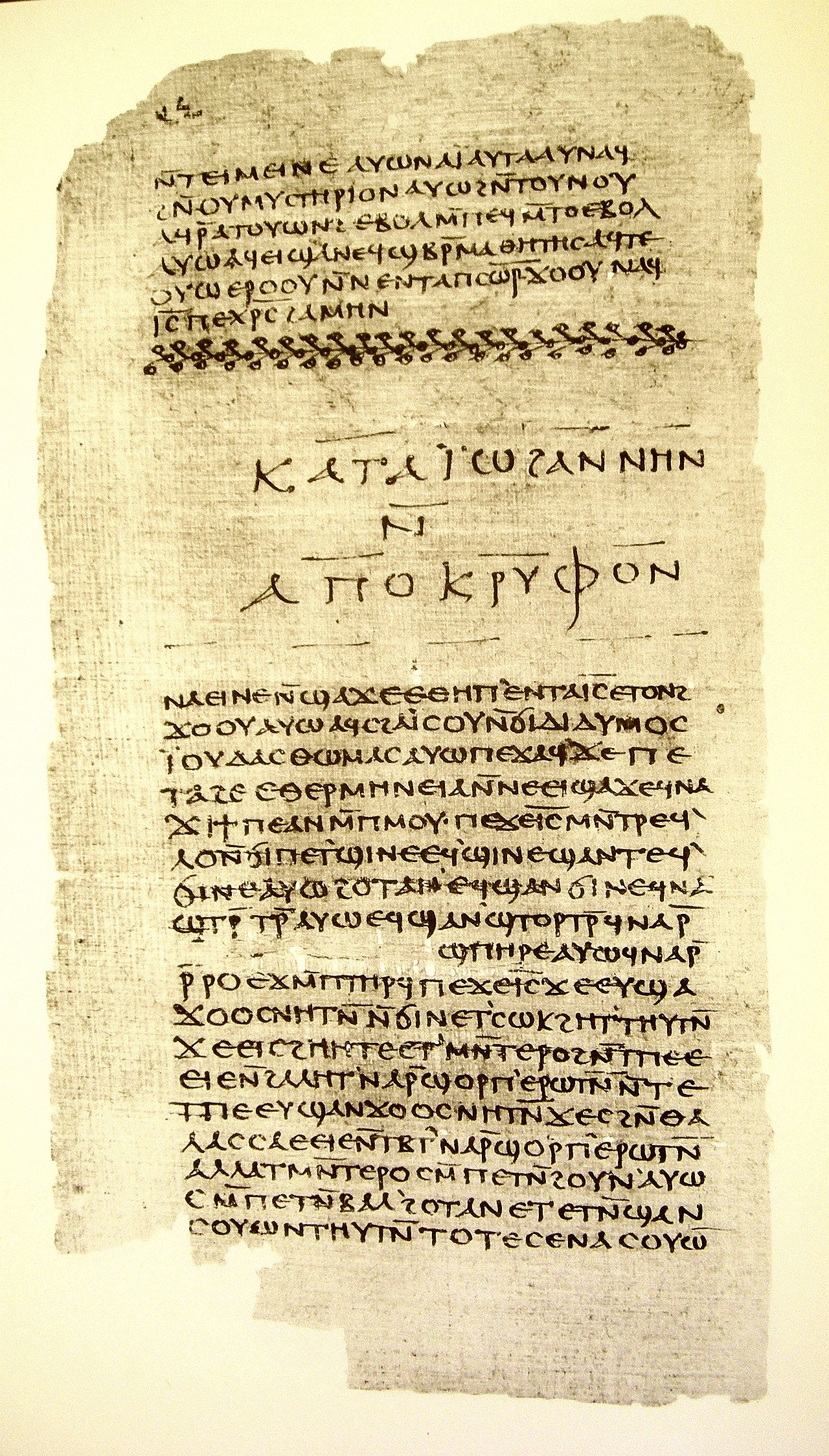

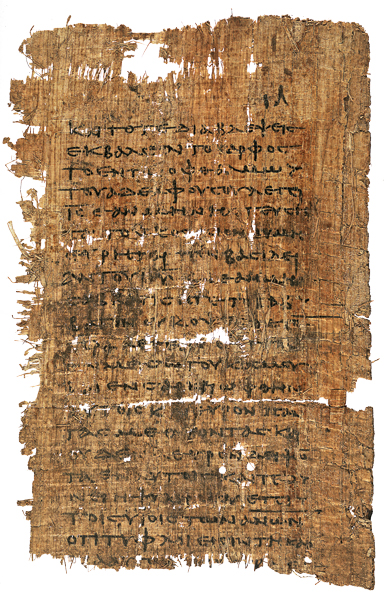
Manuscript and discovery
The fullest manuscript of the Gospel of Thomas was found near Nag Hammadi in Upper Egypt in 1945, as part of a library of Coptic texts. This near-complete book is preserved in a Coptic codex that shows typical features of Coptic binding. The codex carries a Coptic heading used by translators and scholars; reference is often made to the work's original designation in the Coptic tongue, noted in studies as the Coptic title. Earlier, fragmentary Greek sayings related to Thomas had been known, indicating the sayings circulated in multiple languages and stages.
Contents and literary character
Thomas is often described as a "sayings gospel": there is no narrative arc, no passion narrative, and no birth or resurrection account. Instead it gathers concise statements that instruct, provoke, or offer enigmatic counsel. Some sayings reflect inward, contemplative themes—such as the idea that the 'kingdom' is already present within—while others read like traditional apothegms. Readers and translators have noted the text's terse, sometimes aphoristic style and its tendency to pose puzzles rather than give straightforward doctrinal teaching.
Date, origins and scholarly debate
Scholars disagree about when and how the Gospel of Thomas took its present form. It is conventionally grouped with writings from the broader period of the New Testament era, but precise dating is uncertain. Some argue that parts of Thomas derive from an early, possibly first- or early-second-century Greek source closely related to the hypothetical sayings collection called 'Q'; others contend the Coptic form reflects a later compilation shaped by communities with distinctive theological orientations. Because the text contains vocabulary and motifs found in other noncanonical works, many catalogues list it as an apocryphon, though that label says more about its exclusion from institutional lists than about its intrinsic character.
Reception, significance and distinctions
The Gospel of Thomas is not included in the official Christian canons of major churches, yet it has had considerable impact on modern biblical studies, historical Jesus research, and popular interest in early Christianity. Its discovery broadened awareness of the variety of early Christian texts and stimulated new work on oral and written transmission of sayings. Debates about Thomas touch on methodological questions — for example, whether similarity to canonical sayings indicates direct borrowing, shared sources, or independent tradition.
Notable features and examples
- Collection of 114 numbered sayings rather than a continuous narrative.
- Preserved most completely in a Coptic codex from Nag Hammadi and known also from Greek fragments.
- Contains sayings parallel to the synoptics and others unique to Thomas, some of which are cryptic and open to multiple interpretations.
- Often discussed in relation to the 'Q' hypothesis, Gnostic themes, and early Christian diversity.
Translations, annotated editions and commentaries have multiplied since the mid-20th century, and the Gospel of Thomas remains a central text for anyone studying the range of early Christian thought and the various ways Jesus' teachings were collected and transmitted.
Questions and answers
Q: What is the Gospel of Thomas?
A: The Gospel of Thomas is a text written during the era of the New Testament. It is considered to be an apocryphon and is in the form of a codex, bound in what today is known as Coptic binding.
Q: When was the Gospel of Thomas found?
A: The Gospel of Thomas was found in Nag Hammadi, Egypt in 1945.
Q: What is the content of the Gospel of Thomas?
A: The Gospel of Thomas is a collection of sayings and short dialogues attributed to Jesus. There are 114 sayings in the text.
Q: How does the Gospel of Thomas differ from other texts?
A: Unlike the other texts, the Gospel of Thomas is not a narrative but rather a collection of sayings and short dialogues attributed to Jesus.
Q: Are the sayings in the Gospel of Thomas compatible with the other gospels?
A: Most of the sayings in the Gospel of Thomas are compatible with the other gospels and can also be found in one of the other gospels.
Q: Were there any sayings in the Gospel of Thomas previously unknown to scholars?
A: Yes, some of the sayings in the Gospel of Thomas were unknown to scholars before the codex was found.
Q: Is the Gospel of Thomas accepted as canon by any of the big Christian groups?
A: No, the Gospel of Thomas is not accepted as canon by any of the big Christian groups.
Related articles
Author
AlegsaOnline.com Gospel of Thomas Leandro Alegsa
URL: https://en.alegsaonline.com/art/39835