
Canton of Glarus
Small German-speaking canton in eastern Switzerland centred on the Linth valley; known for alpine landscapes, industrial history, direct-democratic traditions and the Glarus thrust geological site.

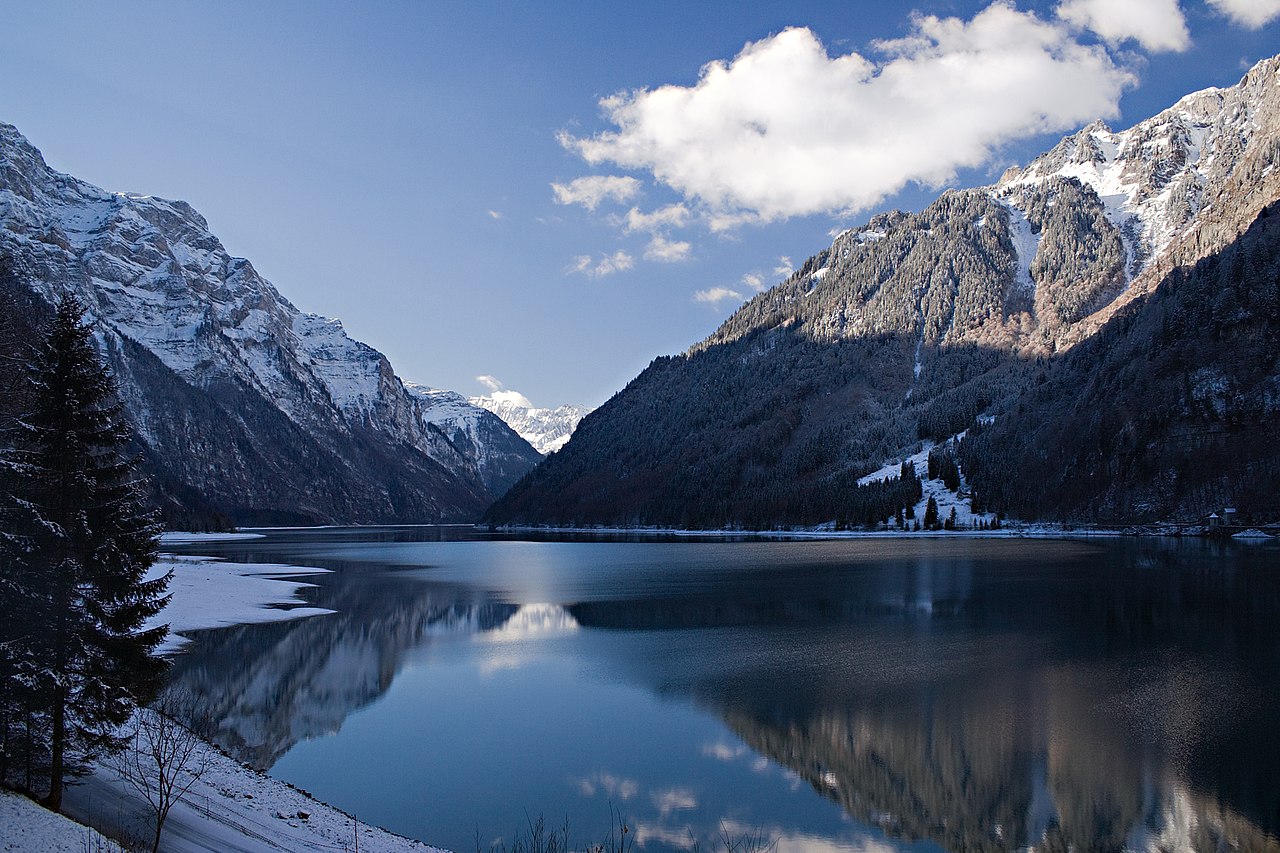
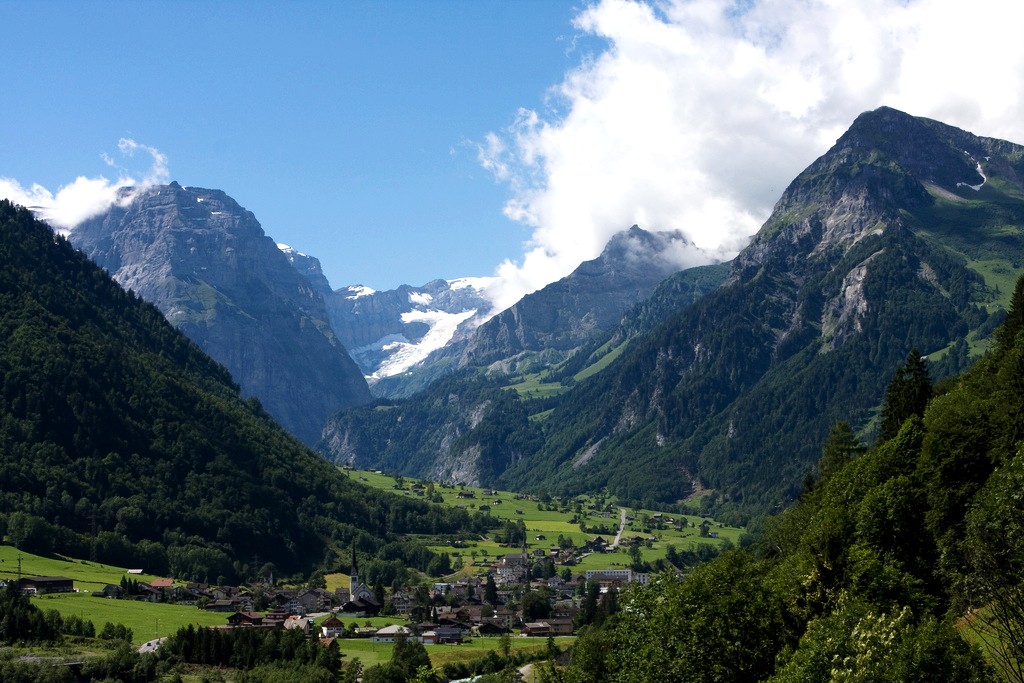
The canton of Glarus is a compact, predominantly German-speaking canton in eastern Switzerland. Its administrative centre is the town of Glarus. The canton is concentrated along the Linth valley and surrounded by high alpine ranges; its topography and waterways have shaped settlement, industry and transport for centuries.
Image gallery
7 Images



Administrative structure and settlements
Historically Glarus was made up of many small communes. In a territorial reform completed in 2010 the smaller municipalities were consolidated into three larger political municipalities: Glarus, Glarus Nord and Glarus Süd. The canton remains one of Switzerland’s smaller units by population and area, with a population on the order of forty thousand people concentrated in valley towns and scattered mountain settlements.
Geography and natural features
Glarus is dominated by alpine relief: steep valleys, glaciers at higher elevations and forested slopes lower down. The Linth river drains the canton and has been important for industry, transport and hydroelectric development. Geologically Glarus is notable for the so-called Glarus thrust — a major rock overthrust that illustrates mountain‑building processes and has been the subject of scientific study and international recognition.
History and political traditions
The canton has a long history of local self-government and civic participation. For many years residents used the open-air assembly, or Landsgemeinde, as a visible form of direct democracy, and local decision-making has been an important aspect of political life. Economically and socially, Glarus was affected early by the wave of industrialization in Switzerland: the availability of water power and transport links encouraged textile and related manufactures in the 19th and 20th centuries.
Population, language and religion
Glarus is officially German-speaking. Surveys show most inhabitants use German as their main language while smaller groups speak Italian and other languages; for example a minority of residents report Italian as their language. Religious affiliation is mixed: traditional Protestant and Roman Catholic communities form the largest groups; other faiths and non‑religious citizens are present as well. Past statistical profiles recorded percentages across Protestant, Roman Catholic, Muslim and other communities, and small numbers belong to congregations such as the New Apostolic Church or to Eastern Christian traditions including Eastern Orthodox and Oriental Orthodox.
Economy, transport and recreation
The local economy combines light industry, energy production, services and tourism. Hydroelectric resources and small manufacturing remain important, while mountain scenery supports hiking, skiing and other outdoor recreation. Glarus is linked by road and rail to larger Swiss cities, allowing residents to commute and goods to move to broader markets.
Notable distinctions
- Compact alpine canton with strong local identity and participatory political culture.
- Geological importance due to a major thrust fault that has drawn international scientific interest.
- A history that blends early industrial development with continuing rural and mountain traditions.
For travelers and students of geology, politics or Alpine culture, Glarus offers an example of how mountainous geography, local governance and industrial change combine to shape a small but distinct Swiss canton.
Questions and answers
Q: Where is Glarus located?
A: Glarus is located in east Switzerland.
Q: What is the capital of Glarus?
A: The capital of Glarus is also Glarus.
Q: How many communes were merged in Glarus in 2010?
A: In 2010, the 25 communes in Glarus were merged into three: Glarus, Glarus Nord, and Glarus Süd.
Q: What is the primary language spoken in Glarus?
A: The primary language spoken in Glarus is German.
Q: What percentage of the population in Glarus speak German?
A: Roughly 83.6% of the population in Glarus speak German.
Q: What were the results of a statistical survey done in 2000 regarding religion in Glarus?
A: According to a statistical survey done in 2000, 44% of the population in Glarus are Protestant, 37.3% are Roman Catholic, 6.5% are Muslims, 6.5% are non-believers, 2.3% are either Eastern orthodox or Oriental orthodox and 3.7% belonged to other communities or did not say.
Q: What is the percentage of Italian speakers in Glarus?
A: Around 6.8% of the population in Glarus speak Italian.
Related articles
Author
AlegsaOnline.com Canton of Glarus Leandro Alegsa
URL: https://en.alegsaonline.com/art/39103
Sources
- bfs.admin.ch : "Swiss Federal office of Statistics: Religions"
- swissinfo.org : SwissInfo