
Giza Plateau
The Giza Plateau is a limestone plateau on the outskirts of Cairo that contains Egypt's best-known ancient monuments, including the Pyramids of Giza and the Great Sphinx.
Overview
The Giza Plateau sits on the western edge of the Nile Valley near modern Cairo and forms one of the world’s most famous archaeological landscapes. It is best known for the Pyramids of Giza, the Great Sphinx and their associated temples and cemeteries. The plateau's monuments were constructed primarily during Egypt’s Old Kingdom and continue to attract scholars, visitors and cultural interest today. For general context see Giza and for information on the larger monument group see Pyramids of Giza.
Image gallery
6 Images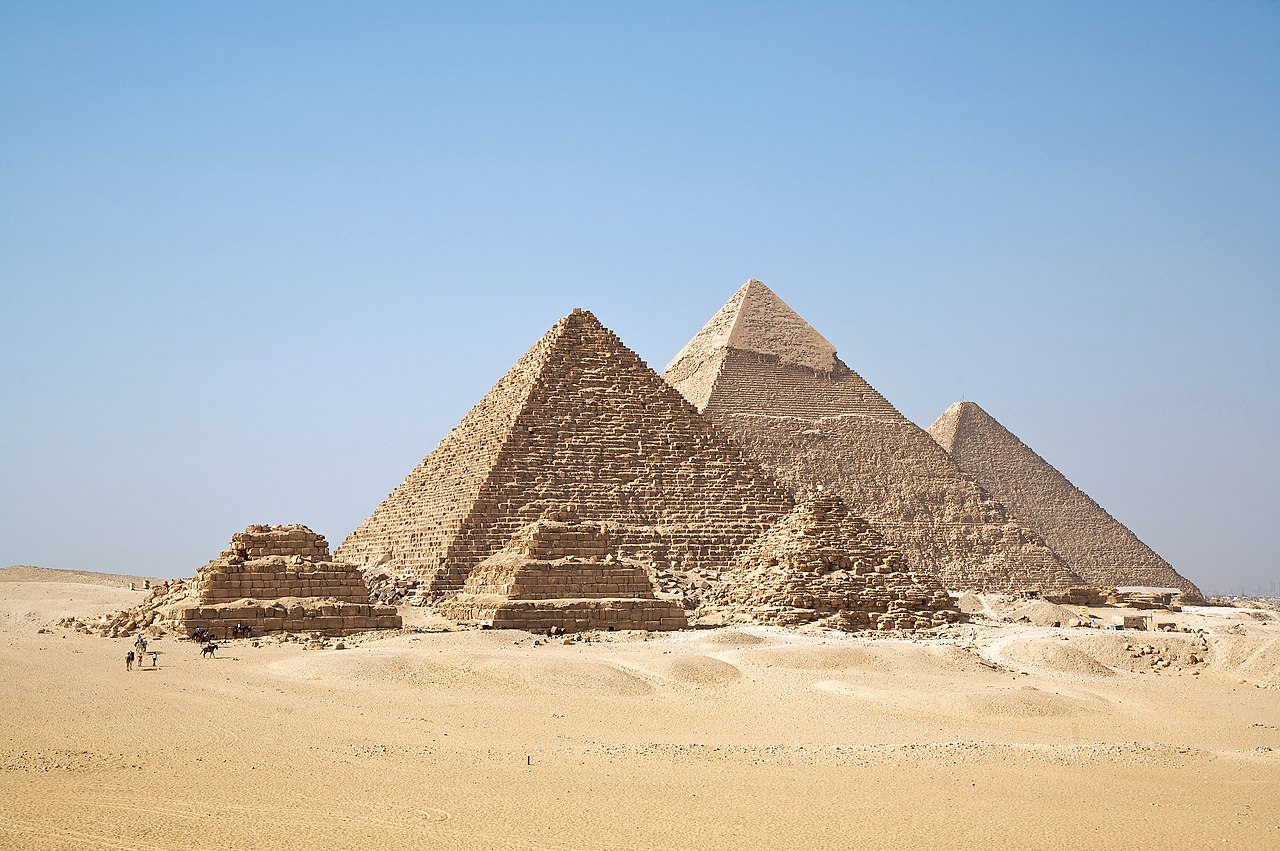


Principal monuments and features
The site combines monumental royal tombs with subsidiary structures and remains of ancient infrastructure. Major components include:
- Great Pyramid (Khufu) — the largest of the three main pyramids.
- Pyramid of Khafre — visually dominant because of higher bedrock and remaining casing at the summit.
- Pyramid of Menkaure — smaller but with important funerary complexes.
- The Great Sphinx — a monumental limestone statue with a human head and lion’s body, set near the Khafre complex.
- Valley temples, causeways, subsidiary mastabas and workers' cemeteries.
History and archaeological research
Construction of the principal monuments dates chiefly to the Fourth Dynasty of the Old Kingdom (around the 26th century BCE for the Great Pyramid). The plateau remained an active cult and burial landscape in later periods and has long been a focus of antiquarian interest. From the 19th century onwards, European and Egyptian archaeologists carried out systematic surveys and excavations, establishing the basic chronology and revealing features such as boat pits and mortuary temples. Modern scientific methods—surveying, conservation and remote sensing—have refined understanding while also raising new questions about construction techniques and workforce organization.
Geology, layout and engineering
The plateau is underlain by limestone bedrock, which both provided building material and defined the planning of monuments. Pyramids, causeways and temples exploit natural terraces and views across the Nile floodplain. Engineering achievements include precisely levelled bases, massive stone blocks moved and placed with methods still studied by engineers and archaeologists. Fragments of original casing stones, debris, and workshop remains attest to the logistics of ancient construction.
Cultural importance, tourism and conservation
The Giza Plateau is a global icon of ancient Egypt and a key component of the UNESCO World Heritage property for Memphis and its Necropolis. It is central to popular images of antiquity and draws millions of visitors each year, which supports local economies but also creates conservation challenges. Preservation work addresses erosion, pollution, visitor impact and urban encroachment from greater Cairo. Ongoing projects combine excavation, stabilization and public presentation to balance access with protection.
Further study and resources
Scholars and interested readers can consult museum publications and archaeological reports for detailed studies. General introductions and site maps are available through many academic and public resources; see also Plateau and broader material on ancient Egyptian civilization. For guided summaries and visitor information consult reputable travel and heritage organizations as well as specialist publications. Giza remains a subject of active research and conservation into the present day.
Questions and answers
Q: What is the Giza Plateau?
A: The Giza Plateau is an ancient plateau located in Giza, Egypt.
Q: Are there any mysteries surrounding the Giza Plateau?
A: Yes, the Giza Plateau has many ancient mysteries surrounding it that archeologists are still trying to uncover.
Q: What is the most impressive ancient monument located on the Giza Plateau?
A: The most impressive ancient monument located on the Giza Plateau is the Pyramids of Giza.
Q: What other ancient Egyptian monuments can be found on the Giza Plateau?
A: There are many other ancient Egyptian monuments that can be found on the Giza Plateau, including the tomb of Pharaoh Djet of the First Dynasty and that of Pharaoh Nynetjer of the Second Dynasty.
Q: Why has the Giza Plateau astonished tourists and travellers over the years?
A: The Giza Plateau has astonished tourists and travellers over the years due to the impressive ancient monuments located there and the mysteries surrounding them.
Q: What is the significance of the Pyramids of Giza?
A: The Pyramids of Giza are considered to be one of the most impressive ancient monuments in the world and hold significant historical and cultural importance in Egyptian history.
Q: Has everything been uncovered about the Giza Plateau?
A: No, there are still many mysteries surrounding the Giza Plateau and archeologists are still uncovering new information about it.
Related articles
Author
AlegsaOnline.com Giza Plateau Leandro Alegsa
URL: https://en.alegsaonline.com/art/39056