
Giselle — a Romantic ballet of love, betrayal and the supernatural
Giselle is a two-act Romantic ballet (premiered 1841) combining a pastoral first act with a spectral second act. It is famed for its music, choreography and the Wilis’ tragic myth.
Giselle is one of the most celebrated ballets of the 19th century: a two-act romantic ballet that juxtaposes rustic life with the supernatural. The work blends a simple village drama with a haunting second act in which ghostly dancers, the Wilis, pursue revenge. Its enduring power rests on a concise libretto, evocative score, and choreography that highlights both acting and ethereal technique.
Image gallery
10 Images


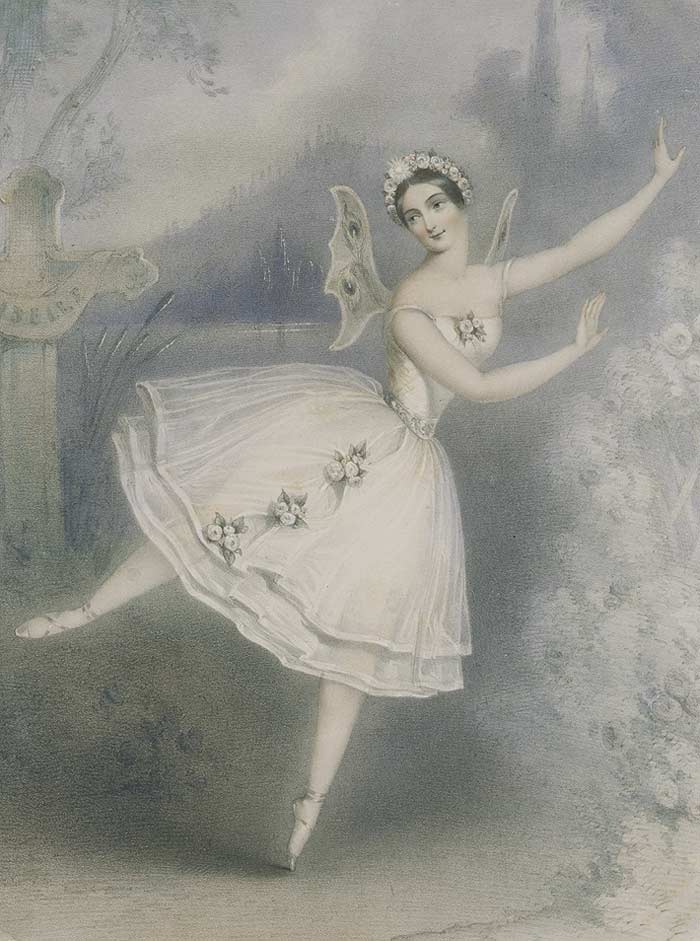


Creators and first performance
The scenario was prepared by Jules-Henri Vernoy de Saint-Georges and Théophile Gautier, who drew material from literary sources including a short prose passage in Heinrich Heine and a poem by Victor Hugo. The score was composed by Adolphe Adam, and the dances were arranged by both Jean Coralli and Jules Perrot. When it premiered in Paris on 28 June 1841 at the Théâtre de l'Académie Royale de Musique, the principal role was danced by Carlotta Grisi. The production’s sets and visual design were an important element of its success.
Plot summary
The story takes place in Germany during a period often imagined as the Renaissance. In Act I the heroine, a young peasant girl named Giselle, falls for a man called Albrecht who is disguised as a peasant. Courtship and local festivities establish a mood of joy and innocence until Giselle learns that Albrecht is of noble birth and is engaged to another. The discovery shatters her; she goes mad and dies. Act II shifts to a nocturnal, otherworldly setting: Giselle returns from the dead and confronts the grave world of the Wilis, spirits of betrayed brides who force men to dance until death.
Structure, music and choreography
Giselle is commonly performed in two contrasting acts: a realistic, colorful village scene and a pale, misty, supernatural tableau. Adam wrote music that supports both the lyricism of the first act and the spectral, rhythmic momentum of the second. Choreographically, the score requires strong mime and dramatic presence as well as the light, sustained footwork and gliding port de bras associated with Romantic-era classics. The second act, in particular, demands a distinct quality of suspension and uniform group work for the Wilis.
Characters and notable elements
- Giselle — the innocent heroine whose fate drives the drama.
- Albrecht — a nobleman disguised as a villager; his duplicity causes the tragedy.
- Bathilde (or a similar aristocratic fiancée) — the noble bride in the background of the story.
- The Wilis — supernatural dancers who embody wrath and sorrow.
The ballet is also known for its use of white costumes and a spectral atmosphere in Act II, a hallmark of Romantic era ballets, and for roles that test both dramatic subtlety and technical control.
Reception, influence and legacy
At its premiere Giselle was received with great enthusiasm and was quickly adopted by companies across European stages, Russia and the United States. The original Giselle, Grisi, was praised alongside earlier stars such as Taglioni for capturing the period’s ideal of ethereal femininity. Dance historians often describe Giselle as an archetype for the style and themes of the Romantic ballet school: it fuses narrative realism with an enduring supernatural finale and helped codify many conventions of 19th-century ballet production.
Why Giselle endures
The ballet remains in the standard repertory because it balances dramatic storytelling, memorable music, and choreographic invention. Performers and audiences continue to find its combination of human emotion and otherworldly imagery compelling. Modern productions vary in staging and interpretation, but most preserve the essential contrast between earthly life and the spectral world of the Wilis that lies at the heart of this romantic masterpiece.
Questions and answers
Q: What is Giselle; or, The Wilis?
A: Giselle; or, The Wilis is a romantic ballet in two acts. It was written by Jules-Henri Vernoy de Saint-Georges and Théophile Gautier based on a short prose passage from Heinrich Heine's De l'Allemagne and Victor Hugo's poem "Fantômes".
Q: Who wrote the music for the ballet?
A: Adolphe Adam wrote the music for the ballet.
Q: Who designed the dances?
A: Jean Coralli and Jules Perrot designed the dances.
Q: Where is the story set?
A: The story of Giselle; or, The Wilis is set in Germany during the Renaissance.
Q: What happens to Giselle when she discovers Albrecht is going to marry another woman?
A: When Giselle discovers that Albrecht, whom she loves, is going to marry Princess Bathilde, her heart breaks and she goes mad (insane) and dies.
Q: Who danced as Giselle in the first production of this ballet?
A: Carlotta Grisi danced as Giselle in the first production of this ballet.
Q: When was it first performed?
A:Giselle; or, The Wilis was first performed on Monday 28 June 1841 at Paris' Théâtre de l'Académie Royale de Musique.
Related articles
Author
AlegsaOnline.com Giselle — a Romantic ballet of love, betrayal and the supernatural Leandro Alegsa
URL: https://en.alegsaonline.com/art/38992
Sources
- worldcat.org : 16747462