
Girolamo Savonarola: Dominican Preacher, Florentine Reformer, and Controversial Figure
Italian Dominican friar (1452–1498) who led Florence after 1494, advocated moral reform, organized the Bonfire of the Vanities, clashed with Pope Alexander VI, and was executed; his reputation remains contested.
Overview
Girolamo Savonarola (1452–1498) was an Italian friar of the Dominican order who rose to prominence in Florence during a period of political upheaval. He combined energetic preaching with political action, seeking to reform both private behaviour and public institutions. His movement culminated in well-known episodes of public penance and the symbolic destruction of objects judged to be immoral, acts that have shaped his reputation for centuries.
Image gallery
10 Images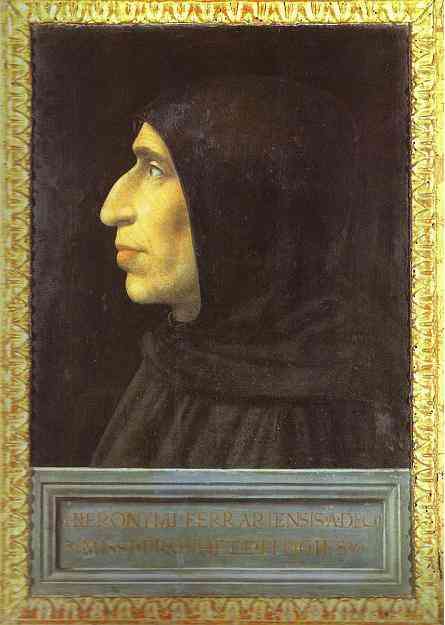




Life and political role
Born in northern Italy, Savonarola became noted for his austere lifestyle and forceful sermons. By 1494, after the Medici were expelled from Florence and foreign armies entered Italy, he emerged as a dominant civic influence. He was not an elected head of state in modern terms but exercised considerable authority over civic policies and moral enforcement. His critics accused him of seeking power through religious authority, while his supporters saw him as a champion of Christian renewal.
Preaching, aims and methods
Savonarola's preaching attacked what he described as the moral corruption of society and the shortcomings of the clergy. He urged repentance, simplicity, and obedience to Christian teaching, combining apocalyptic warnings with concrete proposals for reform. Themes of his sermons included:
- Critique of luxury and ostentation;
- Calls for ecclesiastical reform and accountability;
- Promotion of civic virtue and public morality;
- Warnings about divine judgment and the need for penitence.
Bonfire of the Vanities and cultural impact
Perhaps the most famous episode associated with his movement is the so-called Bonfire of the Vanities (1497), when citizens, encouraged by his followers, disposed of items considered frivolous or sinful: mirrors, paintings, cosmetics, secular books and musical instruments. Contemporary observers reported that the initiative had enthusiastic supporters and fierce opponents; some artists and scholars lost property while others later re-assessed the episode as a dramatic intersection of religion and civic life. The event became a lasting symbol of the tensions between moral rigor and artistic freedom.
Conflict, trial and execution
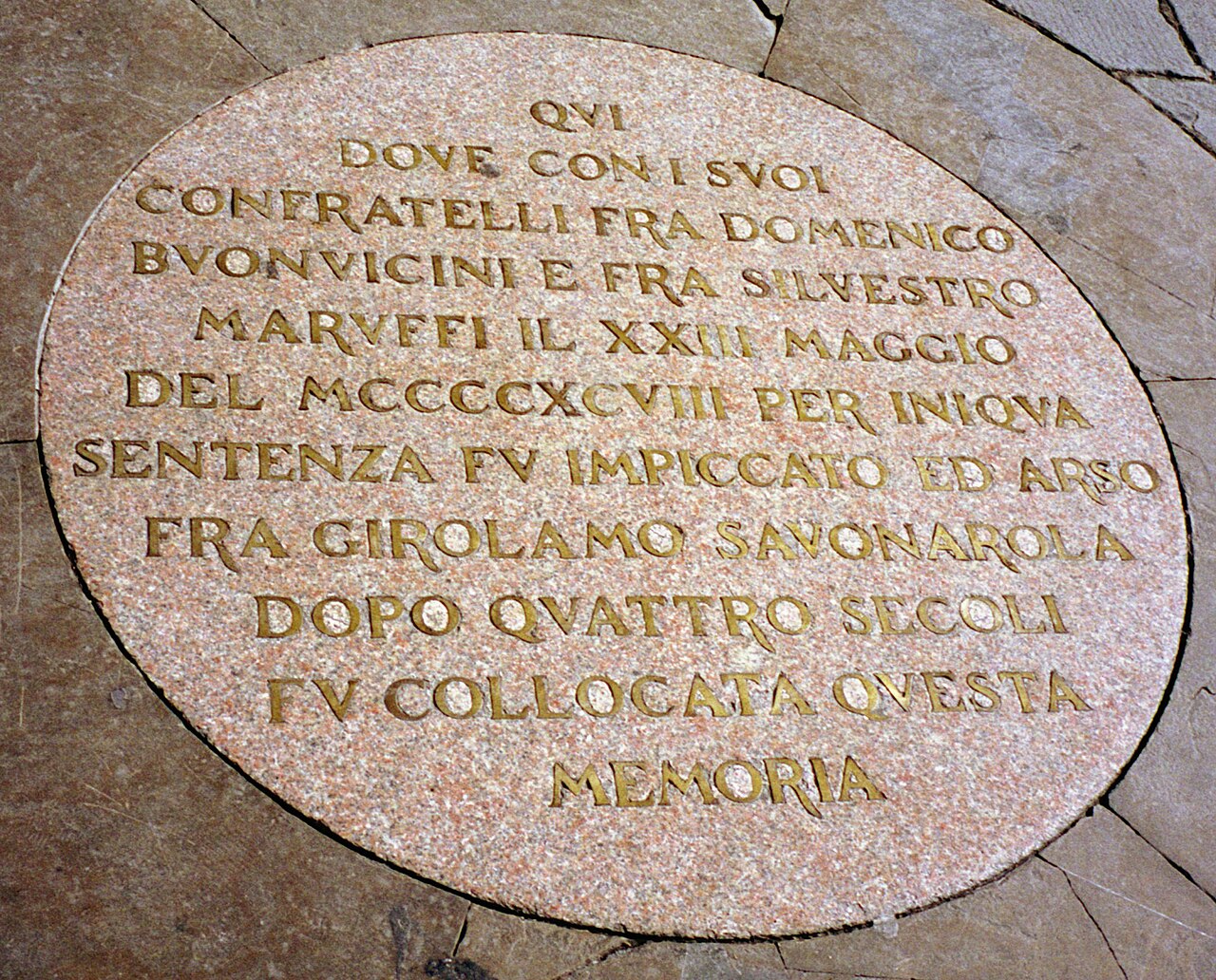
Savonarola's insistence on reform brought him into open conflict with Pope Alexander VI and with political actors who disliked clerical interference in civic affairs. The pope denounced some of his claims, and tensions escalated into formal sanctions, including excommunication. Arrested, tried by ecclesiastical authorities and judged guilty of disobedience and related charges, Savonarola was executed in 1498; accounts indicate he was hanged and his body was subsequently burned (his execution). Questions about the legality and fairness of his trial have been raised by historians and later admirers.
Legacy and interpretations
Savonarola's place in history is complex. Some see him as a prophetic reformer whose moral zeal anticipated later movements, including comparisons to figures such as Martin Luther and broader currents like the Protestant Reformation, though he remained a Roman Catholic and did not found a separate church. Within Catholicism, later decades witnessed efforts among some Dominicans to promote his memory and even campaigns for canonization or beatification, while others—among them members of the Jesuits—have been critical of his attacks on papal authority. Debates also touch on whether his treatment by church courts was just and whether his moral program left a constructive legacy.
Notable facts and distinctions
Savonarola is often remembered for vivid contrasts: passionate asceticism versus control of a vibrant city, advocacy of public morality versus suppression of cultural expression. His insistence on discipline and repentance influenced contemporary politics and later religious conversations. Scholars study him as a case of prophetic charisma intersecting with civic institutions, and his story continues to prompt reflection on the relationship between religion, art and political power.
For further reading on the Dominican tradition, the history of Florence, and the religious controversies of the Italian Renaissance see resources linked by topic: Dominican order, Florence, his execution, moral reform, clergy issues, Pope Alexander VI, Martin Luther, Reformation era, canonization processes, excommunication, beatification, Jesuit responses.
Questions and answers
Q: Who was Girolamo Savonarola?
A: Girolamo Savonarola was an Italian Dominican priest and the leader of Florence from 1494 until his execution in 1498.
Q: What is Savonarola famous for?
A: Savonarola is famous for burning books and for the destruction of what he considered immoral art.
Q: What was Savonarola's stance regarding the moral corruption of the clergy and the Church of Rome?
A: Savonarola was a priest but he preached against the moral corruption of the clergy and the Church of Rome.
Q: Who was Savonarola's main enemy?
A: Savonarola's main enemy was Pope Alexander VI.
Q: Was Savonarola a Protestant?
A: Savonarola is sometimes seen as a forerunner of Martin Luther and the Protestant Reformation, however he remained a devout Roman Catholic.
Q: Is there a movement for the canonization of Savonarola?
A: Yes, in the twentieth century, a movement for the canonization of "Frà Savonarola" began to develop within the Roman Catholic Church, particularly among Dominicans.
Q: Why is Savonarola's beatification and canonization opposed by many Jesuits?
A: Savonarola's beatification and canonization is opposed by many Jesuits, who think Savonarola's attacks on the papacy to have been a serious crime.
Related articles
Author
AlegsaOnline.com Girolamo Savonarola: Dominican Preacher, Florentine Reformer, and Controversial Figure Leandro Alegsa
URL: https://en.alegsaonline.com/art/38977
Sources
- historyguide.org : "Girolamo Savonarola, 1452-1498"