
Gilbert's potoroo: profile of an Australian critically endangered marsupial
Gilbert's potoroo (Potorous gilbertii) is one of Australia's rarest mammals. This small, rabbit-sized marsupial survives in a tiny coastal area and is the focus of intensive conservation efforts.
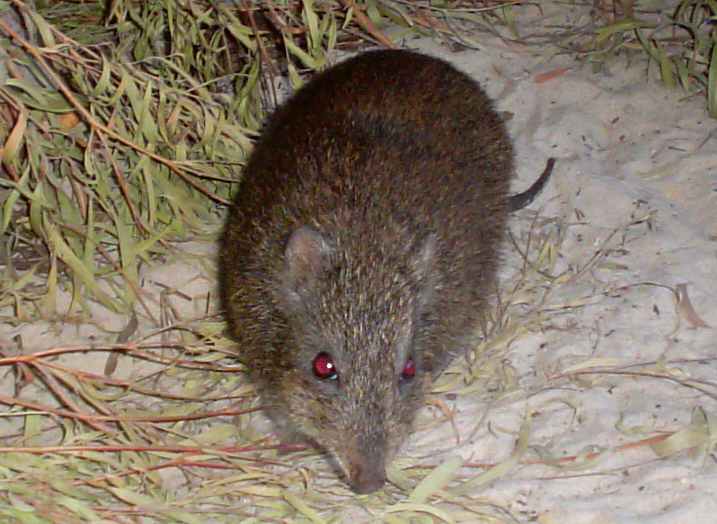
Gilbert's potoroo (Potorous gilbertii) is a small Australian marsupial often called a rat-kangaroo. It has a pointed snout, rounded ears and a compact body roughly comparable in size to a rabbit. Once thought to be extinct, it is now listed as critically endangered and is considered one of the rarest mammals in the world. The species name commemorates the 19th-century naturalist after whom it was described.
Image gallery
6 Images


Physical characteristics and behaviour
Gilbert's potoroo is adapted to a life among dense coastal shrubs. It has strong hind limbs for hopping and shorter forelimbs used for digging, a long tail for balance and coarse fur that ranges in colour from brown to grey. The animals are chiefly nocturnal and secretive, spending the day in thick vegetation or shallow burrows. As a marsupial, females carry and nurse dependent young in a pouch; reproduction is slow, with small litters and extended parental care.
Diet and ecological role
Unlike many small mammals, Gilbert's potoroo feeds largely on underground fungi — truffle-like fruiting bodies — which it locates by scent and excavates with its forepaws. This specialised diet makes the potoroo an important disperser of fungal spores and a contributor to the health of plant-fungal associations (mycorrhizae) in its habitat. Its specialised feeding habits also make it vulnerable when fungal availability is reduced by habitat change or fire.
Range, habitat and current locations
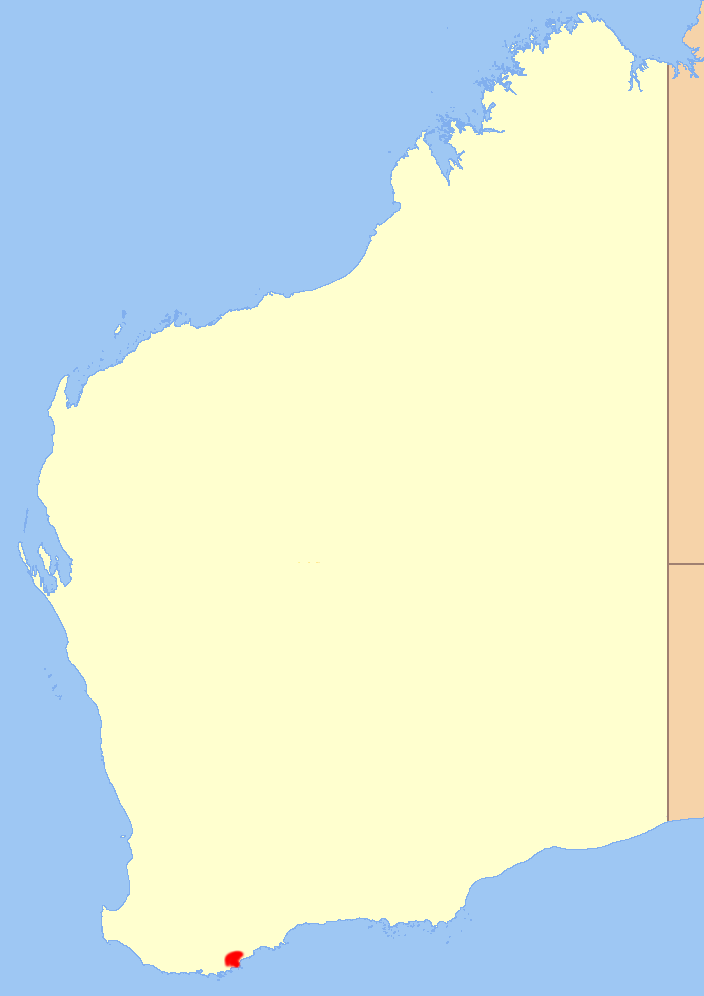
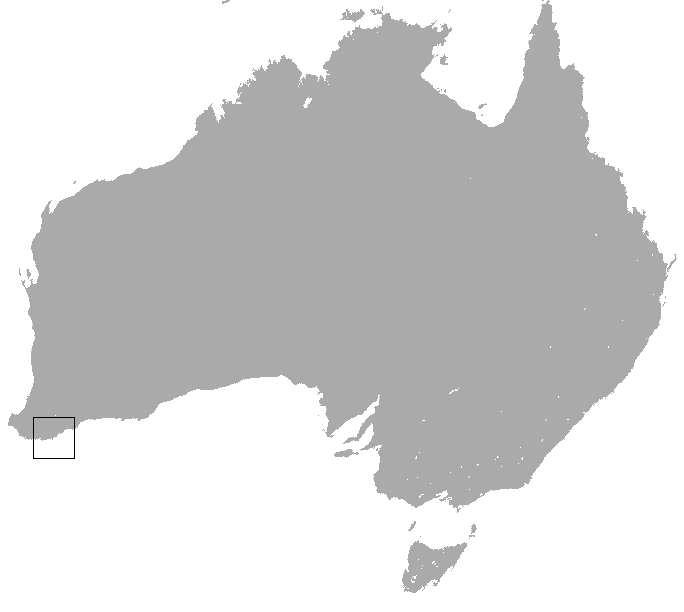
Historically the species occupied a broader area along the south-west corner of the continent, but today it survives in a very restricted region near Albany. The known wild population occupies a small block of coastal heath and scrubland totalling roughly 1,000 ha (about 2,471 acres) within and around the Two Peoples Bay area of Western Australia. Individuals are also being maintained through carefully managed translocations: a founding group was moved to nearby Bald Island where they have been monitored for breeding and survival.
Conservation history and threats
The species was long presumed extinct until a small population was rediscovered in the late 20th century. Since then conservation agencies, researchers and volunteers have worked to reduce extinction risk through intensive management. Remaining threats include predation by introduced species (feral cats and foxes), catastrophic fire, habitat loss or fragmentation and the dangers inherent in very small populations such as inbreeding and stochastic events. Current management combines predator control, fire management, habitat protection, captive care and translocation efforts.
Management efforts and significance
- Active monitoring and targeted conservation programs aim to increase numbers and establish multiple secure populations to reduce extinction risk.
- Captive care and supplementary feeding have been used during critical periods, while translocations seek to create insurance populations on predator-free islands and fenced reserves.
- The potoroo’s role in fungal spore dispersal links its survival to broader ecosystem function, making it a conservation priority for habitat restoration.
For more background on its classification and biology see marsupial overviews and entries on related rat-kangaroos. For comparative size references, sources sometimes note its similarity to a rabbit. Conservation status details are maintained by government and specialist organisations linked under critically endangered listings and regional reserve information.
Notable facts: Gilbert's potoroo is often highlighted in conservation literature as one of Australia's most endangered mammals; it has been the subject of rediscovery stories and intensive recovery programs. Ongoing efforts aim to secure multiple viable populations so that the species can persist beyond the current precarious situation.
Questions and answers
Q: What is a Gilbert's potoroo?
A: Gilbert's potoroo is an Australian marsupial, also known as a rat-kangaroo, with a pointed face and a size similar to a rabbit.
Q: What is the conservation status of Gilbert's potoroo?
A: Gilbert's potoroo is listed as critically endangered and is the most endangered mammal and marsupial in Australia.
Q: How many Gilbert's potoroos are estimated to be left in the world?
A: There are only about 40 Gilbert's potoroos left in the world.
Q: Where can Gilbert's potoroos be found in Australia?
A: Gilbert's potoroos live in a small area of about 1,000 ha (2,471 acres) on the southwest coast near Albany, Western Australia, specifically in the Two Peoples Bay Nature Reserve.
Q: Are Gilbert's potoroos successfully breeding anywhere?
A: Yes, Gilbert's potoroos have been released on nearby Bald Island and are breeding successfully.
Q: What is the significance of the Bald Island breeding program?
A: The Bald Island breeding program is significant because it serves as a way to increase the population of Gilbert's potoroos, which are critically endangered.
Q: Why are Gilbert's potoroos important to protect?
A: Gilbert's potoroos are important to protect because they are one of the world's rarest mammals and play an important role in maintaining the biodiversity of their ecosystem.
Related articles
Author
AlegsaOnline.com Gilbert's potoroo: profile of an Australian critically endangered marsupial Leandro Alegsa
URL: https://en.alegsaonline.com/art/38817
Sources
- dec.wa.gov.au : "Gilbert's potoroo"