
Giant anteater (Myrmecophaga tridactyla): appearance, behavior, and habitat
An overview of the giant anteater—its distinctive anatomy, diet of ants and termites, distribution in Central and South America, behavior, and conservation considerations.
Overview
The giant anteater (genus Myrmecophaga) is a large, terrestrial mammal native to Central America and South America. Often called the ant bear, it is a specialist predator of ants and termites and is well known for its long snout, bushy tail and toothless jaws. The animal appears in many regional ecosystems and has attracted attention for its unusual adaptations to an insectivorous lifestyle. See general references to the species as an animal of interest in Neotropical fauna.
Image gallery
10 Images



Physical characteristics and adaptations
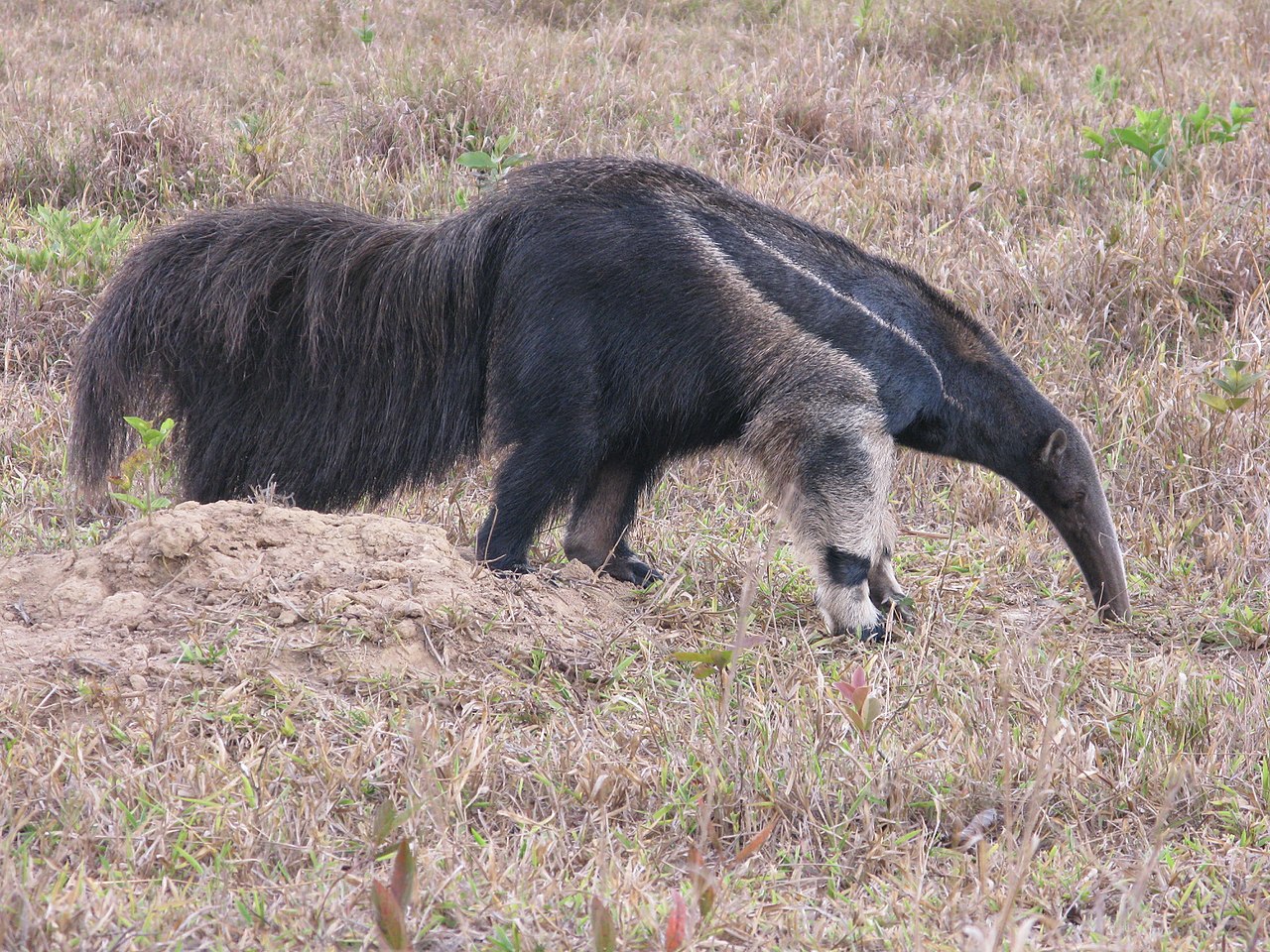
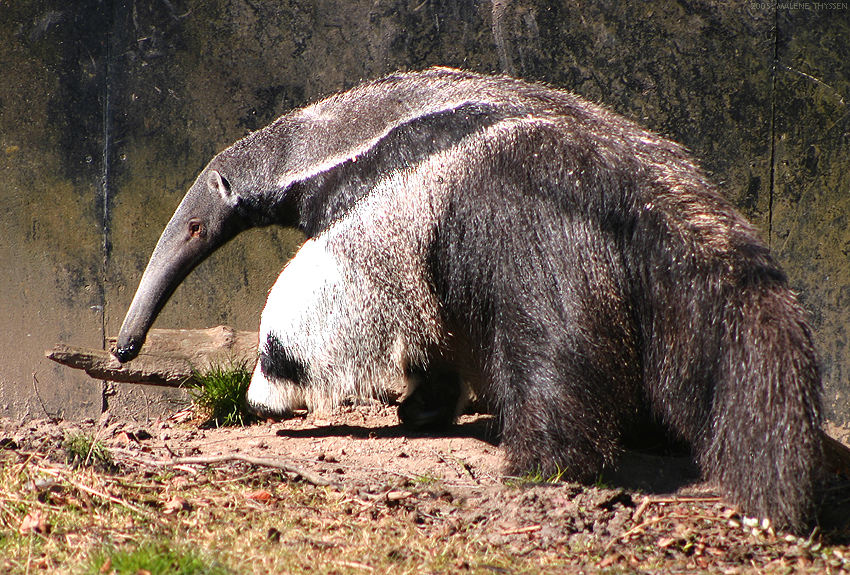
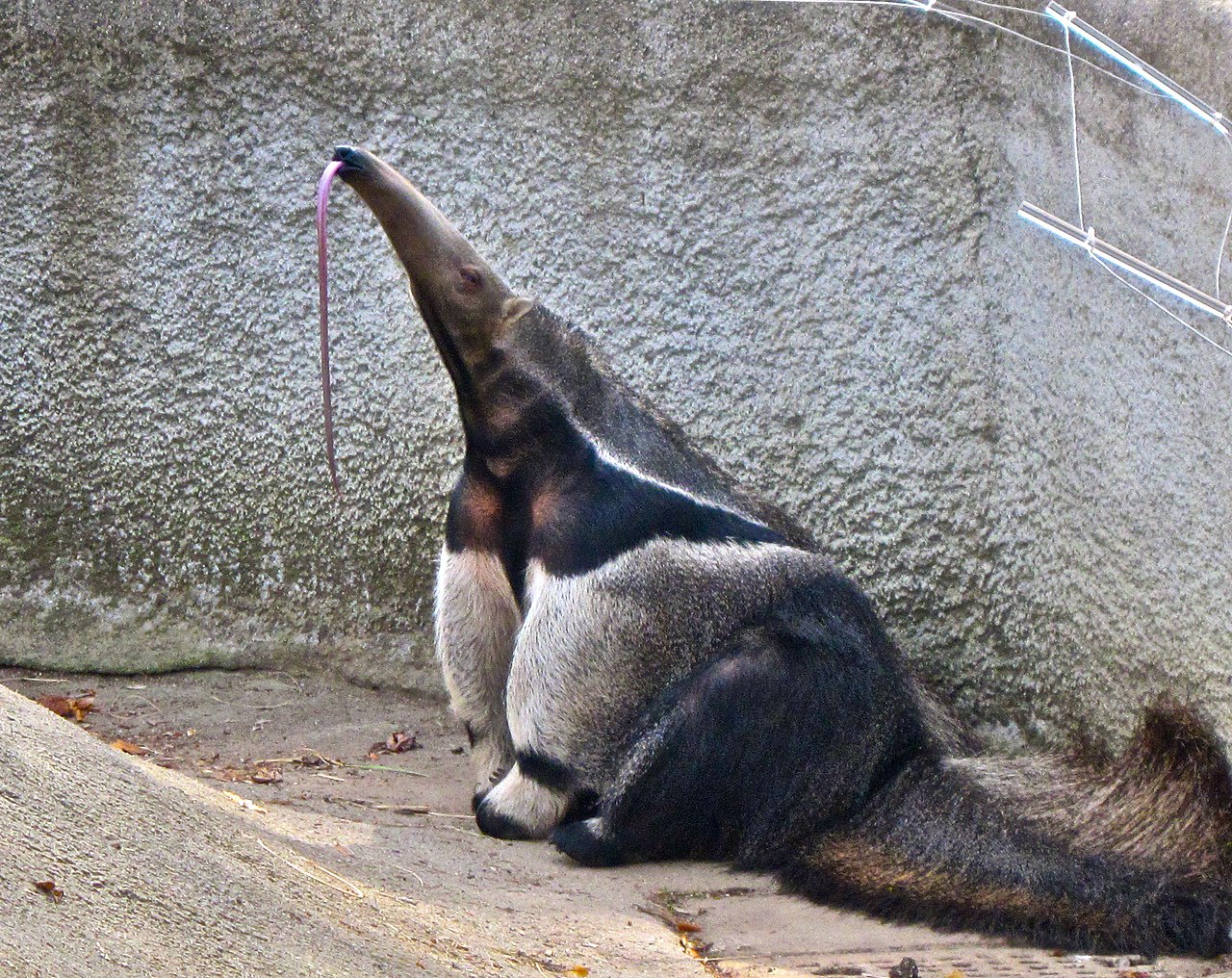
Adults are among the largest of the anteaters, with total length usually more than 1.8 metres when the tail is included. Males and females overlap in weight and size, and both sexes carry a dense, coarse coat with contrasting patterns. The skull is elongated into a tube-like snout that houses a long, sticky tongue; the giant anteater lacks teeth and relies on this tongue to collect insects. Powerful forelimbs end in long, curved claws used to tear open nests and to defend against predators. The animal shares an evolutionary relationship with other xenarthrans such as sloths, but is strictly terrestrial rather than arboreal.
Habitat, range and behavior
Giant anteaters occupy a range of habitats from grasslands and savannas to patches of forest. They typically forage in open or semi-open landscapes and retreat to more covered or forested areas to rest. Unlike several related species that spend time in trees, the giant anteater is largely ground-dwelling; it contrasts with arboreal species and habits described elsewhere as arboreal or semi-arboreal.
Diet and feeding
Specializing on ants and termites, the giant anteater locates nests by scent and then uses its claws to open galleries. It inserts its long, sticky tongue to capture many insects in quick succession. Its digestive system is adapted for processing large numbers of small, chitinous prey rather than chewing—hence the absence of teeth.
Reproduction, threats and notable facts
Females typically raise a single young which rides on the mother's back for a period after birth. Giant anteaters face threats from habitat loss, fragmentation and vehicle collisions in parts of their range. They are notable for being one of the few large, purely insectivorous mammals and for their striking appearance and specialized ecology.
- Distinctive features: long snout, toothless mouth, sticky tongue, large foreclaws.
- Common name: ant bear.
- Behavioral note: terrestrial forager that uses scent and powerful forelimbs to access prey.
Questions and answers
Q: Where does the giant anteater live?
A: The giant anteater lives in Central and South America.
Q: What is another name for the giant anteater?
A: The giant anteater is also known as the ant bear.
Q: What is unique about the giant anteater's diet?
A: The giant anteater's diet consists solely of termites and ants, hence its name.
Q: Does the giant anteater have teeth?
A: No, the giant anteater is the only mammal without teeth.
Q: What is the size of the giant anteater?
A: The giant anteater is the largest anteater, with a length between 182 and 217 cm. Males weigh between 33 to 41 kg and females weigh between 27 to 39 kg.
Q: Where does the giant anteater typically forage and rest?
A: The giant anteater forages in open areas and rests in more forested habitats.
Q: Are other living anteaters and sloths arboreal or semi-arboreal?
A: Yes, other living anteaters and sloths are arboreal or semi-arboreal.
Related articles
Author
AlegsaOnline.com Giant anteater (Myrmecophaga tridactyla): appearance, behavior, and habitat Leandro Alegsa
URL: https://en.alegsaonline.com/art/38705
Sources
- animals.sandiegozoo.org : "Giant Anteater | San Diego Zoo Animals & Plants"
- doi.org : 10.1023/A:1027366129277
- doi.org : 10.1002/jmor.20718
- doi.org : 10.1590/s0100-736x2017001100025