
Get Rich or Die Tryin' — debut studio album by 50 Cent
Get Rich or Die Tryin' is 50 Cent's 2003 debut album, produced and promoted by Dr. Dre and Eminem. It spawned major singles, topped charts, earned multi-platinum sales and influenced 2000s hip hop.
Get Rich or Die Tryin' is the debut studio album by American rapper 50 Cent. Released in early February 2003, the record introduced the artist's frank narratives of street life and survival alongside polished, radio-ready production. Backed by major-label support, the album established 50 Cent as a mainstream star and remains a defining commercial release of early 2000s hip hop.
Image gallery
1 Image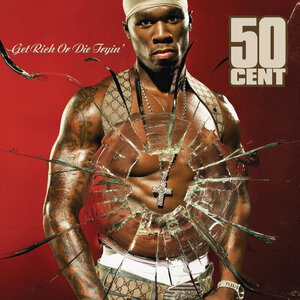
Musical style and production
The album mixes gritty, autobiographical lyrics with glossy beats and strong pop hooks. Executive producers included Dr. Dre and Eminem, whose involvement helped shape the sonic balance between hard-edged gangsta rap themes and accessible production. Instrumentation tends toward sparse, bass-heavy arrangements that foreground 50 Cent's measured delivery and memorable choruses.
Singles and notable tracks
- "In da Club" — the breakout lead single with an instantly recognizable hook.
- "21 Questions" — a more melodic, relationship-focused track that broadened the album's appeal.
- "P.I.M.P." and "Many Men (Wish Death)" — songs that reinforced the album's street-oriented persona.
The record balances aggression and vulnerability: tales of violence and hustling sit alongside introspective moments that examine loyalty, ambition and consequence.
Background, release and impact
50 Cent's early life and the publicity surrounding an assassination attempt were part of the album's narrative context; his signing to high-profile labels helped the project gain wide attention. It topped major album charts on release, achieved multi-platinum certifications, and produced multiple hit singles. The album's mainstream success influenced peers and helped bring street-centered rap back into commercial prominence in the 2000s.
Beyond sales, the album had cultural ripple effects: it led to a semi-autobiographical film sharing the same name and contributed to 50 Cent's broader career as an artist and entrepreneur. Critics generally praised the record's hooks and production, while some commentary questioned its depiction of violence; nevertheless, its commercial and cultural footprint is widely acknowledged.
For more on the artist and labels involved, see the pages for 50 Cent, Aftermath Entertainment and Shady Records.
Questions and answers
Q: What is Get Rich or Die Tryin'?
A: Get Rich or Die Tryin' is the first studio album of American rapper 50 Cent.
Q: When was it released?
A: It was released on February 4, 2003.
Q: Who are the labels that produced and distributed the album?
A: The album was produced by Aftermath Entertainment and Shady Records.
Q: Is Get Rich or Die Tryin' a successful album?
A: Yes, it is considered a commercial and critical success.
Q: Did the album win any award?
A: Yes, it received the Billboard Music Award for the Top R&B/Hip-Hop Album of the Year.
Q: How many records has Get Rich or Die Tryin' sold worldwide?
A: As of 2021, the album has sold over 8 million copies worldwide.
Q: How did the album impact 50 Cent's career?
A: The album significantly boosted 50 Cent's career, making him a household name in the hip hop industry and launching him to mainstream success.
Related articles
Author
AlegsaOnline.com Get Rich or Die Tryin' — debut studio album by 50 Cent Leandro Alegsa
URL: https://en.alegsaonline.com/art/38572
Sources
- blender.com : Review: Get Rich or Die Tryin'
- ew.com : Review: Get Rich or Die Tryin'
- guardian.co.uk : Review: Get Rich or Die Tryin'
- 8.12.42.31 : Review: Get Rich or Die Tryin'
- pitchfork.com : Review: Get Rich or Die Tryin'
- rollingstone.com : Review: Get Rich or Die Tryin'
- stylusmagazine.com : Review: Get Rich or Die Tryin'
- pqasb.pqarchiver.com : Review: Get Rich or Die Tryin'
- metacritic.com : "Get Rich Or Die Tryin' reviews at"
- allmusic.com : Credits: Get Rich or Die Tryin'
- swisscharts.com : "50 Cent - Get Rich Or Die Tryin'"
- billboard.com : billboard.com
- ifpi.gr : "Greek Foreign Albums Chart"
- mahasz.hu : "Archívum - Slágerlisták - MAHASZ - Magyar Hangfelvétel-kiadók Szövetsége"