
Gerd von Rundstedt (1875–1953)
German Field Marshal Gerd von Rundstedt was a senior Wehrmacht commander in both world wars, known for his role in the 1940 campaign in the West and later as Commander-in-Chief West; his legacy remains controversial.
Overview
Karl Rudolf Gerd von Rundstedt (12 December 1875 – 24 February 1953) was a senior officer of the German army who served as a commanding general in both world wars and as a Field Marshal during World War II. Born into a Prussian military family, Rundstedt rose through the ranks of the Imperial German Army, served chiefly as a staff and corps officer during World War I, and remained a prominent figure in the interwar Wehrmacht establishment. He is remembered both for operational successes and for the moral and political ambiguities that surrounded senior German commanders under the Nazi regime.
Image gallery
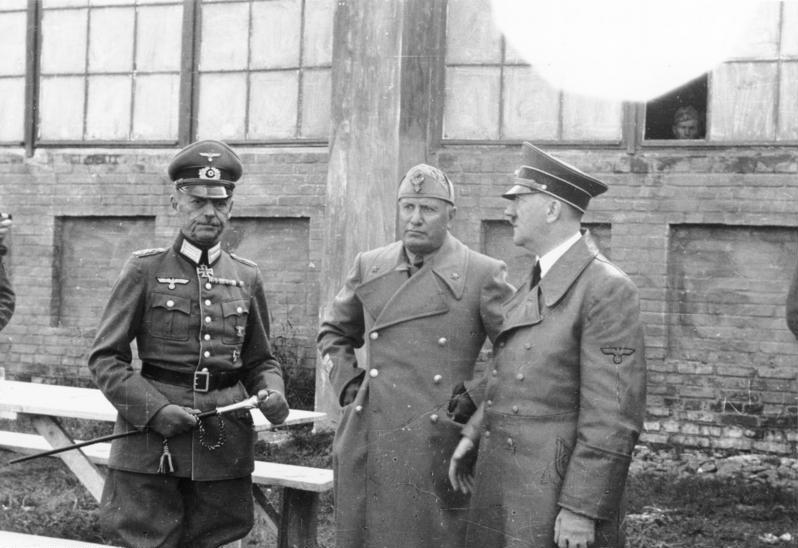
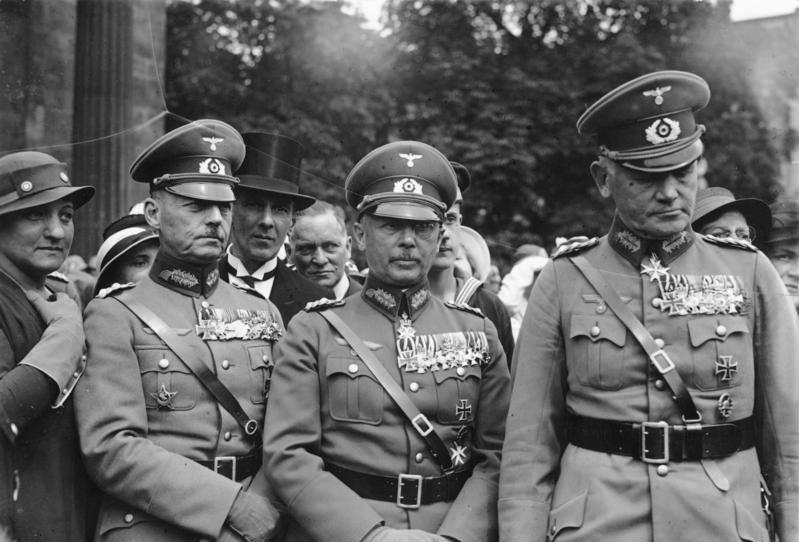
10 Images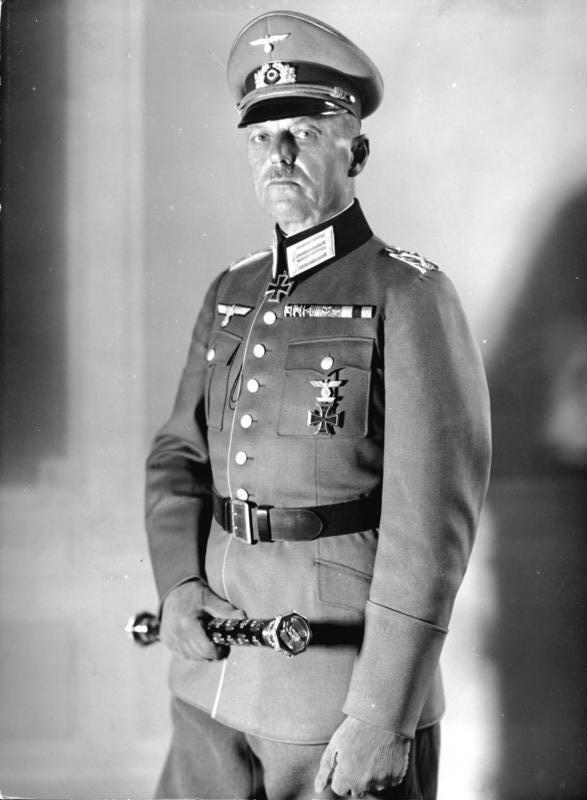



Military career and positions
Rundstedt's career spanned many of the German army's defining campaigns. Recalled from retirement at the outbreak of war, he commanded important formations in Poland and then in the West. Notable assignments included leading Army Group A during the German invasion of France and later commanding Army Group South during Operation Barbarossa, where his forces took part in the large encirclement at the first Battle of Kiev. In 1940 he received promotion to the rank of Field Marshal, and in 1942 he was appointed Commander in Chief in the West, a post he held on and off amid repeated dismissals and recalls by Adolf Hitler.
Career highlights and controversies
- Saw service as a staff officer in World War I and remained influential in the interwar officer corps.
- Commanded major formations in Poland, France (notably the Ardennes breakthrough), and on the Eastern Front.
- Dismissed after the retreat from Rostov in 1941, recalled and made Commander in Chief West, dismissed after the defeat in Normandy (July 1944) and briefly returned the same year before final removal in March 1945.
- Associated with old-Prussian military conservatism; often preferred traditional operational caution over ideological radicalism but did not openly break with the Nazi leadership.
Responsibility and postwar outcome
Rundstedt lived and operated within a command structure that carried out policies now judged criminal by contemporary standards. He was aware that elements of the officer corps considered removing Hitler yet declined to support conspiracies that might have deposed the regime. After Germany's defeat he was detained by Allied authorities and faced investigation for alleged war crimes. Because of his age and failing health he did not stand trial; he was released in 1949 and died in Hanover in 1953.
Assessment and legacy
Historians regard Rundstedt as a skilled and conservative commander whose strategic outlook reflected the traditions of the pre‑Nazi German officer corps. He demonstrated operational competence in maneuver warfare and in large-scale operations, but his legacy is clouded by the ethical compromises made by senior Wehrmacht leaders under Nazi rule. Debates over his level of responsibility for criminal orders and for the conduct of troops in occupied territories continue to shape assessments of his career.
Notable facts
- Born into a Prussian military family and educated in the traditional officer system of the German empire.
- Promoted to Field Marshal following the 1940 Western campaign.
- Took part in some of the largest encirclement battles of the Eastern Front, including Kiev.
- Repeatedly dismissed and recalled by Hitler, reflecting tensions between professional military judgment and political interference.
- Detained after the war but released without trial; he died in early 1953 shortly before the death of Soviet leader Joseph Stalin.
For further reading and documentation on Rundstedt's orders, career timeline and wartime correspondence, see archived military collections and specialized biographies available through major libraries and research institutions (rank and decorations, campaign histories, and primary documents in German military archives such as those catalogued under Wehrmacht records). Contemporary accounts and scholarly studies provide differing interpretations of his operational skill and his moral responsibility during a period when military command and political criminality were deeply entangled.
Additional context: Rundstedt's life and decisions can be placed alongside other senior German commanders of the era to understand the tensions between professional military norms and the demands of a criminal political regime—an issue central to 20th‑century military and moral history.
Related entries and resources: Imperial Army background, First World War service, Western campaign, Eastern Front campaigns, and postwar legal proceedings referenced under war crimes investigations.
Questions and answers
Q: What was Karl Rudolf Gerd von Rundstedt's rank in the Imperial German Army?
A: Karl Rudolf Gerd von Rundstedt rose through the ranks of the Imperial German Army and reached the rank of Colonel General (Generaloberst) before retiring in 1938.
Q: When did he join the Imperial German Army?
A: Karl Rudolf Gerd von Rundstedt joined the Imperial German Army in 1892.
Q: What was his role during World War I?
A: During World War I, Karl Rudolf Gerd von Rundstedt mainly served as a staff officer.
Q: What military campaign did he command during World War II?
A: During World War II, Karl Rudolf Gerd von Rundstedt commanded Army Group A during the German invasion of France and later commanded Army Group South during the Russian Campaign.
Q: How was he promoted to Field Marshal?
A: In 1940, Karl Rudolph Gerd von Rundstedt was promoted to Field Marshal for his service in commanding Army Group A during the German invasion of France.
Q: When was he dismissed by Adolf Hitler for the first time?
A: In December 1941, Adolf Hitler dismissed Karl Rudolph Gerd von Rundstedt after Germany's retreat from Rostov.
Q: When did he die?
A:Karl Rudolph Gerd von Rundsted died on 24 February 1953 in Hanover, just 10 days before Soviet leader Joseph Stalin died on 5 March 1953.
Related articles
Author
AlegsaOnline.com Gerd von Rundstedt (1875–1953) Leandro Alegsa
URL: https://en.alegsaonline.com/art/38421