
Ancient Corinth
Ancient Corinth was a major Greek city-state on the Isthmus of Corinth, noted for trade, distinctive pottery and architecture, political influence, and turbulent history before Roman destruction and later refoundation.
Overview
Ancient Corinth occupied the narrow land bridge linking the Peloponnese to mainland Greece, a position that shaped its economy and politics. The city was one of the most important poleis of classical times in the Peloponnese and widely recognized across Ancient Greece for its maritime commerce, craft production, and influential civic life.
Image gallery
10 Images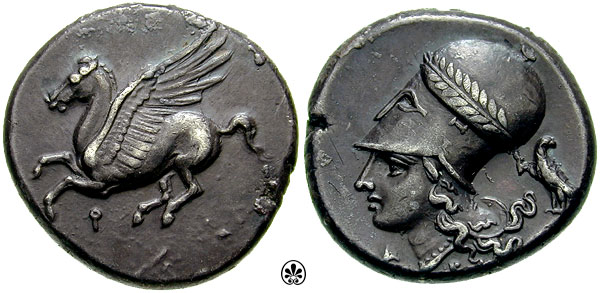


Location and infrastructure
Situated on the Isthmus of Corinth, the city controlled land and sea routes between the Aegean and Ionian seas. Its geography encouraged innovations aimed at easing maritime traffic, such as the Diolkos, a paved trackway used for hauling ships across the isthmus, and harbors on both coasts that supported an active merchant fleet.
Society, government and culture
Corinthian society combined mercantile wealth with artistic production. The city gave its name to the Corinthian order in architecture and to Corinthian pottery, a widely traded style in the Archaic and Classical periods. Political life ranged from oligarchic councils to periods ruled by prominent tyrants in the 7th and 6th centuries BCE; later it participated in the shifting alliances and rivalries that characterized Greek politics.
Economy and notable features
Commerce and industry underpinned Corinth's prominence. Exports and ateliers included fine pottery, metalwork and luxury goods. Religious and civic monuments—such as the Temple of Apollo and the city's agora—served both ritual and public functions. Many travelers and merchants passed through, contributing to the city's reputation for wealth.
Conquest, refoundation and legacy
In 146 BCE Corinth fell to the Romans, who destroyed the city as part of wider suppression in Greece. A Roman colony was established on the site in 44 BCE and the rebuilt city later became an important administrative center in the Roman province of Achaea. Classical writers and later traditions record these dramatic political changes.
Archaeology and modern significance
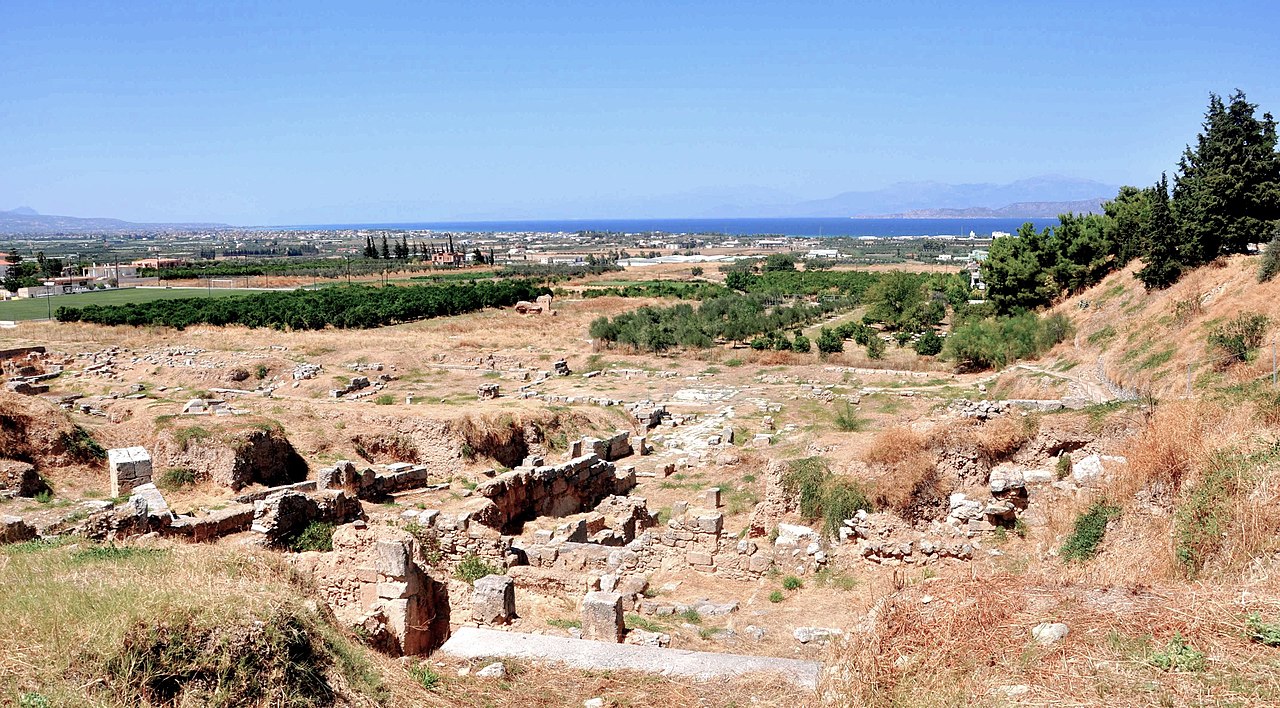
Excavations around the ancient acropolis and coastal sites have revealed temples, public buildings, and workshops that testify to Corinth's commercial and cultural role. The city is also prominent in early Christian history: the New Testament contains letters addressed to the Christian community there. Visitors and scholars study Corinth to understand urban life, trade networks, and cultural exchange in the ancient Mediterranean.
Notable sites
- Temple of Apollo and surrounding sanctuary areas
- Agora and administrative quarters
- Diolkos (ship trackway across the isthmus)
- Harbors and remains of industrial workshops
For further background and maps, see materials on Peloponnese, the Isthmus, the broader context of Ancient Greece, and Roman-period transformations under Roman rule.
Questions and answers
Q: What is the location of Corinth in the Peloponnese?
A: Corinth is located in the Peloponnese, specifically on the Isthmus of Corinth.
Q: Was Ancient Corinth a significant city in Ancient Greece?
A: Yes, Ancient Corinth was one of the largest and most important cities of Ancient Greece.
Q: What was the population of Ancient Corinth in 400 BC?
A: The population of Ancient Corinth in 400 BC was 90,000.
Q: Who demolished Corinth in 146 BC?
A: The Romans demolished Corinth in 146 BC.
Q: When was a new city built in place of the demolished Corinth?
A: A new city was built in place of the demolished Corinth in 44 BC.
Q: What did the Romans make Corinth later on?
A: The Romans made Corinth the provincial capital of Greece.
Q: What happened to Corinth after the Romans built a new city in its place?
A: Corinth continued to be an important city, serving as the provincial capital of Greece under Roman rule.
Related articles
Author
AlegsaOnline.com Ancient Corinth Leandro Alegsa
URL: https://en.alegsaonline.com/art/3837