
Georges Simenon: life, work and legacy of the creator of Inspector Maigret
Georges Simenon (1903–1989) was a Belgian novelist and short‑story writer, prolific creator of the detective Jules Maigret and of many psychological novels; his work shaped modern crime fiction and continental realism.
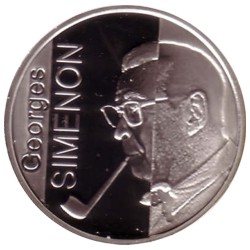
Georges Simenon (13 February 1903 – 4 September 1989) was a Belgian novelist and short‑story writer who produced a vast body of work during the 20th century. He wrote nearly 200 novels and numerous shorter pieces. Simenon is best known for creating the detective Jules Maigret, but his oeuvre also includes a substantial number of standalone psychological novels that explore character and social atmosphere.
Image gallery
7 Images



Life and career
Born in Liège, Simenon began his professional life as a journalist, an experience that shaped his economical prose and interest in social detail. Over decades he lived and worked in France, the United States and Switzerland. He maintained a famously disciplined writing routine and completed many books in short spans of time, becoming one of the most prolific European writers of his era. He died in Lausanne in 1989.
Maigret and detective fiction
The inspector Jules Maigret is Simenon’s best‑known creation: an observant, pipe‑smoking police commissioner whose investigations emphasize psychology, atmosphere and human motive rather than puzzle‑based detection. Simenon wrote dozens of Maigret novels and stories that range from Parisian cases to provincial mysteries, presenting crime as embedded in social life.
Romans durs and other novels
Beyond crime fiction, Simenon produced a series of serious, often dark novels sometimes referred to by critics as "romans durs" (hard novels). These works focus on inner conflict, moral ambiguity and the pressures that lead characters to drastic acts. They are notable for their spare language and sustained psychological tension.
Style, themes and influence
Simenon’s style is marked by clear, unadorned sentences, close observation and an ability to evoke place and mood. Recurring themes include loneliness, social class, the banality of evil and the fallibility of perception. His approach influenced subsequent crime writers who sought realism and character depth over elaborate plotting.
Selected works and adaptations
- Dozens of Maigret novels and short stories (series works translated into many languages)
- Numerous standalone psychological novels (known for their intensity and concision)
- Extensive adaptations for film, television, radio and theatre across Europe and beyond
Simenon remains a central figure in 20th‑century European literature: his Maigret stories continue to be read and dramatized, while his darker novels are studied for their probing portraits of human behaviour.

Works and film adaptations
→ Main article: List of Georges Simenon's works and List of film adaptations of Georges Simenon's works.
Documentary
- The Century of Georges Simenon. Documentary, France, 2013, 52 min., written and directed by Pierre Assouline, produced by Cinétévé, Les Films du Carré, RTBF Secteur Documentaires, INA, arte France, Simenon.tv, first broadcast: 23 February 2014 on arte, synopsis; retrieved 26 Dec. 2020.
Related articles
Author
AlegsaOnline.com Georges Simenon: life, work and legacy of the creator of Inspector Maigret Leandro Alegsa
URL: https://en.alegsaonline.com/art/38326