
Georges Seurat: Life, Technique, and Legacy of a Neo‑Impressionist Pioneer
Georges Seurat (1859–1891), French painter and founder of Neo‑Impressionism, developed pointillism — a scientific approach to color and composition that influenced modern art.
Georges Seurat (1859–1891) was a French painter whose careful studies of color and form led to one of the most distinctive moves away from Impressionism in the late 19th century. Trained in Paris and active for only a short career, Seurat combined academic composition with novel ideas about optics to create large, formally organized canvases that aimed to make color and light operate according to scientific principles rather than solely subjective perception. Early in his career he associated with the Impressionists and artists such as Claude Monet, but he soon developed a markedly different method.
Image gallery
10 Images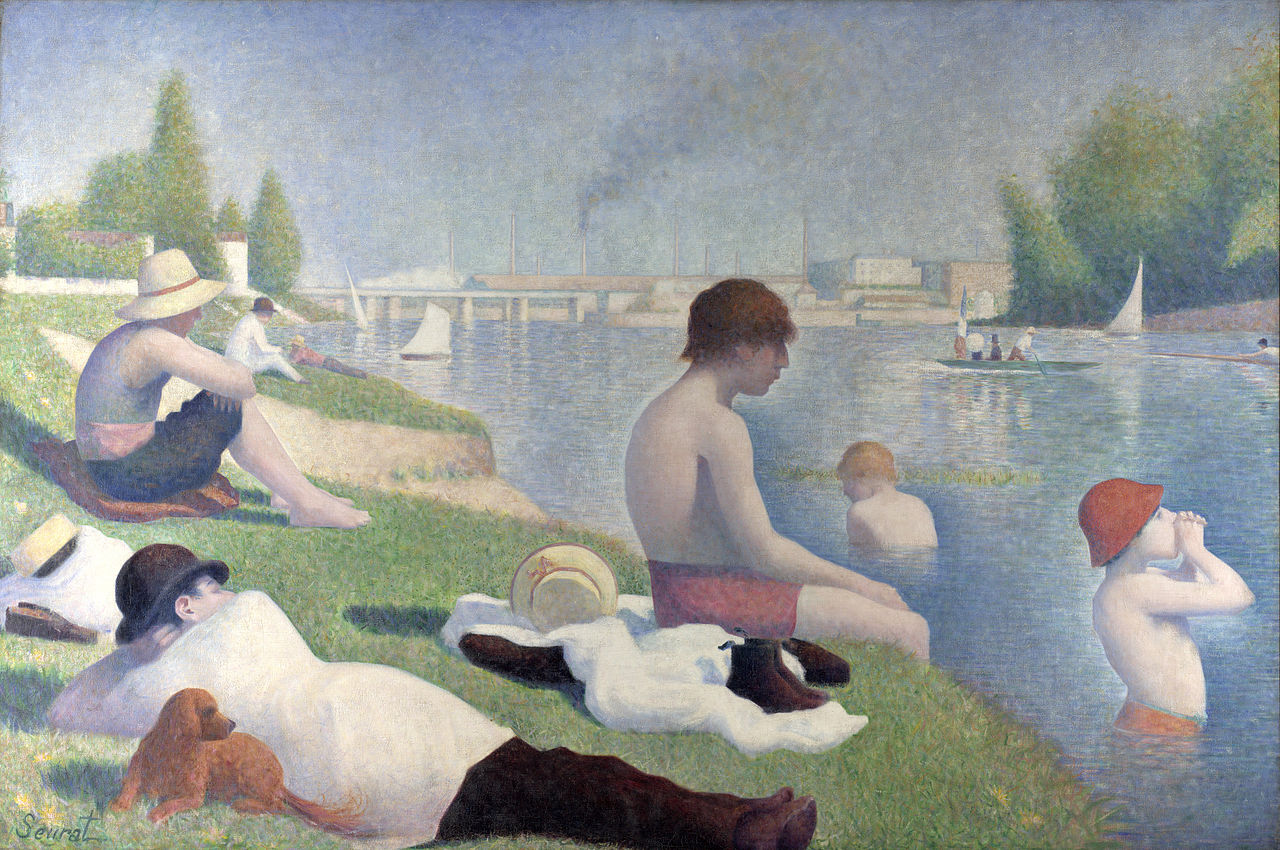


Style and technique
Seurat is best known for a technique commonly called pointillism, in which small, discrete touches of pure color are placed close together so that the viewer's eye blends them at a distance. Rather than mixing pigments thoroughly on the palette, Seurat applied separate, unmixed spots, dashes, or short strokes chosen for their optical interaction. This approach emphasizes the perception of color, contrast and vibration, and often produces an effect of luminosity and clarity. The method is sometimes described as divisionism, a term that highlights the deliberate separation of color into component parts.
Working process and influences
Seurat's paintings grew from careful preparatory work: detailed charcoal drawings, compositional studies, and experiments in color and tone. He drew on contemporary theories of color and vision, including ideas about optical mixing and simultaneous contrast advanced by scientists and writers of the period. His method combined those scientific ideas with rigorous draftsmanship and a concern for rhythm, balance and formal order. The result was a disciplined art that contrasted sharply with the rapid, improvisatory strokes associated with some Impressionist practice.
Development and reception
When Seurat began exhibiting his new work in the mid‑1880s, critics and fellow artists took notice. Critics coined the label pointillism (sometimes used pejoratively at first), while a circle of younger artists adopted his principles and became known collectively as Neo‑Impressionists. Paul Signac was an important ally who helped propagate Seurat's ideas. Although reactions were mixed at the time, Seurat's approach quickly became recognized as a major development in modern painting, influencing subsequent explorations of color and abstraction.
Major works and legacy
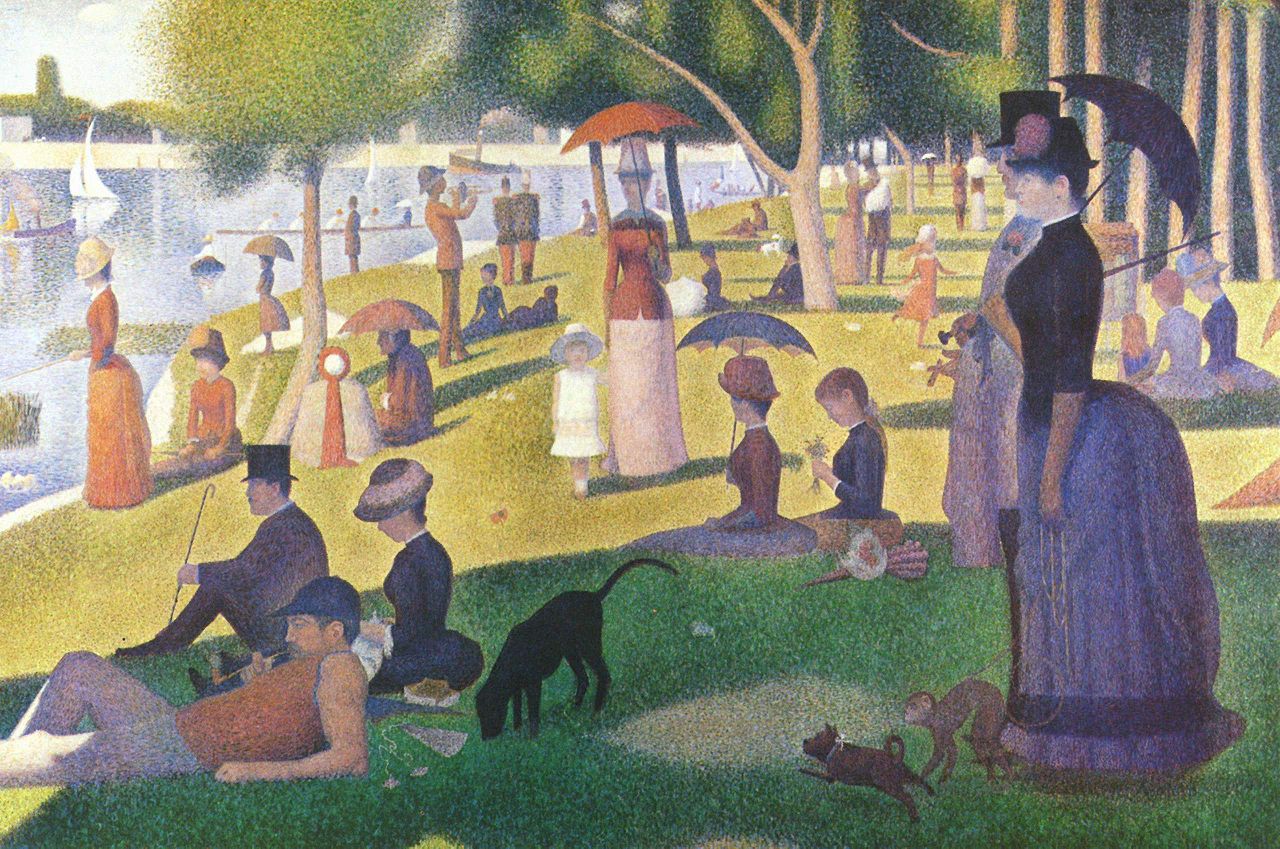
- A Sunday Afternoon on the Island of La Grande Jatte (1884–1886) — Seurat's most famous canvas, notable for its precise composition and pointillist surface.
- Bathers at Asnières (1884) — an earlier large work showing a suburban riverside scene; this painting is held by the National Gallery and is often cited alongside La Grande Jatte as essential to his achievement.
- Other notable works include portraits, studies of parks and circuses, and several color experiments that reveal his persistent inquiry into optical effects.
Seurat's influence extended beyond immediate followers: his emphasis on color relationships and surface structure helped pave the way for later movements that examined formal properties of painting, including various forms of abstraction. Museums and art historians now regard his work as a crucial bridge from late 19th‑century realism and Impressionism to the formal experiments of the 20th century.
Distinctions and notable facts
- Seurat was the founder and leading theoretical voice of Neo‑Impressionism, a movement that sought to apply scientific principles to composition and color.
- The term "pointillism" was originally used by critics; some artists preferred "divisionism" to emphasize the analytical splitting of color.
- Although his career was brief—he died young—Seurat left a clear, influential body of work characterized by meticulous planning and a concern for optical truth.
- His paintings are studied both for their aesthetic innovations and for their role in debates about color theory, perception, and the purpose of modern painting.
For further reading and images of his work, consult specialized museum resources and catalogues raisonnés that document Seurat's experiments and finished canvases in detail.
Questions and answers
Q: Who influenced Seurat's painting style?
A: Claude Monet, Renoir, Sisley and Pissarro influenced Seurat's painting style.
Q: What is the painting technique Seurat developed?
A: Seurat developed the painting technique called "pointillism," which involves painting in tiny dots of color that the viewer's eye would mix.
Q: What is the theory behind Seurat's pointillism technique?
A: The theory behind Seurat's pointillism technique was that the viewer's eye would mix the tiny dots of color to create a more vibrant and unified painting.
Q: What is the Neo-Impressionist movement?
A: The Neo-Impressionist movement refers to Seurat and his followers who were also known as the "New Impressionists."
Q: What are some of Seurat's most famous paintings?
A: Seurat's most famous paintings are A Sunday Afternoon on the Island of La Grande Jatte (1884-1886) in the Chicago Art Institute and Bathers at Asnières (1884) in the National Gallery, London.
Q: When did Seurat paint A Sunday Afternoon on the Island of La Grande Jatte?
A: Seurat painted A Sunday Afternoon on the Island of La Grande Jatte from 1884-1886.
Q: Where is Bathers at Asnières located?
A: Bathers at Asnières is located in the National Gallery, London.
Related articles
Author
AlegsaOnline.com Georges Seurat: Life, Technique, and Legacy of a Neo‑Impressionist Pioneer Leandro Alegsa
URL: https://en.alegsaonline.com/art/38325
Sources
- artic.edu : Art Institute of Chicago