
George Washington Parke Custis: life, legacy, and Arlington House
American writer, orator, and custodian of Washingtonian memory; builder of Arlington House and father-in-law of Robert E. Lee. Custis preserved Mount Vernon relics and promoted agricultural improvement.
George Washington Parke Custis (April 30, 1781 – October 10, 1857) was an American preservationist, writer, public speaker and landowner best known for building Arlington House and for his efforts to preserve the memory and belongings of George Washington. Born into the influential Custis family, he was raised by George Washington and Martha Washington after the death of his father, John Parke Custis, and later became a prominent figure in Virginia society.
Image gallery
8 Images


Early life and family
Custis was the grandson of Martha Washington through her first marriage and grew up at Mount Vernon, where he received an upbringing in the household of the first president. In 1804 he married Mary Lee Fitzhugh, and the couple had several children, though only one, Mary Anna Randolph Custis, survived to adulthood. That daughter married Lieutenant Robert E. Lee in 1831, linking the Custis estate to the Lee family and to later national events.
Arlington House and collections
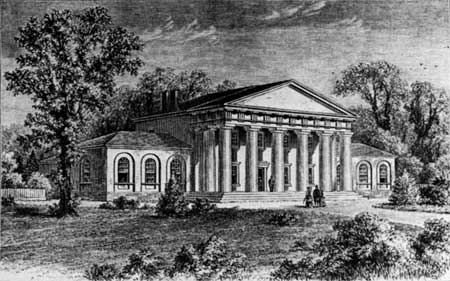
Construction of Arlington House overlooking the Potomac was completed around 1818. Custis conceived it as both a family home and a shrine to the Washington legacy. He displayed an extensive collection of relics, manuscripts and personal items connected with George Washington and cultivated the house as a site of remembrance. The estate combined a plantation economy with the role of a curated house museum long before that was common in the United States.
Public life, writing, and agricultural interests
Custis was active as an orator and produced writings that emphasized memory, commemoration, and the virtues he associated with the Revolutionary generation. He also took an interest in agricultural improvement: managing a large estate required attention to farming practices and estate administration, and Custis experimented with methods and promoted innovations that were typical of landed gentlemen of his era. He used his public speeches and writings to shape how Americans remembered the founding generation.
Later years, death, and legacy
In his later life Custis relied on family members, including his son-in-law Robert E. Lee, for help in running his household and business affairs. He died at Arlington House in 1857. After his death the estate passed to his daughter and to Lee; during and after the Civil War the property became centrally involved in national events. Arlington House and its grounds were occupied by Union forces and eventually became the site of Arlington National Cemetery, and the house and its collections have remained important to American historical memory.
Notable facts and significance
- Custis served as a bridge between the Washington household and later nineteenth-century commemoration of the Revolution.
- Arlington House was intended as a memorial to George Washington and housed many Mount Vernon artifacts and family papers.
- The Custis–Lee connection made the estate centrally important to Civil War and postwar legal and public history.
- Collections and writings associated with Custis contributed to nineteenth-century views of the first president and influenced later preservation efforts.
The story of George Washington Parke Custis combines family ties, preservation of material culture, and the practical demands of running a large estate. His efforts to keep alive the memory of George Washington and to showcase relics from Mount Vernon left a tangible mark: Arlington House remains a historic site and a physical reminder of how Americans of the early republic shaped their own history and commemoration practices.
Arlington and Alexandria context | Custis family connections | Mount Vernon associations | Washington household | Lee family link
Questions and answers
Q: Who was George Washington Parke Custis?
A: George Washington Parke Custis was an American writer, orator, and agricultural reformer who was the grandson of Martha Washington through her first husband, John Parke Custis.
Q: How was George Washington Parke Custis raised?
A: When his father died in 1781, George Washington Park Custis was raised at Mount Vernon by George and Martha Washington as their own son.
Q: Who did George Washington Parke Custis marry and how many children did they have?
A: George Washington Parke Custis married Mary Lee Fitzhugh and they had four children. Only one of their children, Mary Anna Randolph Custis, survived.
Q: When did Custis complete Arlington House and what was special about it?
A: Custis completed Arlington House in Alexandria, Virginia in 1818. He displayed a large number of Mount Vernon relics there.
Q: Who did George Washington Parke Custis's daughter marry and where did they live?
A: In 1831, George Washington Parke Custis's daughter married Lt. Robert E. Lee. They lived in Arlington House.
Q: How many children did Robert E. Lee and Custis's daughter have?
A: Robert E. Lee and Custis's daughter had seven children.
Q: Who helped Custis manage his business affairs and where did he die?
A: Lee helped Custis manage his business affairs. Custis died in his bedroom at Arlington House in 1857.
Related articles
Author
AlegsaOnline.com George Washington Parke Custis: life, legacy, and Arlington House Leandro Alegsa
URL: https://en.alegsaonline.com/art/38307
Sources
- nps.gov : NPA:George Washington Parke Custis