
Abdullah Öcalan: founder and longtime leader of the Kurdistan Workers' Party (PKK)
Abdullah Öcalan (born 1949) is the founding leader of the Kurdistan Workers' Party (PKK). Imprisoned since 1999, his politics shifted from Marxist-Leninist militancy to a theory called democratic confederalism.
Overview
Abdullah Öcalan (born 4 April 1949) is a Kurdish political figure best known as a founding leader of the Kurdistan Workers' Party, commonly abbreviated PKK. Emerging from a rural background in southeastern Anatolia, he organized and led a movement that challenged the Turkish state from the late 1970s onward. The PKK has been armed at times and is regarded by Turkey and several other states as a terrorist organization; Öcalan was captured in 1999 and has remained in custody in Turkey since his transfer there.
Image gallery
5 Images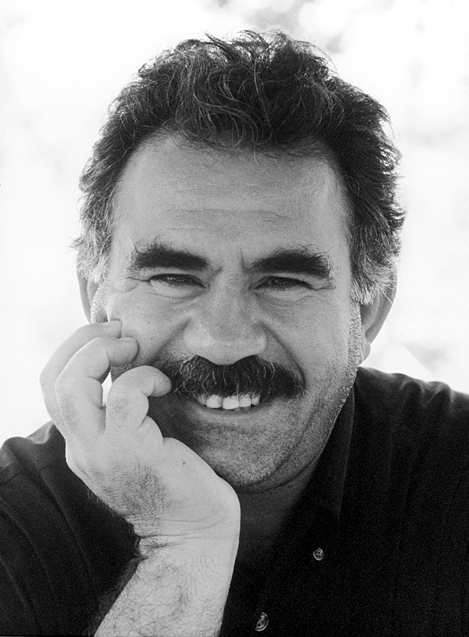


Early life and founding of the PKK
Öcalan was born into a peasant family in a village in Şanlıurfa Province and pursued vocational and political studies in Ankara. Influenced by leftist and anti-imperialist currents of the 1960s and 1970s, he participated in underground networks and was arrested in the early 1970s. In the late 1970s, while in exile, he helped found the PKK and was elected its leader at the group’s first congress. The organization combined Kurdish nationalism with a Marxist-Leninist framework in its early decades and developed military and political wings.
Ideology and development
Over time, Öcalan’s public positions shifted. Through the 1990s and especially during his imprisonment, he moved from orthodox Marxist-Leninist doctrine toward a concept he later called democratic confederalism. This vision emphasizes local self-governance, gender equality, ecology and pluralism rather than a conventional state-centered solution. His prison writings and statements have been influential among segments of the Kurdish movement and have shaped debates about autonomy and governance across the region.
Armed campaign, capture and trial
The PKK began an armed insurgency in the 1980s that led to decades of violent clashes with Turkish security forces and to significant civilian displacement and casualties. After being expelled from various regional bases in the late 1990s, Öcalan traveled through several countries before being captured in early 1999 in Kenya and returned to Turkey. He was tried on charges related to leading an organization responsible for attacks; authorities sentenced him to death in 1999, a sentence that was later commuted when Turkey abolished capital punishment.
Imprisonment, legal status and influence
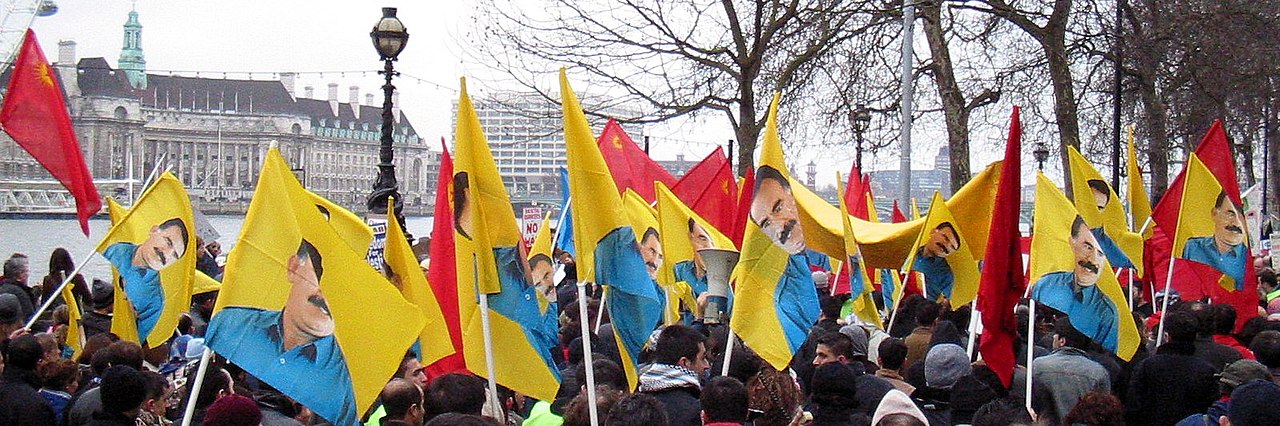
Öcalan has been held on an island prison in the Sea of Marmara since his conviction. Despite incarceration, he has continued to exert political influence through messages relayed by lawyers and supporters. He has at times called for ceasefires or negotiated prisoner-mediated proposals, and his ideas were a reference point during intermittent peace talks between Turkish authorities and Kurdish representatives. His detention has also been a focal point for protests, hunger strikes and international human rights scrutiny.
Legacy, controversies and notable facts
Öcalan remains a polarizing figure: seen by supporters as a leader of Kurdish rights and by critics as the head of an armed insurgency. His intellectual evolution—from militant separatism toward proposals for decentralized politics—has had practical effects on political organizing in parts of the Middle East. Important facts often noted in accounts of his life include his role in founding the PKK in the late 1970s, his capture in 1999 after moving between several countries, the original death sentence and its later commutation, and his continuing symbolic role in contemporary Kurdish politics.
Further reading and sources
- LINK_1
- LINK_2
- LINK_3
- LINK_4
- LINK_5
- LINK_6
- LINK_7
- LINK_8
- LINK_9
- LINK_10
- LINK_11
- LINK_12
- LINK_13
- LINK_14
- LINK_15
- LINK_16
- LINK_17
- LINK_18
- LINK_19
- LINK_20
- LINK_21
- LINK_22
- LINK_23
- LINK_24
- LINK_25
- LINK_26
- LINK_27
- LINK_28
- LINK_29
- LINK_30
- LINK_31
- LINK_32
- LINK_33
- LINK_34
- LINK_35
- LINK_36
- LINK_37
- LINK_38
- LINK_39
- LINK_40
- LINK_41
- LINK_42
Questions and answers
Q: Who is Abdullah Öcalan?
A: Abdullah Öcalan is the leader of Kurdistan Workers Party (PKK), an influential terrorist organization in Turkey.
Q: What does "Öcalan" mean in Turkish?
A: In Turkish, "Öcalan" means "he who takes revenge".
Q: Where was Abdullah Öcalan born?
A: He was born on April 4, 1949 into a poor peasant family in the village of Ömerli, in the district of Halfeti in Şanlıurfa Province.
Q: What did he study at university?
A: He studied at vocational school and then pursued a course at the School of Political Science, Ankara University.
Q: When did he become involved with militant Maoist politics?
A: He became involved in militant Maoist politics and was first arrested in 1973.
Q: How did PKK move away from violence towards a political approach? A: Through the 1990s, Öcalan publicly stated his desire to move the PKK away from violence and towards a political approach.
Q: Where was Abdullah Öcalan arrested after fleeing Europe?
A; After fleeing Europe, he was arrested after arriving from Moscow at Rome's Fiumicino Airport.
Tags
Related articles
Author
AlegsaOnline.com Abdullah Öcalan: founder and longtime leader of the Kurdistan Workers' Party (PKK) Leandro Alegsa
URL: https://en.alegsaonline.com/art/383
Sources
- turkishweekly.net : "Barzani Has Chosen the Terrorists' Side?"
- eur-lex.europa.eu : Council Decision 2011/70/CFSP of 31 January 2011 updating the list of persons, groups and entities subject to Articles 2, 3 and 4 of Common Position 2001/931/CFSP on the application of specific measures to combat terrorism - Official Journal L 028, 02/02/2011 P. 0057 - 0059
- state.gov : Foreign Terrorist Organizations, US Department of State