
George Mallory — British mountaineer and Everest mystery
Brief biography of George Mallory (1886–1924), his Everest expeditions, disappearance with Andrew Irvine, discovery of his body in 1999, and the ongoing debate over whether he reached the summit.
George Herbert Leigh Mallory (18 June 1886 – 8 or 9 June 1924) was an English mountaineer whose name is inseparable from the early British attempts on Mount Everest. A Cambridge-educated climber and schoolmaster, Mallory became a public figure in the 1920s through three expeditions to Everest and through a brief, often-quoted reply to a question about his motives: "Because it's there." He and his climbing partner Andrew Irvine vanished on the northeast ridge during the 1924 expedition and were last seen roughly 800 vertical feet from the summit. Mallory's body was discovered by a research team on 1 May 1999, but whether he and Irvine reached the top before they died remains unresolved.
Image gallery
10 Images




Early life and climbing background
Born in 1886, Mallory was educated at Winchester and at Cambridge, where he developed an interest in mountaineering. He worked as a schoolteacher and combined a professional career with serious climbing in the Alps and the Himalaya. His reputation grew not only from technical ability and physical endurance but also from a composed, determined public persona that helped transform high-altitude climbing into a subject of broad popular interest in Britain between the world wars.
Everest expeditions and disappearance
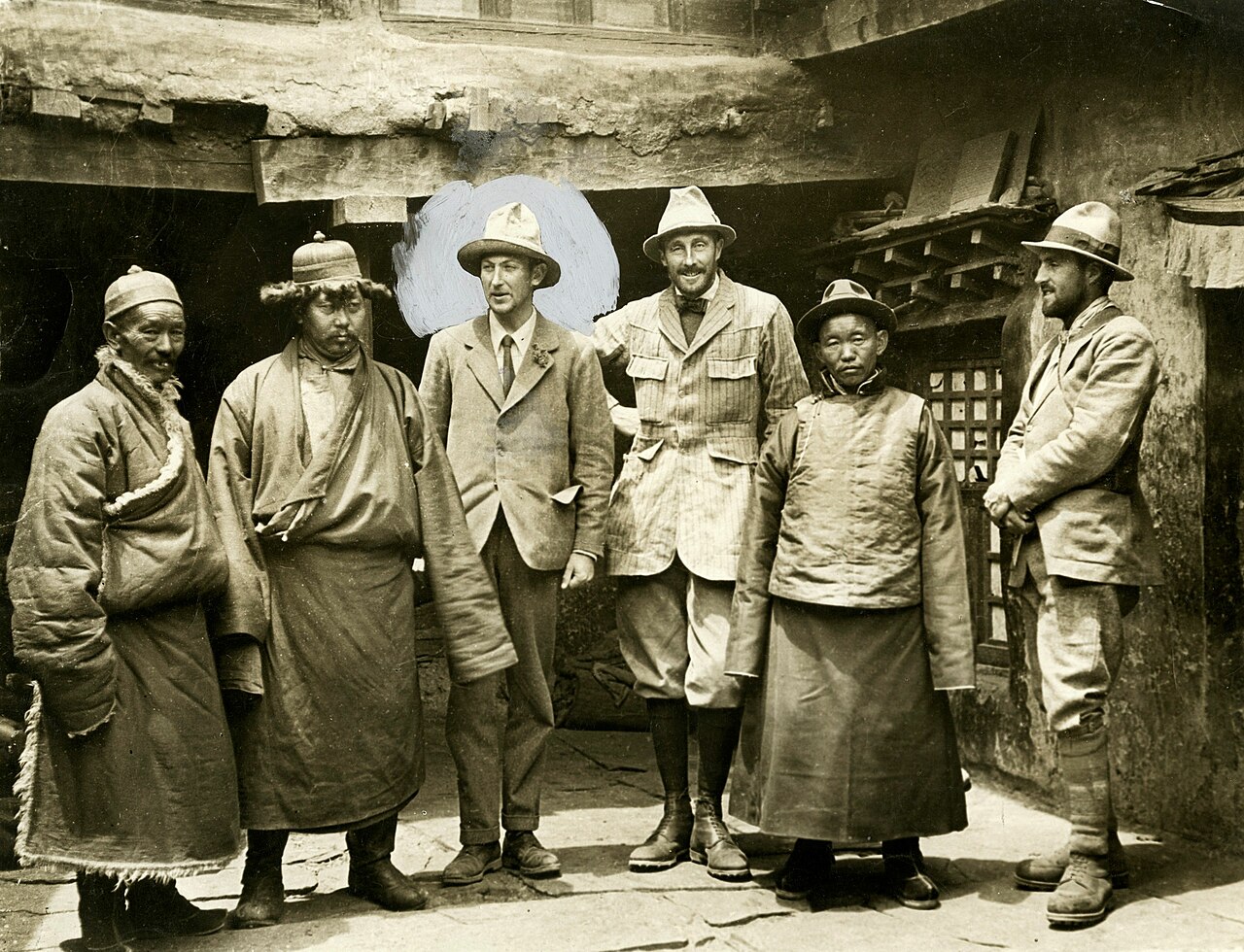
Mallory took part in the first reconnaissance of Everest in 1921, and he was a central figure on the 1922 and 1924 British expeditions. The 1924 attempt ended in tragedy: Mallory and the younger climber Andrew Irvine set out on 8 June (or 7–8 June, by some accounts) for a final summit push and were sighted for the last time at high altitude on the northeast ridge. They failed to return to camp, and extensive search efforts at the time could not resolve their fate.
Discovery and physical evidence
Seventy-five years after the disappearance, an expedition located Mallory's body on the north face of Everest on 1 May 1999. The position and condition of the remains suggested a fall during descent, but details recorded at the site and the material found with him have provoked debate rather than closure. Some personal items were recovered and catalogued by investigators; other potentially decisive evidence — notably a summit photograph or an intact camera — was not recovered, leaving the central question open.
Legacy and continuing debate
Mallory's life and disappearance have become one of mountaineering's enduring mysteries. He is remembered for his climbing skill, his role in the earliest organized attempts on the world's highest peak, and for the terse, famous reply that encapsulated a new kind of purposeful exploration. Scholars, climbers and historians continue to examine expedition records, eyewitness testimony and physical evidence found on Everest to assess whether Mallory and Irvine may have reached the summit before they died. The case illustrates both the extreme hazards of high-altitude exploration and the limits of historical reconstruction when key artifacts are missing.
Notable facts
- Participated in the three British expeditions to Everest in the early 1920s.
- Last seen with Andrew Irvine high on the northeast ridge during the 1924 summit attempt.
- Body discovered on 1 May 1999, but no definitive proof that the summit had been attained was found.
- Famous quotation attributed to him—"Because it's there"—is widely known and often debated as to its exact origin.
Mallory's story remains a cornerstone of mountaineering history: a mixture of achievement, national aspiration in the interwar period, and a question that continues to inspire expeditions and research on the high slopes of Everest.
Questions and answers
Q: Who was George Mallory?
A: George Mallory was a British mountaineer who took part in the first three expeditions to Mount Everest in the early 1920s.
Q: What happened to Mallory and his climbing partner, Andrew Irvine?
A: They disappeared high on the northeast ridge during the final summit attempt of the 1924 expedition.
Q: When was Mallory's fate discovered?
A: Mallory's fate was unknown for 75 years until a research expedition discovered his body on 1 May 1999.
Q: How close were Mallory and Irvine to the summit when they were last seen?
A: The last sighting of the pair was about 800 vertical feet from the summit.
Q: What was Mallory famous for saying about climbing Mount Everest?
A: Mallory was famous for replying to the question "Why do you want to climb Mount Everest?" with the reply: "Because it's there," described as: "The most famous three words in the history of mountaineering."
Q: What was the controversy surrounding Mallory's famous quote?
A: Questions have arisen about whether Mallory had said it or if it was a newspaper reporter making it up.
Q: Was it ever determined if Mallory and Irvine made it to the summit of Mount Everest?
A: Whether they made it to the summit or not remains a mystery.
Related articles
Author
AlegsaOnline.com George Mallory — British mountaineer and Everest mystery Leandro Alegsa
URL: https://en.alegsaonline.com/art/38249