
George Armstrong Custer (1839–1876)
Biographical overview of George A. Custer, U.S. cavalry officer who rose to fame in the Civil War and died at the Battle of the Little Bighorn; covers career, tactics, controversies, and legacy.
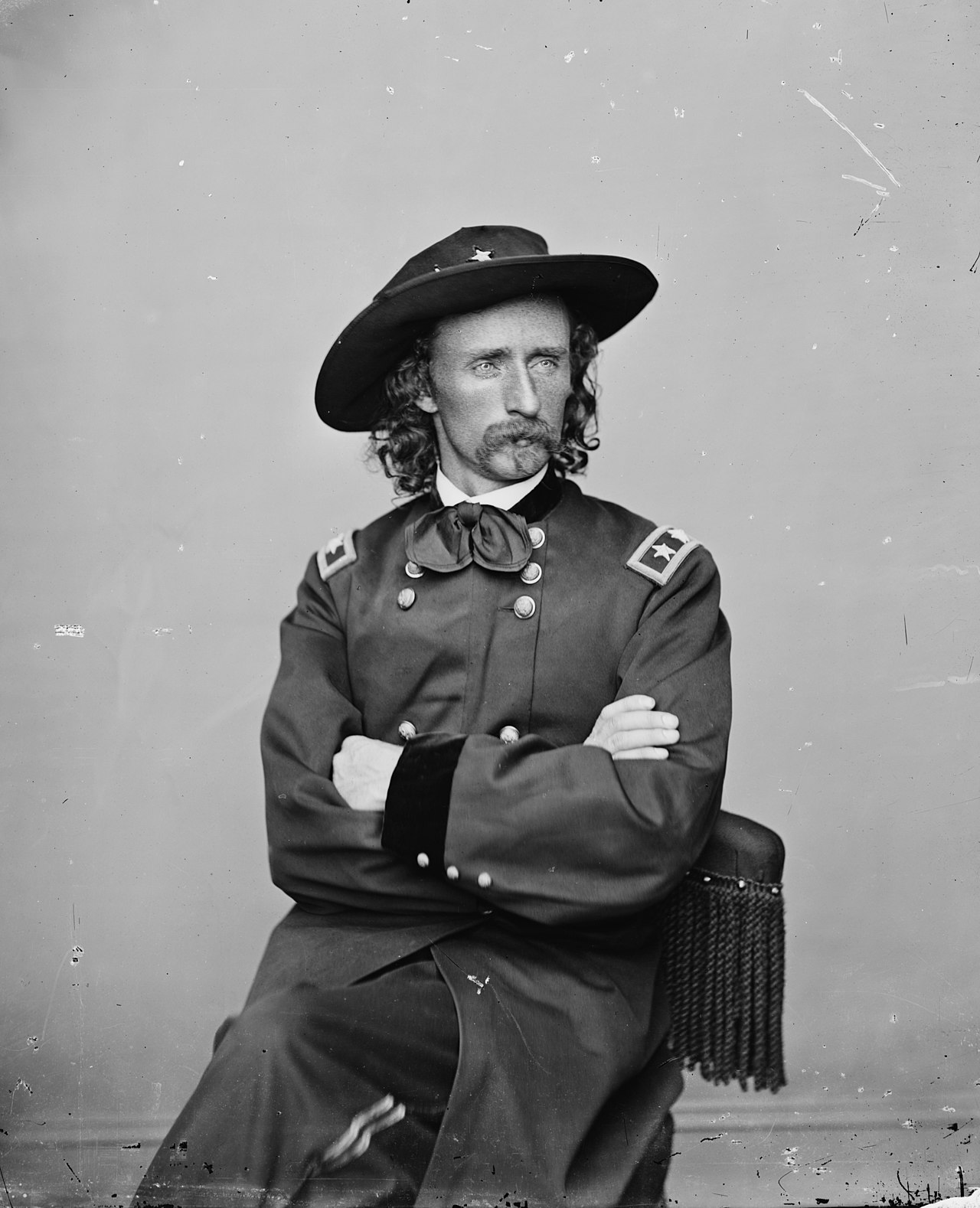
George Armstrong Custer was an American cavalry officer whose rapid rise during the Civil War and dramatic death during the Plains Indian Wars made him one of the most famous and contested military figures of the 19th century. Born in 1839 in Ohio, he graduated from the United States Military Academy and earned early distinction for aggressive cavalry actions and daring reconnaissance. Custer is remembered both for bold tactical instincts and for decisions that proved costly in later campaigns.
Image gallery
10 Images




Early life and Civil War service
Custer attended the United States Military Academy at West Point, where his class's graduation was accelerated as the Civil War began. He graduated near the bottom of his class, but his energetic leadership won rapid promotion. Serving with the Union Army, he performed staff duties and later commanded mounted units in operations such as the Peninsula Campaign and the campaigns of the Army of the Potomac. His association with senior cavalry commanders helped secure a series of brevet and volunteer promotions, including a young appointment as a brigadier general of volunteers. Veterans and contemporaries noted his flamboyant uniform and aggressive approach to cavalry warfare.
Postwar career and the Indian Wars
After the Civil War Custer reverted to regular army rank but remained in the cavalry. He led regiments on the late 1860s and 1870s frontier, taking part in campaigns that aimed to force Native American tribes onto reservations. In 1876, during a summer campaign in what is now Montana, Custer's detachment engaged a large coalition of Lakota, Northern Cheyenne, and Arapaho warriors at the Little Bighorn River. Custer and most of his immediate command were killed in that encounter, an event popularly known as "Custer's Last Stand." The battle became a focal point for national debate over frontier policy and military conduct.
Characteristics, tactics, and controversies
Custer's style combined personal bravery, rapid movement, and an appetite for bold action. He favored aggressive charges and close reconnaissance, often leading from the front. Critics accused him of recklessness, poor logistical planning, and an underestimation of enemy strength—criticisms that intensified after the Little Bighorn defeat. Supporters emphasized his battlefield successes in the Civil War and charisma as a leader. His interactions with Native Americans, and his role in campaigns that resulted in forced relocations and violent clashes, remain ethically and historically contested.
Legacy and historical interpretation
The image of Custer has been shaped by contemporaneous press coverage, memoirs, popular biographies, and memorials. He has been depicted alternately as a gallant hero, a tragic figure, and a symbol of a harsher chapter in American expansion. His life is studied in military history for lessons about cavalry use, command responsibility, and the limits of bold leadership. Custer's name appears in numerous monuments, battlefield parks, books, and films—often provoking debate over commemoration and perspective.
- Notable facts: Custer served in both the Civil War and the Indian Wars; his dramatic end at Little Bighorn made him an enduring cultural figure.
- Primary associations: West Point training, leadership of cavalry units, involvement in 19th-century frontier campaigns.
- For primary documents, battlefield research, and curated collections see resources such as military records, cavalry studies, and Civil War archives like period collections.
Further reading and archival materials can be found through institutional repositories and curated sites: West Point collections and cadet records (academy archives, alumni resources), accounts of early Civil War battles (Bull Run and related actions), staff and campaign papers (command correspondence), Army of the Potomac operations (campaign summaries), and focused studies of operations such as the Peninsula Campaign and the Gettysburg Campaign (peninsula operations, Gettysburg cavalry actions) that illuminate how young officers like Custer advanced through wartime promotion systems (brevet and volunteer ranks).
Questions and answers
Q: Who was George Armstrong Custer?
A: George Armstrong Custer was a United States Army officer and cavalry commander in the American Civil War and the Indian Wars.
Q: Where was George Armstrong Custer when the Civil War broke out?
A: George Armstrong Custer was a cadet at the United States Military Academy at West Point when the Civil War broke out.
Q: How did George Armstrong Custer perform in his class at West Point?
A: George Armstrong Custer graduated last in his class at West Point.
Q: What was George Armstrong Custer's role in the First Battle of Bull Run?
A: George Armstrong Custer served as a staff officer for Major General George B. McClellan in the Army of the Potomac's 1862 Peninsula Campaign in the First Battle of Bull Run.
Q: How did George Armstrong Custer earn his promotion to Brigadier General in the Civil War?
A: George Armstrong Custer's association with cavalry commander Major General Alfred Pleasonton earned him a brevet promotion from First Lieutenant to Brigadier General of United States Volunteers at the age of 23 during the Gettysburg Campaign.
Q: What were the Indian Wars?
A: The Indian Wars were a series of conflicts between the United States government and various Native American tribes that occurred between 1622 and 1918.
Q: When did George Armstrong Custer die?
A: George Armstrong Custer died on June 25, 1876.
Related articles
Author
AlegsaOnline.com George Armstrong Custer (1839–1876) Leandro Alegsa
URL: https://en.alegsaonline.com/art/38175
Sources
- nps.gov : "George Armstrong Custer – Little Bighorn Battlefield NM"