
Georg Büchner: German dramatist, prose writer and political radical (1813–1837)
Georg Büchner (1813–1837) was a German dramatist, prose writer and revolutionary whose brief life produced influential plays and a novella that shaped modern drama and German literary modernism.
Karl Georg Büchner (17 October 1813 – 19 February 1837) is remembered as a remarkably original German dramatist and playwright and as a writer of prose and political tracts. Born into a professional family — his brother was the physician and thinker Ludwig Büchner — he produced a small body of work that has been celebrated for its psychological acuity, social engagement and formal innovation. Critics and readers often speculate that had he lived beyond his mid‑twenties he might have matched the stature of earlier German masters such as Goethe and Schiller.
Image gallery
4 Images
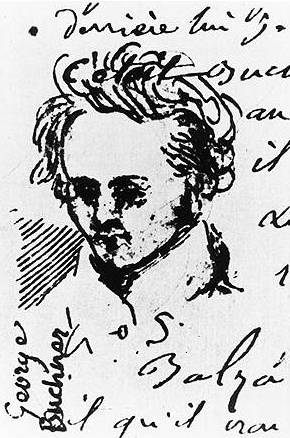


Life and education
Büchner was born in the village of Goddelau near Darmstadt in the Grand Duchy of Hesse‑Darmstadt. His early schooling emphasized classical languages — Latin and Greek — alongside modern tongues such as French, Italian and English, but Büchner’s interests also embraced natural science. He entered university to study medicine, first in Strasbourg and then in Gießen, combining anatomical research and scientific observation with wide reading in literature and political thought. His scientific curiosity resulted in a doctoral dissertation on the nervous system of the barbel fish, later published in Paris and Strasbourg.
Political commitment and exile
From about 1828 Büchner was drawn into radical political circles and reformist societies. He joined a group that became associated with the Gießen and Darmstadt section of the Gesellschaft für Menschenrechte (Society for Human Rights) and, together with the Protestant theologian Friedrich Ludwig Weidig, helped prepare a revolutionary pamphlet, Der Hessische Landbote, which openly criticized landowners and state authorities in the Grand Duchy. Charged with treason for this activity, Büchner escaped arrest by fleeing to Strasbourg, while Weidig was arrested and died in custody. In exile Büchner combined translations (including plays by Victor Hugo) with original literary work and with continuing scientific study.
Major works and themes
Büchner’s extant literary output is compact but influential. Key items include:
- Dantons Tod (Danton’s Death) — a drama about the French Revolution that interrogates the moral and political consequences of revolutionary violence and leadership (published 1835).
- Lenz — a novella based on the life of Sturm und Drang poet Jakob Michael Reinhold Lenz that explores psychological crisis and social isolation; a work praised as an early instance of modern prose.
- Leonce und Lena — a satirical romantic comedy that lampoons courtly life and hereditary rule and that stages questions about identity and freedom (1836).
- Woyzeck — an unfinished, fragmentary play centering on a soldier and other working‑class figures; notable for being one of the first German dramas to make ordinary, economically oppressed people the protagonists. Published posthumously, it later inspired Alban Berg’s opera Wozzeck.
Across these works Büchner shows a commitment to depicting social injustice, to probing psychological interiority and to experimenting with dramatic form. He drew on contemporary social ideas, including the influence of figures such as François‑Noël Babeuf and early socialist thinkers like Claude Henri de Saint‑Simon, and he translated French literature while studying the broader European intellectual context.
Style, influence and reception
Büchner’s writing is characterized by compressed dialogue, sudden tonal shifts, vivid imagery and a refusal to sentimentalize suffering. His portrayal of mental distress in Lenz and the fragmented, episodic scenes of Woyzeck anticipate literary movements such as naturalism and expressionism; by the late 19th and early 20th centuries his work was rediscovered and became a touchstone for modern drama. Editors and scholars like Karl Emil Franzos played a role in reviving interest after Büchner had been largely neglected for decades. In the 20th century playwrights, directors and composers continued to adapt and respond to his texts — for instance, Alban Berg’s opera Wozzeck (first performed 1925) — and critics have called Lenz a precursor of modern European prose.
Later life, death and legacy
In October 1836 Büchner accepted a post as a lecturer in anatomy at the University of Zurich and returned to Switzerland, where he taught and continued to write until his untimely death from typhus on 19 February 1837. He was only twenty‑three. Because his oeuvre is small and because several works remained unfinished, scholarship has often concentrated on textual restoration, editorial history and performance practice. His works influenced later German literature, contributing to currents that fed into naturalism and expressionism, and his fusion of political engagement with experimental form continues to attract readers and theatre makers.
For further reading on Büchner’s life, editions of his dramatic fragments and modern productions, consult scholarly overviews and contemporary translations. General introductions and annotated editions address the political context of the Grand Duchy and Büchner’s scientific training, while theatrical studies focus on staging strategies, the play’s episodic structure, and the representation of class and madness. Modern scholarship also examines his editorial reception from the 19th century to the present, showing how his reputation has evolved over time. Additional resources and reference entries can be found through research libraries and specialized literary databases (prose, biography, science, medical studies, French literature).
Selected topics for further exploration include the pamphlet Der Hessische Landbote and its legal consequences, Büchner’s translations of plays such as Lucrèce Borgia and Marie Tudor, the anatomical studies he published in Paris and Strasbourg, and the ways later composers and directors adapted his fragmentary Woyzeck into finished works. His short but intense career links nineteenth‑century scientific curiosity, revolutionary politics and the emergence of a modern dramatic sensibility, making him a pivotal figure in German letters and in the history of modern theatre.
Questions and answers
Q: Who was Karl Georg Büchner?
A: Karl Georg Büchner was a German dramatist and writer of prose. He was the brother of physician and philosopher Ludwig Büchner. Many people think that he might have become as important as Johann Wolfgang von Goethe and Friedrich Schiller if he had lived longer.
Q: Where was Karl Georg Büchner born?
A: Karl Georg Büchner was born in Goddelau near Darmstadt, Hesse-Darmstadt.
Q: What did he study at university?
A: At university, Karl Georg Büchner studied medicine in Strasbourg. In addition to medicine, he also studied French literature and political thought while in Strasbourg.
Q: What kind of secret society did he start while studying in Gießen?
A: While studying in Gießen, Karl Georg Büchner started a secret society which wanted revolutionary change. With the help of the Protestant theologian Friedrich Ludwig Weidig, they published the leaflet Der Hessische Landbote, a revolutionary text that criticized social problems in the Grand Duchy of Hesse.
Q: What is his most famous play?
A: Karl Georg Büchner's most famous play is Woyzeck, an unfinished work which became the basis for Alban Berg's opera Wozzeck which was first performed in 1925. It is notable for being one of the first literary works written in German whose main characters were members of the working class.
Q: How did Arnold Zweig describe Lenz?
A: Arnold Zweig described Lenz, one of Karl Georg Buchner's only works of prose, as "the beginning of modern European prose".
Related articles
Author
AlegsaOnline.com Georg Büchner: German dramatist, prose writer and political radical (1813–1837) Leandro Alegsa
URL: https://en.alegsaonline.com/art/38159