
Geography of Romania
Physical geography of Romania: landforms from the Carpathians to the Danube Delta, major rivers, climate zones, biodiversity, soils, natural resources and regional patterns.
Romania covers an area of 238,391 square kilometres and sits on the eastern edge of Europe, commonly classified as part of southeastern Europe. Its territory is defined by a mix of mountainous, hilly and plain landscapes, and its modern borders meet Hungary, Ukraine, the Republic of Moldova and the Balkan states. In the south, a significant portion of the national frontier follows the course of the Danube, creating boundaries with Serbia and Bulgaria and shaping the lowland corridor that links inland regions to the coast.
Image gallery
10 Images


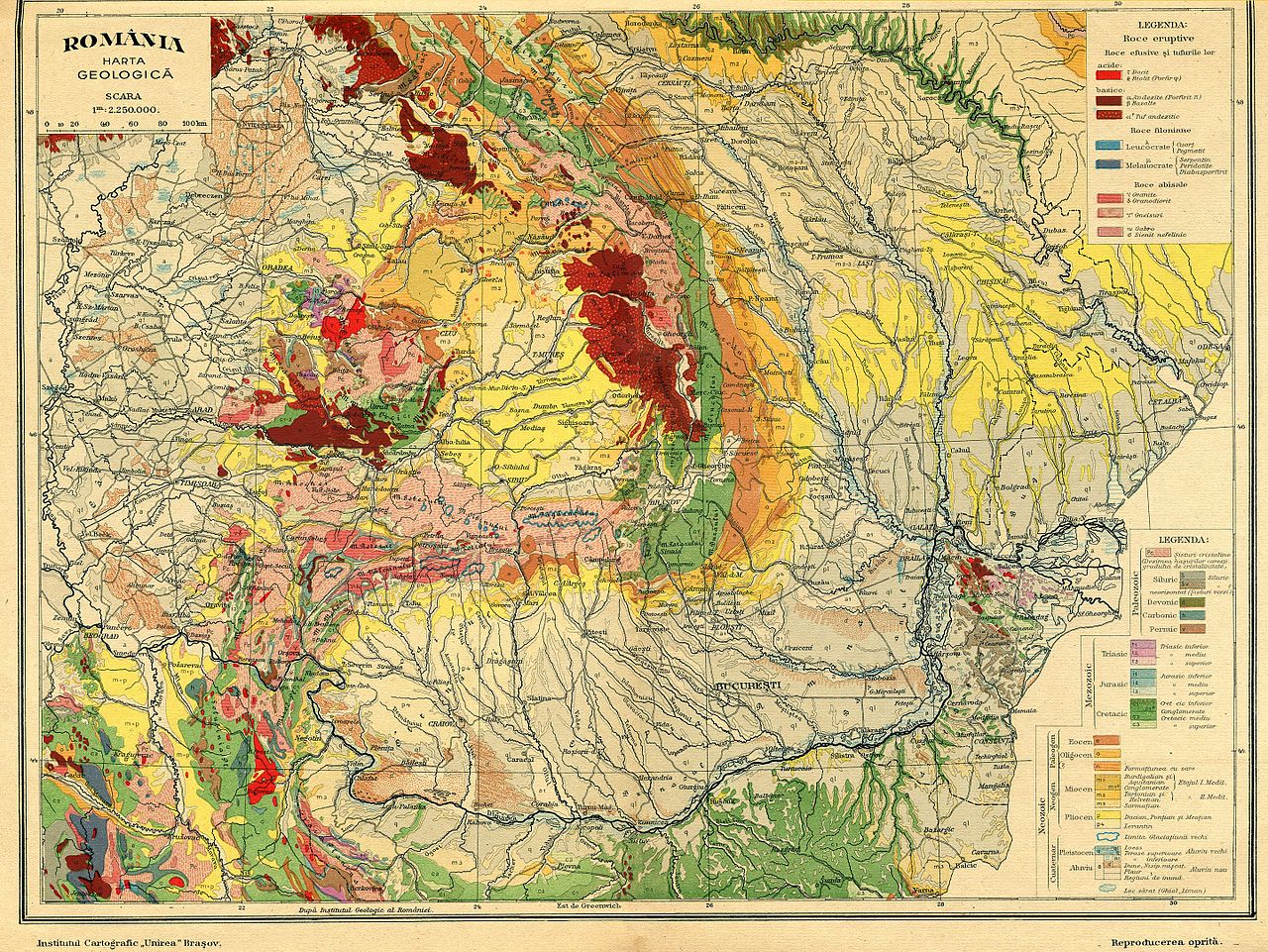


Major landforms
The Carpathian Mountains form the most conspicuous feature of Romania’s relief, describing an arc through the central part of the country. These mountains contain the highest peaks, forested slopes and alpine-like valleys that influence climate, hydrology and land use. Enclosed by the Carpathian arc is the Transylvanian Plateau and basin area, a region of intermontane plateaus, hills and basins associated with Transylvania. To the south and east of the mountains the terrain descends to broad plains and river valleys, including the Romanian Plain and historic regions such as Oltenia and Moldavia.
Rivers, the Danube and the delta
Rivers are fundamental to Romania’s geography. The Danube, Europe's second-longest river, functions as a major transport route and international boundary. Along its course in eastern Romania the Danube is joined by the Prut, which forms the border with the Republic of Moldova, and by numerous tributaries that drain the Carpathians and interior highlands. Among these tributaries are the Siret, which runs through the Moldavian region; the Olt, which descends from the Carpathians into Oltenia; and the Mureş, which crosses the Transylvanian basin from east to west.
As the Danube reaches the coast it fans into the Danube Delta, one of Europe’s largest and best-preserved deltas. The delta occupies a complex of channels, reed beds, lakes and marshes that support important fisheries, traditional human settlements and a wide array of wildlife. For its ecological value the area is classified as a biosphere reserve and is internationally recognized for its biodiversity; it is also inscribed as a World Heritage Site.
Climate and ecosystems
Romania’s climate is broadly temperate continental, with warm summers and cold winters, though the Black Sea coast and lower-elevation southern plains receive milder maritime influence. Elevation produces marked local differences: the Carpathians have lower temperatures, more precipitation and extended snow cover in winter, while lowland plains experience greater seasonal extremes. Vegetation zones range from deciduous and mixed forests on lower mountain slopes to coniferous forests at higher altitudes, extensive agricultural fields on plains, and extensive wetland and reed ecosystems in the delta and river corridors.
Soils, resources and human use
Soil types and fertility vary with geology and relief. Lowland areas contain fertile chernozems and alluvial soils that support intensive cereal, vegetable and industrial crop cultivation. Mountain and hilly zones provide timber, pasture and mineral resources; hydroelectric schemes exploit river gradients in several basins. Urbanization, transport corridors along river valleys and coastal tourism on the Black Sea shore are important components of the national economy, while traditional rural land uses remain widespread in interior regions.
Conservation and regional patterns
Romania’s geography places it at a crossroads of Central, Eastern and Southeastern Europe, leading to a diversity of regional landscapes and human adaptations. Protected areas, national parks and Natura 2000 sites conserve representative ecosystems, while the Danube Delta remains a focus for international conservation due to its bird populations and wetland habitats. Regional planning seeks to balance economic development with the conservation of forests, rivers and wetlands that underpin biodiversity and local livelihoods.
For further geographic overviews and maps consult specialist references and national resources. The interaction of mountains, rivers, plains and the Black Sea gives Romania a varied physical character that continues to shape settlement, agriculture and conservation priorities across the country.
References and external resources: general encyclopedic and government sources provide detailed maps, climatic statistics, and legal frameworks for protected areas; consult authoritative atlases and national park administrations for site-specific information.
Area data | Regional classification | Border with Serbia | Border with Bulgaria | The Danube | Black Sea coast | Danube Delta | Biosphere reserve status | Biodiversity highlights | World Heritage listing | Prut and Moldavia | Olt and Oltenia | Transylvania region
Questions and answers
Q: What is the area of Romania?
A: Romania has an area of 238,391 square kilometres (92,043 sq mi).
Q: Where does the Danube River form part of Romania's border?
A: The Danube forms part of Romania's border with Serbia and Bulgaria.
Q: What river joins the Danube in Romania?
A: The Prut River joins the Danube in Romania.
Q: What river runs through Moldavia from north to south?
A: The Siret River runs through Moldavia from north to south.
Q: What river runs through Transylvania from east to west?
A: The Mureş River runs through Transylvania from east to west.
Q: How large is the Danube Delta in Romania?
A: The Danube Delta in Romania is the second largest delta and one of the best kept deltas in Europe.
Q: Is the Danube Delta a protected area?
A: Yes, it is a biosphere reserve and a biodiversity World Heritage Site.
Related articles
Author
AlegsaOnline.com Geography of Romania Leandro Alegsa
URL: https://en.alegsaonline.com/art/38133
Sources
- whc.unesco.org : "Danube Delta"
- countrystudies.us : "Romania: Climate"
- romaniatourism.com : "Romania: climate"
- insse.ro : The 2004 Yearbook