
General Certificate of Secondary Education (GCSE)
The GCSE is the main set of public examinations taken by 15–16-year-olds in parts of the UK. It covers a broad range of subjects, assessment formats and has undergone major reforms since its introduction.
Overview
The General Certificate of Secondary Education (GCSE) is a suite of public examinations taken mainly by students aged 15–16 in England, Wales and Northern Ireland. It forms the principal qualification at the end of compulsory secondary schooling and is administered by a number of awarding bodies. The GCSE framework sets out aims, subject content and assessment methods and provides nationally recognised grades that help determine progression to further study, training or employment. For more information about the examinations in general see GCSE exams.
Image gallery
1 Image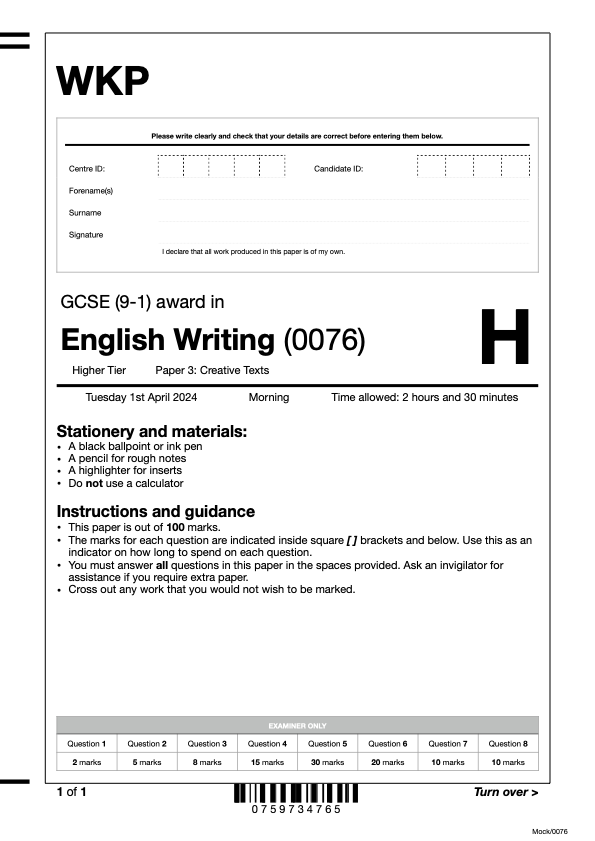
Who takes GCSEs and where
GCSEs are typically taken after two years of study in secondary school. They are most common in England (England), Wales (Wales) and Northern Ireland (Northern Ireland), and are also offered in several other British territories and international centres (overseas centres). Students usually study a mix of compulsory and optional subjects; the core curriculum commonly includes English (English), mathematics (mathematics) and science (science), with Welsh language study required in Wales until an earlier age in the curriculum (Welsh).
Structure and assessment
GCSEs are organised by subject. Assessment methods vary by discipline: many subjects are assessed primarily by written examinations at the end of the course, while others include practical assessments, controlled tasks or non-examined elements. Historically GCSE grading used letters (A*–G); in England a numerical 9–1 scale was introduced for reformed subjects to provide finer differentiation at the top end. Schools and exam boards set timetables and specify entry rules, and some candidates are entered early for selected subjects if they demonstrate readiness.
Typical programme and progression
Most learners take several GCSEs: a typical programme might include the core subjects plus a selection from humanities, modern languages, arts and vocational options. The exact number varies: many students take around eight to ten subjects, while some take fewer or pursue broader vocational pathways. Achieving passes in a number of GCSEs—often interpreted as grades 4 or 5 and above under the numeric system—is commonly required by schools and colleges for progression to A-levels, vocational qualifications or employment.
History and notable developments
GCSEs were introduced in the late 1980s to unify earlier secondary qualifications and have been revised periodically to reflect curriculum and assessment priorities. Reforms in the 2010s changed grading and content in many subjects. In 2020 standard examinations were cancelled nationwide because of the COVID-19 pandemic; that year assessments were replaced by teacher-assessed outcomes and subsequently adjusted by awarding bodies (COVID-19 impact).
Uses, recognition and controversies
- GCSEs form the basis for entry to post-16 options such as A-levels, apprenticeships or vocational study.
- They are used by employers and institutions to check basic skills and subject knowledge.
- Reforms and grade changes have prompted debate about standards, comparability over time and the role of coursework versus final exams.
For further official guidance and detailed subject specifications consult the awarding organisations and national education authorities: see general resources on examinations and regional information for England, Wales, and Northern Ireland. Additional practical advice for students and teachers is available from exam boards and school careers services (international centres, English language, mathematics support, science resources, Welsh curriculum).
Questions and answers
Q: What is the General Certificate of Secondary Education (GCSE)?
A: The GCSE is a set of exams taken in England, Wales, Northern Ireland and other British territories. They are usually taken by students aged 15-16 after two years of study.
Q: Can students take their GCSEs early?
A: Yes, some students can take their exams early if their teachers think the students are capable.
Q: How many subjects do most students taking their GCSEs study?
A: Most students taking their GCSEs study between 5 and 25 subjects.
Q: Are there any mandatory subjects for all pupils to study until they are 15-16?
A: Yes, all pupils have to study English, mathematics and science until they are 15-16.
Q: Is it compulsory for pupils to take the GCSE exams?
A: No, it is not compulsory for pupils to take the GCSE exams but the large majority do so. In Wales, students must also study Welsh until they are 14.
Q: What grades must a pupil pass in order to move on to A-levels?
A: Most schools require that a pupil passes 5 or more GCSE exams at grades 4 or 5 or above before they can move on to study A-levels.
Q: When were the 2020 GCSE exams cancelled due to COVID-19 pandemic?
A: The 2020 GCSE exams were cancelled for the first time due to the COVID-19 pandemic
Related articles
Author
AlegsaOnline.com General Certificate of Secondary Education (GCSE) Leandro Alegsa
URL: https://en.alegsaonline.com/art/37938