
Anastasio Somoza García
Nicaraguan military leader and politician who ruled as president and dictator from 1936 until his assassination in 1956; founder of the Somoza family dynasty and a central figure in 20th‑century Nicaraguan history.
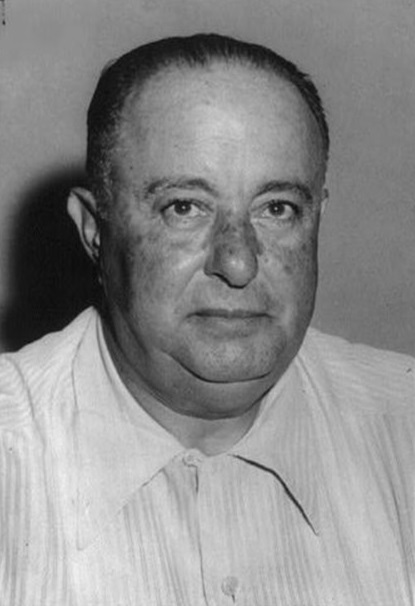
Anastasio Somoza García (1896–1956) was a Nicaraguan military officer and politician who dominated his country’s politics from the mid-1930s until his death. He is best known for converting control of the armed forces into a personal political machine, consolidating power through patronage, economic control and family appointments, and establishing a dynasty that governed Nicaragua for decades. Historians characterize his regime as authoritarian and deeply corrupt, while contemporaries in Washington often supported him because of his anti-communist stance.
Image gallery
5 Images



Early life and rise
Somoza was born into a prosperous family of landowners and agricultural entrepreneurs. The son of a wealthy landowner and coffee planter, he received some education abroad, including time in Philadelphia, where he forged connections that aided his later career. He married Salvadora Debayle Sacasa, a member of another influential family, strengthening his social and political networks. Returning to Nicaragua, Somoza built personal fortune through investments spanning land, transport and manufacturing, creating an overlap between private wealth and public authority.
Seizure of power and rule
After the turbulent post-revolutionary period, Somoza emerged as the effective head of the National Guard. In 1936 he won the presidential election and thereafter used control of the armed forces to dominate the state. He placed relatives and loyalists in key posts, exercised influence over the legislative and judicial branches, and directed the ruling political party to maintain political control. Observers labeled his administration corrupt and repressive; critics decried nepotism and the subordination of legal institutions to executive interests.
- Office: He served as President and retained power through a combination of formal office and informal control.
- Nature: Many historians describe his regime as a dictatorship because of its authoritarian character.
- Legislature and Judiciary: Legislative and judicial institutions were weakened or co-opted to sustain his rule.
Internationally, Somoza’s anti-communist posture won him support from the United States and other Western governments during a period when Cold War priorities shaped foreign policy. At home, his control of economic levers and patronage networks fostered both private enrichment and political stability for supporters, but it also entrenched inequality and limited political freedoms. Critics called his government one of the most corrupt in the region during that era.
Somoza’s rule ended violently. On September 21, 1956 he was shot in the city of León by a young poet and dissident; the assassin has been widely identified in historical accounts as the poet who carried out the attack. Somoza died days later, and his family maintained control of state institutions. The Somoza family continued to exert political authority for years afterward, effectively keeping power until they were removed in the late 1970s.
Legacy: Somoza’s tenure left a lasting imprint on Nicaragua’s political landscape. Supporters credit him with relative public order and economic modernization in certain sectors; detractors emphasize repression, concentrated wealth and weakened democratic institutions. The Somoza era provided the context for later revolutionary movements and debates about governance, reform and foreign influence that shaped Nicaragua’s subsequent history. For further reading consult specialized biographies and historical studies on 20th‑century Nicaragua and the Central American Cold War period (authoritative overviews and archival collections are helpful starting points).
For introductory resources on related topics—Nicaraguan politics, military influence in Latin America, and mid‑century US foreign policy—see links and reference materials provided by academic and public archives: Nicaragua background, transport economics, and analyses of authoritarian governance (corruption studies), as well as primary source collections and contemporary press accounts (economic history, biographical notes).
Note: This overview summarizes broadly accepted facts about Anastasio Somoza García and his rule while avoiding contested specifics. For detailed archival evidence and contested interpretations, consult specialized historical monographs and primary documents in academic libraries and collections.
Questions and answers
Q: Who was Anastasio Somoza García?
A: Anastasio Somoza García was the President and dictator of Nicaragua from 1936 until his death in 1956.
Q: What was the government of Anastasio Somoza García known for?
A: The government of Anastasio Somoza García was known for being one of the most corrupt in history.
Q: Why was Anastasio Somoza García supported by the United States?
A: Anastasio Somoza García was supported by the United States because his administration was anti-communist.
Q: How did Anastasio Somoza García become wealthy?
A: Anastasio Somoza García became wealthy through investments in land, transport, real estate, and manufacturing.
Q: How did Anastasio Somoza García maintain control of Nicaragua?
A: Anastasio Somoza García maintained control of Nicaragua by placing family members in key positions of the government and controlling the Nationalist Liberal Party which controlled the legislature and Judiciary.
Q: When and how did Anastasio Somoza García die?
A: Anastasio Somoza García was shot in León, Nicaragua by a poet on September 21, 1956. He died eight days later.
Q: Who continued to rule Nicaragua after Anastasio Somoza García's death?
A: Anastasio Somoza García's family continued to rule in Nicaragua for two more decades after his death.
Related articles
Author
AlegsaOnline.com Anastasio Somoza García Leandro Alegsa
URL: https://en.alegsaonline.com/art/3791
Sources
- latinamericanhistory.about.com : "Biography of Anastasio Somoza García"
- countrystudies.us : "The Somoza Era, 1936-74"
- thefamouspeople.com : "Anastasio Somoza García Biography"