
Anarchy: meanings, forms, history, and distinctions
Comprehensive overview of anarchy: definitions, political and social forms, historical development, examples of statelessness, and distinctions between anarchism and disorder.
Overview
Anarchy (from the Greek αναρχία, meaning "without a ruler") is a term with several related senses. At its simplest it denotes the absence of a single, centralized authority or sovereign power. In political theory it also names a family of ideas—collectively called anarchism—that argue for organizing social life without coercive government and for voluntary, non-hierarchical institutions. In everyday language and much of the mass media the word is often used to describe chaotic conditions or widespread lawlessness. Careful usage distinguishes between anarchy as a normative project and anarchy as a descriptive condition such as collapse or contested authority.
Image gallery
6 Images
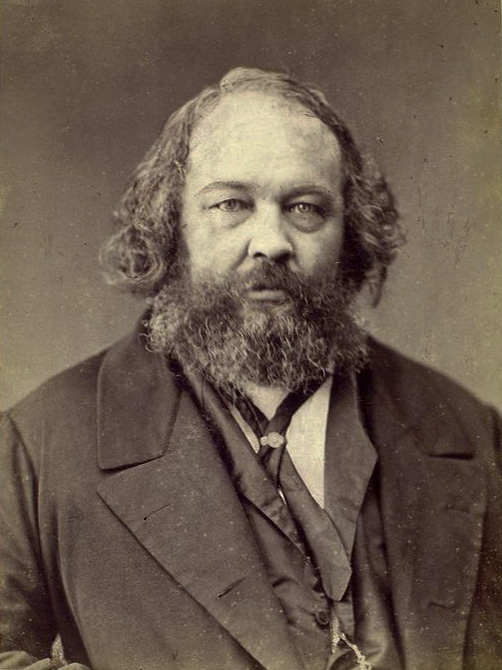




Common meanings and distinctions
Several distinct but overlapping meanings are commonly discussed:
- Political philosophy: Anarchism proposes forms of social organization based on voluntary association, mutual aid and decentralized decision-making rather than centralized state power. Currents in the tradition include collectivist, individualist and communal tendencies; one well known current is anarcho-communism, which emphasizes collective ownership and free association.
- Statelessness: A descriptive situation in which formal state institutions do not exercise effective control. This may be an intentional characteristic of some anarchist communities or an outcome of institutional collapse. Historical and anthropological studies examine how social order can persist or re-form in such conditions.
- Disorder and competing authority: The word is often applied to environments where multiple actors—warlords, militias, criminal networks or competing administrations—claim control. Political scientists may prefer terms such as contested sovereignty, fragmentation or polyarchy to capture that complexity.
Principles and mechanisms proposed by anarchists
Anarchist thinkers and movements have proposed a variety of mechanisms they believe can generate order without a centralized state. These include:
- Mutual aid and cooperative institutions that encourage voluntary support across families and communities.
- Federations of local councils, assemblies or workplace collectives that link decision-making across regions while retaining local autonomy.
- Customary law, mediation and restorative practices for dispute resolution rather than punitive state courts.
- Non-hierarchical organization of production and distribution, ranging from small cooperatives to broader communal arrangements.
History and notable figures
Modern anarchism emerged in the 19th century as part of broader debates about state power, industrial society and social justice. Early figures and influences debated the role of property, markets and individual liberty, producing a range of approaches from individualist to collectivist. The tradition has been expressed in political writings, social movements, labor struggles and experiments in local self-organization. For readers wanting primary texts and historical details, specialist bibliographies and collections of classic works provide authoritative sources.
Uses and contemporary examples
In international reporting the term sometimes characterizes severe instability or state collapse. For example, commentators have described parts of Somalia as a prolonged case in which central authority disintegrated and a mixture of local actors—including armed groups, mobs and warlords—exercised control in different areas. Compilations such as the CIA World Factbook and other country reports summarize conditions that analysts interpret as statelessness or fragility.
Other countries have experienced periods of transitional or fragile governance after conflict: observers have discussed situations in Afghanistan, Albania, Burundi, Bosnia and Herzegovina and Rwanda at various times as involving emerging or contested authorities. Analysts sometimes warn of growing instability in places where violence, corruption and weak institutions undermine civil society; such warnings have been raised about the Solomon Islands and other fragile settings where unrest may be looming.
Misconceptions and debates
A common misconception equates anarchy simply with chaos. Anarchist theorists generally reject this interpretation, arguing that order can arise spontaneously from social norms, reciprocal obligations and horizontal institutions without centralized coercion. Critics reply that such arrangements can be fragile, susceptible to internal domination, or difficult to scale. Another debate concerns terminology: when multiple authorities compete for control, some scholars prefer the term civil unrest or fragmentation rather than "anarchy," because the latter can obscure the presence of organized power exercised by nonstate actors. Others stress that the existence of competing authorities demonstrates a form of governance that is not genuinely non-hierarchical.
Practical and ethical considerations
Assessing real-world cases requires careful, evidence-based study of how security, conflict resolution and public services function in the absence of an effective central state. Analysts examine whether community institutions, informal legal systems and local governance provide sufficient protection and fairness. When discussing movements or ideologies, it is useful to consult primary texts and historical analyses that situate proposals in specific social and economic contexts. When discussing collapsed states, reports typically document which actors—local councils, militias or transitional administrations—are providing services and how they are held accountable.
Further reading and resources
Introductory surveys of political theory and contemporary case studies of fragile states give complementary perspectives on anarchy as both an idea and a description of social conditions. For concise definitions and country-level descriptions see reference compendia and specialized reports; for the political tradition consult anthologies of anarchist writings and scholarly histories. Readers may also examine debates about the relationship between authority and cooperation, including studies of voluntary association and cooperative enterprises, and consider concrete historical examples of nonstate governance such as intentional communities or periods of localized self-rule. For examples of how particular communities have tried to organise without central control see case studies and archival material that document both successes and challenges in practice, including accounts of constructed societies and of states in crisis where ordinary governance functions have been disrupted, prompting local responses that ranged from informal councils to emergent administrations and negotiated settlements. For a general introduction consult explanatory entries and surveys that treat both the normative arguments of anarchist theory and the empirical literature on stateless societies, while keeping in mind that scholarly and journalistic sources use different criteria and terminology when they describe instability, collapse or intentional non-state organization. For contemporary governance contexts see materials on how formal governments contend with nonstate powers and how contested claims to authority produce varied outcomes in security, economy and social cohesion.
Questions and answers
Q: What is the meaning of anarchy?
A: Anarchy is a word that has more than one meaning. Some of its meanings are when there is no leader or when nobody has power over everyone, when there is no political order and confusion, and when people do not have any reason to work together or do not have anything that makes them feel like a group.
Q: Is Somalia an example of anarchy?
A: Yes, according to the CIA World factbook Somalia is in a state of anarchy where the government is no longer in control and some parts of the country are ruled by mobs and warlords who sometimes fight one another.
Q: Are there other countries besides Somalia that could be considered anarchic?
A: Yes, Afghanistan, Albania, Burundi, Bosnia and Herzegovina, Rwanda are all countries where government is "emerging" or "transitional", which were in civil unrest in the near past. The Solomon Islands may also be moving towards civil unrest due to violence, corruption and crime undermining stability and civil society.
Q: What's the difference between anarchy and polyarchy?
A: The difference between "anarchy" and "polyarchy" lies in that with anarchy there would be only one governing authority while with polyarchy there would be multiple competing authorities vying for resources such as food oil land or groups of people.
Q: Who believes true anarchy would work well?
A: Someone who believes true anarchy would work well might be referred to as an anarchist; this kind of thinking being called anarchism.
Q: How long has anarchism been thought about for?
A: Anarchism has been thought about for hundreds of years.
Q: What does The Politics of Individualism attempt to teach readers about anarchism?
A:The book called The Politics of Individualism attempts to teach its readers that anarchism is not always simply an opposition to the government but a complicated political movement against the domination of few people.
Related articles
Author
AlegsaOnline.com Anarchy: meanings, forms, history, and distinctions Leandro Alegsa
URL: https://en.alegsaonline.com/art/3786