
Geisha: Traditional Japanese female entertainers and cultural artists
Geisha are professional Japanese entertainers trained in music, dance, conversation and hospitality. This article outlines their names, training stages, dress, districts, historical context, misconceptions and contemporary role.
Overview
Geisha (also called geigi or, in Kyoto, geiko) are traditional professional entertainers in Japan who preserve and perform refined arts. They are trained to entertain guests through music, dance, conversation and hospitality, and are widely regarded as cultural artists rather than sex workers. The occupational world of geisha is often described as the karyūkai, literally the "flower and willow" world, a term that evokes both aesthetic beauty and resilience.
Image gallery
10 Images



Etymology and names
The word geisha combines the characters 芸 (gei, "art") and 者 ("person"), so the most literal English rendering is "artist" or "person of the arts". Regional and historical variants exist: apprentices in Kyoto are known as maiko, while other cities have different apprentice titles such as han'gyoku or o-shaku. These names reflect local customs and the variety of roles within the profession.
Training and apprenticeship
Becoming a geisha requires long periods of disciplined training under the guidance of senior practitioners. In Kyoto classical apprenticeship can last several years, with apprentices living and studying in a registered house. Training covers musical instruments, singing, dance, calligraphy, tea ceremony and social skills needed to host and pace an evening. A formal match with a house and a teacher is an important step; registration to an okiya is generally required for professional work.
Stages and roles
Apprentices progress through stages with distinct names and expectations. A maiko typically displays bright, youth-oriented costume and more elaborate hair, while a fully licensed geisha adopts subtler dress and simplified hairstyles. In some cities training is shorter; historically, in Tokyo the path to full professional status could take months to a year, and apprentice titles and duties there differ from those in Kyoto.
Costume, makeup and hair
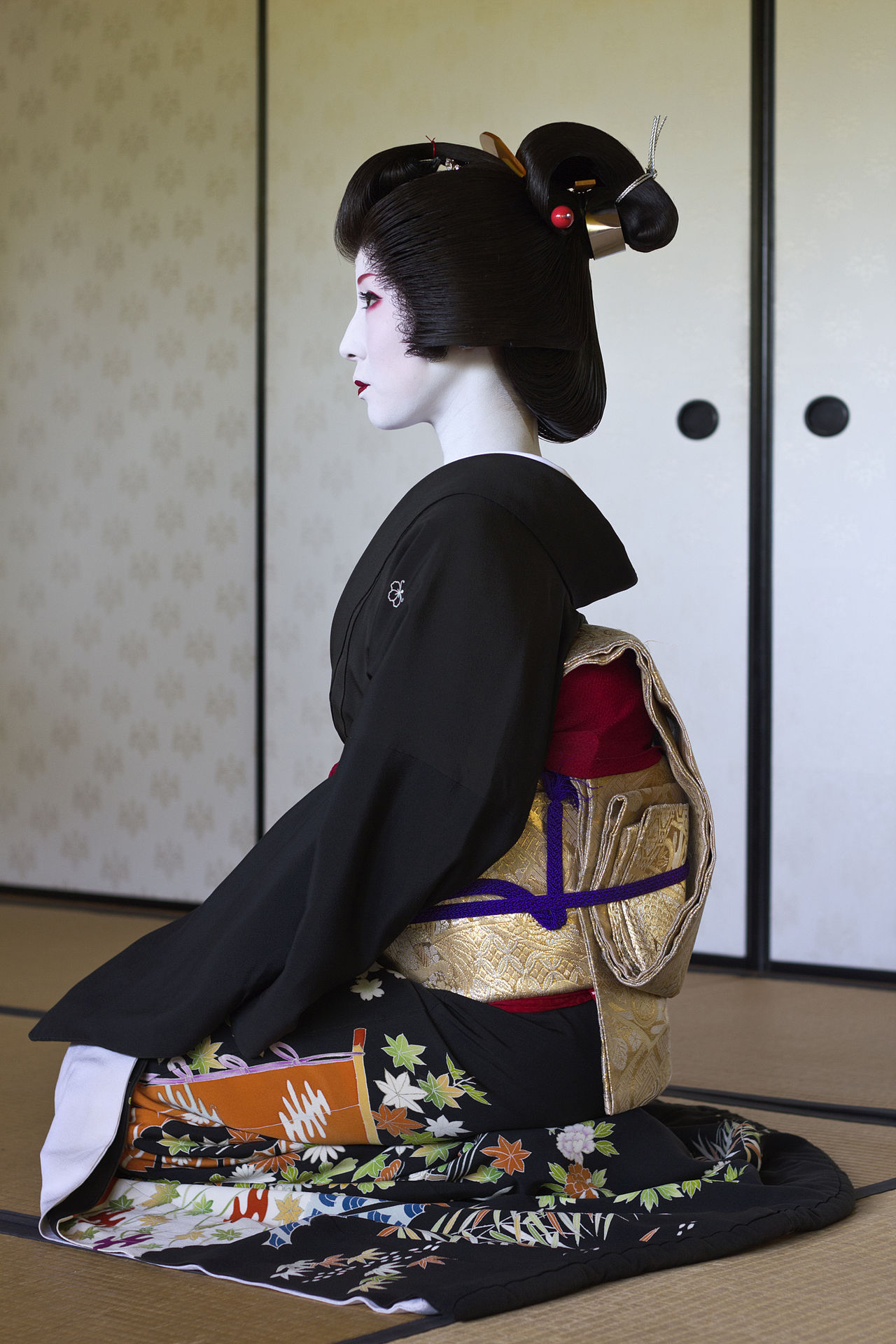
Clothing and cosmetics signal rank and occasion. Maiko often wear long-sleeved, colorful kimono and use distinctive white face powder called oshiroi for performances and ceremonies. Their obi (kimono sash) may be extraordinarily long and tied in elaborate knots; some apprentices wear obi reported to reach several metres in length. Hairstyles for apprentices can be ornate and are sometimes created with the wearer's own hair, though wigs are used in many places. Senior geisha typically wear simpler kimono and reserve white makeup for special events.
Arts and repertoire
Geisha are trained in a range of traditional Japanese arts. Instrumental music, notably the shamisen, is central, together with singing and choreographed dance. Study of poetry, seasonal repertoire and the ability to conduct refined conversation and parlor games are also important; these skills help shape the flow of an engagement and create an atmosphere of cultured hospitality.
Workplaces and districts
Geisha typically perform in specialized neighborhoods known as hanamachi ("flower towns") and are often associated with tea houses and private venues. The house system keeps practice within registered okiya, which manage contracts, training and finances. While many geisha still live in traditional houses, experienced practitioners may maintain independent homes.
Social rules and reputation
Professional codes govern behavior, including etiquette toward patrons, rules about public appearances, and expectations for secrecy and discretion that historically reinforced the exclusivity of the profession. Though popular culture has sometimes confused their role with prostitution, scholars and practitioners emphasize that geisha identity centers on artistic training, entertainment and hospitality rather than sexual services.
History and change
Geisha traditions developed over centuries, reaching particular prominence in the Edo period and continuing to evolve through the modern era. Urban entertainment quarters gave rise to specialized performers, and over time geisha became associated with refined cultural forms. Social and economic change has reduced numbers from historical peaks, but the role persists through local patronage, cultural events and educational initiatives.
Contemporary practice and preservation
Today geisha perform at festivals, cultural showcases, private banquets and tea-house gatherings. Many senior geisha teach, mentor apprentices, and take part in programs aimed at preserving traditional arts. Municipalities, cultural organizations and individuals support apprenticeships and public demonstrations to maintain skills and public awareness of the karyūkai.
Notable figures and perspectives
Several geisha have gained international attention by writing memoirs or participating in documentaries; among them, Mineko Iwasaki is a well-known figure who has spoken about the traditions, discipline and personal meaning of geisha life. Such accounts often stress both the artistry and the demanding lifestyle involved.
Further reading and resources
For study and context, works by historians of Japanese performing arts, museum collections and local cultural centers offer reliable information. Visitors interested in seeing performances or learning introductory skills can look for seasonal dances and public events in hanamachi. The following links provide entry points to related topics and terminology: traditional entertainers, specialized training, dance, translation, English usage, artist, cultural icon, alcohol service, music, poetry, training, Japanese arts, obi, kimono, Tokyo, Kyoto, geigi, maiko, okiya, hanamachi, karyūkai, Mineko Iwasaki.
Questions and answers
Q: What does the term geisha mean?
A: Geisha is a Japanese word made up of two parts, 芸 (gei) meaning "art," and 者 (sha), meaning "person who does" or "to be employed in." The most literal translation in English is "artist."
Q: Where are the strictest geisha traditions found?
A: The strictest geisha traditions can be found in Kyoto. Geisha have worked there for the longest time and it takes up to five years of training to become a professional geisha in this city.
Q: What do apprentice geishas wear?
A: Apprentice geishas, also known as maiko, wear white make-up called oshiroi and long-sleeved kimono with many bright colors. Maiko in some places also wear a belt, called an obi, that is up to 6 metres (20 ft) long. Many maiko wear fancy hairstyles made with their own hair, but in some places they wear wigs instead.
Q: How long does it take to become a full geisha in Tokyo?
A: Becoming a full geisha in Tokyo takes from six months to one year.
Q: What are apprentice geishas called in Tokyo?
A: Apprentice geishas in Tokyo are called han'gyoku (半玉), which means "half jewel" or "half pay," and o-shaku (御酌), which means "one who serves (alcohol)."
Q: Where do many traditional geishas live?
A: Many traditional geishas live in traditional houses called okiya located within neighborhoods referred to as hanamachi ("flower town"). Successful older geishas may have their own home. A registered address at an okiya is required for any working professional Geisha.
Q: What is the world that Geishas are part of referred to as?
A: The world that Geishas are part of is referred to as karyūkai (花柳界), which translates into English as “the flower and willow world”
Related articles
Author
AlegsaOnline.com Geisha: Traditional Japanese female entertainers and cultural artists Leandro Alegsa
URL: https://en.alegsaonline.com/art/37849
Sources
- gnavi.joy.ne.jp : "Tokyo Asakusa"
- mostlyfiction.com : ""Geisha, A Life", by Mineko Iwasaki" · web.archive.org
- whatever.net.au : whatever.net.au
- hanamiweb.com : "Inside Japan" · web.archive.org
- geigi-gakko.castillejo.org : "Geigi Gakko" · web.archive.org
- eden.rutgers.edu : eden.rutgers.edu
- japonismo.com : "El mundo de la flor y el sauce"
- angelfire.com : "Shizuka Online"