
Geiger counter
A Geiger counter is an instrument that detects and counts ionizing radiation using a Geiger–Müller tube, commonly used for radiation surveys, monitoring, and safety checks.
Overview
A Geiger counter, often called a Geiger–Müller counter, is an instrument used to detect and count ionizing radiation. Typical targets include alpha particles, beta particles and gamma rays. The device converts individual ionizing events into electrical pulses that are presented as audible clicks, a meter deflection, or a digital count rate. It exists in handheld, bench, and fixed-installation formats.
Image gallery
10 Images


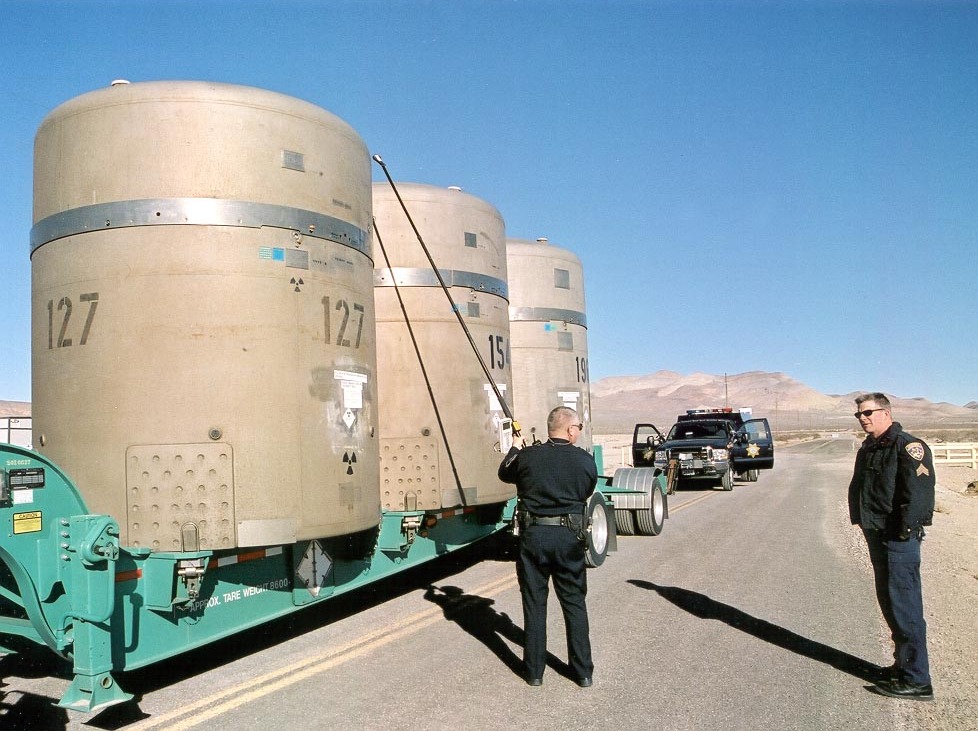


Design and operation
At the heart of the Geiger counter is the Geiger–Müller (GM) tube: a gas-filled cylinder or tube with an anode wire in the center and a cathode forming the wall. A high voltage (typically several hundred volts) is applied across the electrodes. When ionizing radiation enters the tube and ionizes the gas, an electron avalanche occurs and produces a measurable pulse. A quenching mechanism—either a halogen gas or organic vapor—stops the discharge so the tube can recover.
Main components
- Geiger–Müller tube: the sensing element; varieties include end-window, pancake and windowless types for different particles.
- High-voltage supply: provides the voltage that allows avalanches to form.
- Pulse processing: electronics that count pulses, handle dead time, and drive displays or alarms.
- Display and alerts: audible clicks, LEDs, analog meters or digital readouts for counts per minute (CPM) or counts per second (CPS).
History
The basic counting concept dates to the early 20th century when Hans Geiger developed techniques to detect charged particles. In 1928 Hans Geiger and Walther Müller introduced the Geiger–Müller tube, which made robust, portable counting practical. Over subsequent decades the instrument became widespread because of its mechanical simplicity, low cost and suitability for field work.
Uses, strengths and limitations
Geiger counters are widely used for radiation surveys, contamination checks, environmental monitoring, education, industrial safety, and emergency response. Strengths include ruggedness and sensitivity to single particles. Limitations: they do not measure particle energy, so they cannot perform spectroscopy; response varies with radiation energy and type; and they have a finite "dead time" after each pulse during which further events are missed. At very high radiation levels a GM tube can saturate and under-report dose rates.
Variants, calibration and comparisons
Variants include pancake detectors for alpha and low-energy beta detection, and shielded gamma probes for higher-energy photons. Proper interpretation of readings usually requires calibration against known sources and, for dose assessment, conversion from count rates to dose units (such as sieverts) using energy-dependent factors. For energy discrimination or precise dose-rate measurements, scintillation detectors or semiconductor spectrometers are preferred over GM tubes.
Practical notes
Users should be aware that a Geiger counter signals the presence of ionizing radiation but rarely identifies the isotope or energy. Selecting the right tube and maintaining calibration are important for reliable surveys. For more detailed technical or regulatory information, consult specialized resources or manufacturer documentation via links such as further reading on ionizing radiation and topic-specific entries on alpha detection, beta detection and gamma monitoring.
Questions and answers
Q: What is a Geiger counter?
A: A Geiger counter is an instrument that measures ionizing radiation such as alpha particles, beta particles, or gamma rays.
Q: What is another name for a Geiger counter?
A: A Geiger counter is sometimes called a Geiger-Müller counter.
Q: What can a Geiger counter be used for?
A: A Geiger counter can be used as a hand held radiation survey instrument, but it can also be used as a bench instrument or permanently installed.
Q: When was the original operating principle of the Geiger counter discovered?
A: The original operating principle of the Geiger counter was discovered in 1908.
Q: What was developed in 1928 relating to the Geiger counter?
A: The Geiger-Müller tube was developed in 1928 and has been very popular due to its robust sensing detector and element and relatively low cost.
Q: What types of radiation can a Geiger counter measure?
A: A Geiger counter can measure ionizing radiation such as alpha particles, beta particles, or gamma rays.
Q: Why is the Geiger counter a popular instrument?
A: The Geiger counter is a popular instrument due to its robust sensing detector and element and relatively low cost.
Related articles
Author
AlegsaOnline.com Geiger counter Leandro Alegsa
URL: https://en.alegsaonline.com/art/37845