
Ge'ez script (Ethiopic): origin, structure, and modern use
Overview of the Ge'ez (Ethiopic) script: its origins, structure as an abugida, historical development from an abjad, and contemporary use for languages of Ethiopia and Eritrea.
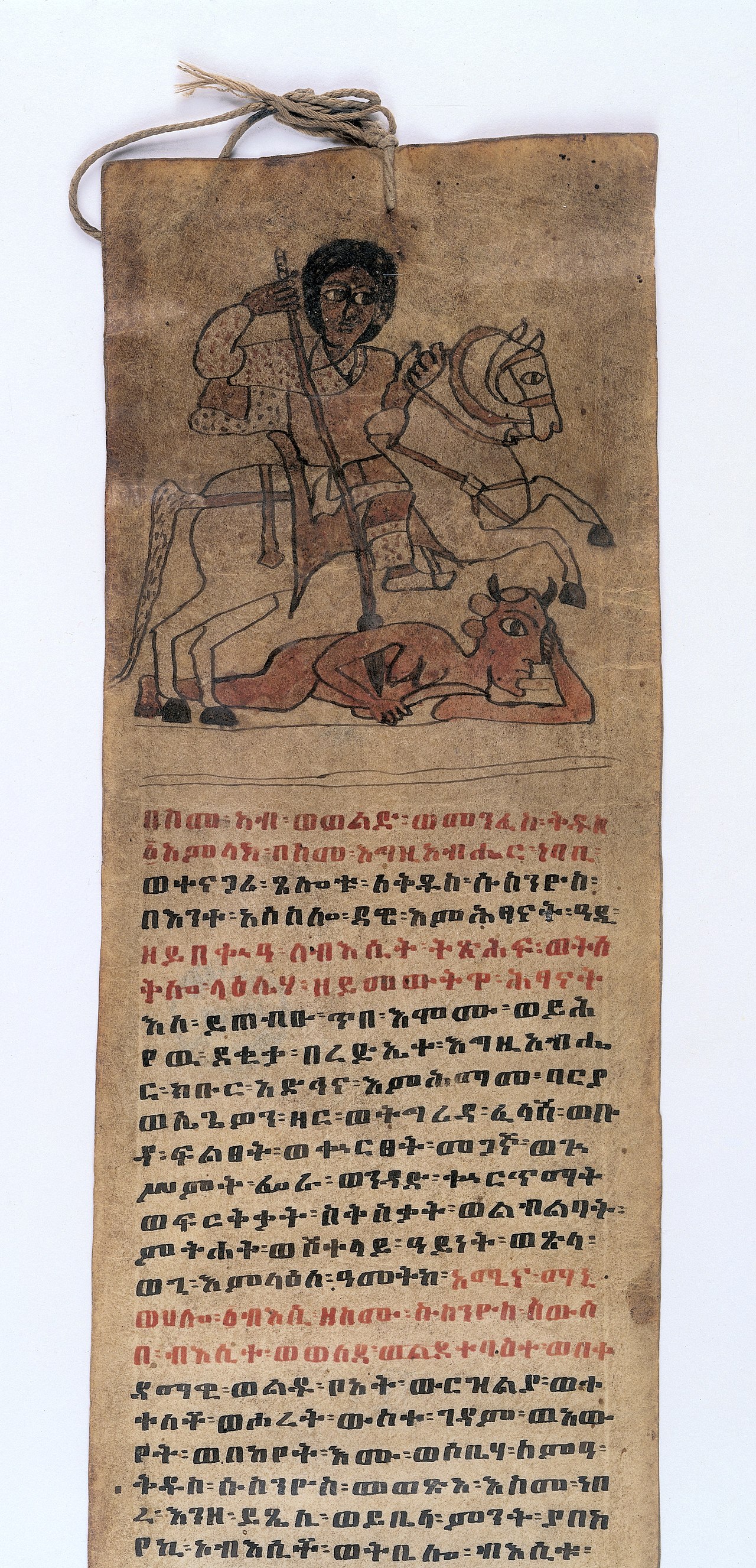
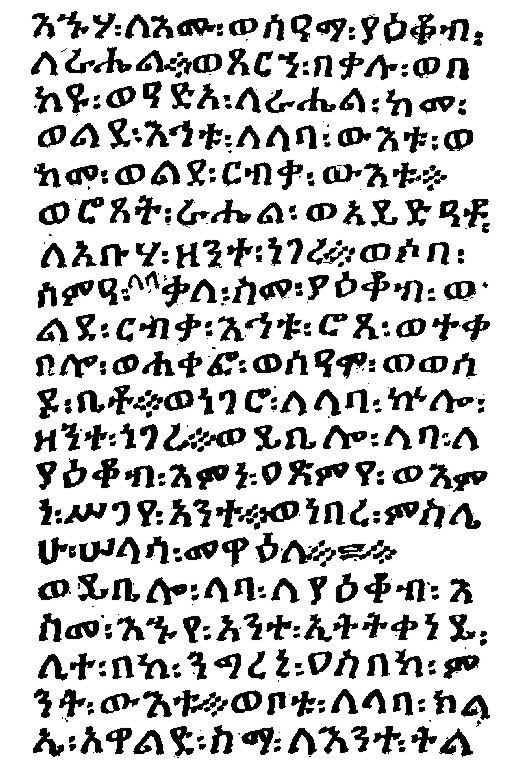
The Ge'ez script (Ge'ez: ግዕዝ, Gəʿəz), commonly called Ethiopic, is a writing system native to the Horn of Africa and the traditional script of Ethiopia and Eritrea. It is the standard graphic system for several languages of the region and for the liturgical language Ge'ez. The script is often referred to by speakers as fidäl (ፊደል), a word meaning "script" or "alphabet". For a general introduction see the Ge'ez alphabet resources and regional language references for Eritrea and Ethiopia.
Image gallery
6 Images


Basic characteristics
Ge'ez is most commonly classified as an abugida (an alphasyllabary) rather than a true alphabet or an abjad; this means symbols represent consonant–vowel units built from a base consonant form. Linguists and typographers often discuss Ge'ez as an abugida because vowel quality is indicated by modifying a consonant shape. In everyday use the script shows a systematic pattern: each consonant appears in a series of forms that together encode different vowels. The modern pedagogical description commonly cites a set of primary vowel variants for each base consonant.
History and development
The letters used in Ge'ez derive from earlier South Arabian inscriptions and related Semitic scripts. Early forms of the writing system functioned primarily as an abjad, recording consonants with limited or no marking of vowels; some sources describe this earlier stage as an abjad-type system. Over time the script developed distinct vowel-marked syllabic forms, converting it into the abugida used today. This transition took place in the early centuries of the first millennium CE and continued as the script adapted to local languages and orthographic needs.
Languages and contemporary use
Today Ge'ez letters are used to write several living languages, including major national languages such as Amharic and Tigrinya, and smaller languages across Ethiopia and Eritrea. The classical language Ge'ez remains the liturgical language of Ethiopian and Eritrean Orthodox churches and is learned for religious and historical study. Modern usage includes print, signage, education, and digital media; the script is encoded in the Unicode Standard, which supports its use on computers and phones.
Notable features and distinctions
- Direction: written left-to-right like most modern scripts of the world.
- Form: consonant bases modified to indicate vowel quality, producing syllabic glyphs.
- Terminology: called "Ethiopic" in many typographic and computing contexts, but locally known as fidäl.
- Variants: regional fonts and orthographic conventions exist for different languages and historical periods.
Because of its deep cultural significance and continuing practical use, Ge'ez remains an important subject of study for linguists, historians, and those interested in the scripts of Africa and the Semitic language family. For further reading and resources about character inventories, typography, and teaching materials consult specialized references and digital font projects indexed under general script surveys and regional language portals such as script overviews and national language sites for Eritrea and Ethiopia.
Questions and answers
Q: What is the Ge'ez script?
A: The Ge'ez script is a writing system native to Eastern Africa used as an abugida for languages such as Amharic and Tigrinya.
Q: What are some languages that use the Ge'ez script?
A: Several languages of Eritrea and Ethiopia use the Ge'ez script, including Amharic and Tigrinya.
Q: What was the Ge'ez script originally used for?
A: The Ge'ez script was originally an abjad, used for writing consonants only.
Q: What is an abugida?
A: An abugida is a writing system where consonant-vowel combinations are represented as a unit.
Q: What is the name for the Ge'ez script in Amharic and Tigrinya?
A: In Amharic and Tigrinya, the Ge'ez script is often called fidäl meaning "script" or "alphabet".
Q: Does the Ge'ez script have any other names?
A: Yes, it is also known as Ethiopic.
Q: Where is the Ge'ez script native to?
A: The Ge'ez script is native to Eastern Africa.
Author
AlegsaOnline.com Ge'ez script (Ethiopic): origin, structure, and modern use Leandro Alegsa
URL: https://en.alegsaonline.com/art/37834