
Anangu Pitjantjatjara Yankunytjatjara (APY) Lands
Remote Aboriginal-owned lands in northwestern South Australia, held by Aṉangu peoples; noted for desert landscapes, cultural significance, art centres, recognized native title and restricted access.
Aṉangu Pitjantjatjara Yankunytjatjara (commonly abbreviated APY) is a large region of recognised Aboriginal land in the far north‑west of South Australia. The territory is traditionally owned and maintained by Aṉangu — the people of the Pitjantjatjara, Yankunytjatjara and Ngaanyatjarra language groups — and covers approximately 102,650 square kilometres. Native title rights for the lands were formally recognised by the South Australian government on 30 October 1981 under Premier David Tonkin, a milestone often cited in discussions of native title and land rights in Australia.
Image gallery
2 Images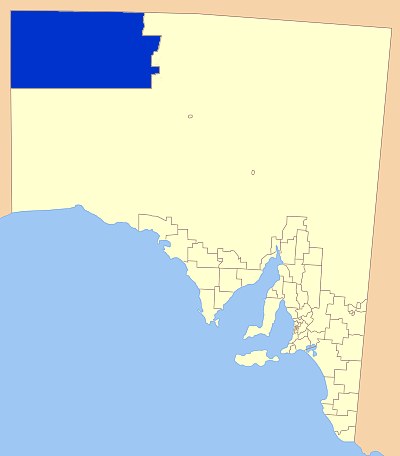

Geography and environment
The APY lands lie within arid and semi‑arid zones of central Australia. Landscapes include sandy plains, dune fields, spinifex vegetation, mulga woodlands and scattered rock outcrops. The terrain is mostly flat but is punctuated by low mountain groups such as the Everard Ranges in the east and the Musgrave Ranges along the boundary with the Northern Territory. Surface water is scarce and typically ephemeral, with soaks, rockholes and seasonal channels providing important ecological and cultural resources.
People, language and culture
The region is home to several thousand residents who identify as Aṉangu and maintain strong connections to country through language, law and ceremony. Daily languages include dialects of Pitjantjatjara and Yankunytjatjara, and many people also speak English. Cultural life centres on traditional knowledge, song and ceremony, which remain integral to land management, education and community governance. Contemporary cultural expression is visible in painting, printmaking, textiles and other arts, with local art centres playing a key role in sustaining and sharing cultural practice.
Communities and services
Populations are concentrated in several small communities and outstations spread across the APY lands. Communities provide local housing, schools, clinics and shop services at a scale appropriate to remoteness; transport links are primarily via unsealed roads and occasional air services. Visitors are expected to respect local protocols and to seek prior permission before entering inhabited or culturally sensitive areas.
- Notable communities: Pukatja (Ernabella), Amata, Mimili, Indulkana, Pipalyatjara and Watarru are among the better‑known settlements.
- Area: About 102,650 km² — roughly 10% of South Australia.
- Population: A small resident population living in dispersed communities and homelands.
Governance, law and land management
Governance arrangements on APY land combine traditional ownership and customary decision‑making with statutory frameworks. Local representative bodies and community councils work alongside state agencies to coordinate services, land management and cultural protection. The area is also recognised as one of the local government areas of South Australia and operates with specific rules that reflect the wishes of traditional owners and the unique circumstances of the region; for further administrative information see regional local government resources.
Access and permissions
Access to APY land is restricted by local law and custom. Visitors are generally required to obtain permission from the authorised local body before entering most parts of the territory, both to protect cultural sites and to respect community wishes. These arrangements help balance cultural preservation with carefully managed cultural tourism, research and service delivery.
Economy, arts and development
Economic activity in the APY lands is adapted to remoteness and cultural priorities. Income sources include arts enterprises, fee‑for‑service projects, small‑scale pastoral activity where feasible, community employment and government programs. Art centres and cultural enterprises are significant both economically and culturally; works by Aṉangu artists have attracted national and international attention. Proposals for mining or large‑scale development have been debated, with communities weighing potential benefits against cultural and environmental considerations.
Environmental and social challenges
Residents and service providers face challenges associated with isolation: delivering health care, education, housing and reliable services over vast distances remains complex and costly. Environmental concerns include protection of fragile desert ecosystems, managing invasive species and ensuring water security for communities and cultural sites. Local knowledge and customary practices are important tools in addressing these challenges through combined traditional and contemporary management approaches.
Significance and further reading
The APY lands are among the largest contiguous tracts of Aboriginal‑owned country in South Australia and represent a living cultural landscape where traditional practice continues alongside contemporary community life. For those seeking more detailed or current information about governance, permissions, cultural programs and community services, consult official APY administration materials and authorised community publications, or contact Aṉangu information providers directly via Aṉangu information.
This summary is intended as an introductory overview. For legal, administrative or travel decisions refer to formal sources and obtain required permissions before visiting.
Relevant topics and external references include: Aboriginal land rights and history, the role of native title in Australia, the geography of South Australia, and the cultural landscapes of the Pitjantjatjara and Yankunytjatjara peoples. Additional geographical context can be found by consulting materials relating to the Everard Ranges, the Musgrave Ranges and the neighbouring Northern Territory.
Questions and answers
Q: What is APY?
A: APY stands for Aṉangu Pitjantjatjara Yankunytjatjara, which is a large area of Aboriginal land in the north-west corner of South Australia.
Q: Which indigenous groups own APY land?
A: Pitjantjatjara, Yankunytjatjara and Ngaanyatjarra peoples (or Aṉangu) own APY land.
Q: When was native title granted in APY land?
A: Native title was granted by the government of David Tonkin on 30 October 1981.
Q: What is the size of APY land?
A: The land covers about 102,650 square kilometres (39,630 sq mi), about 10.4% of the state.
Q: Is APY land populated?
A: Yes, there are about 2500 people living on the lands.
Q: What is the topography of APY lands?
A: The APY lands are mostly flat, except for the Everard Ranges in the east and Musgrave Ranges along the border with the Northern Territory.
Q: Does APY have a local government?
A: Yes, APY is one of the 74 local government areas of South Australia.
Tags
Related articles
Author
AlegsaOnline.com Anangu Pitjantjatjara Yankunytjatjara (APY) Lands Leandro Alegsa
URL: https://en.alegsaonline.com/art/3768
Sources
- sa.gov.au : "Far North SA Government Region"
- ntru.aiatsis.gov.au : "South Australia: Land Rights"
- bennelong.com.au : "The Pitjantjatjara Land Rights Act 1981"
- books.google.com : Uluru: an Aboriginal history of Ayers Rock
- abs.gov.au : "Aboriginal Lands in South Australia"
- papertracker.com.au : "APY Lands: renewal of the Mintabie lease" · web.archive.org
- waru.org : waru.org/communities/indulkana/
- abc.net.au : "Anangu Pitjantjatjara people agree to discussions with mining industry"
- adelaidenow.com.au : "Battle to stop drugs in APY Lands"
- sa.gov.au : "Children on the Anangu Pitjantjatjara Yankunytjatjara Lands"
- premier.sa.gov.au : "$34 million package for the APY Lands"