
Gas-fired power plant
A power station that burns natural gas to produce electricity; common for flexible generation and combined-cycle efficiency, but still emits greenhouse gases and faces transition challenges.
A gas-fired power plant is an electricity-generating facility that burns natural gas to drive turbines and produce electricity. These plants range from small peaking units to large combined-cycle installations used for continuous generation. Because natural gas plants can start and stop more quickly than many alternatives, they are widely used to meet variable demand and to balance intermittent renewable sources.
Image gallery
6 Images


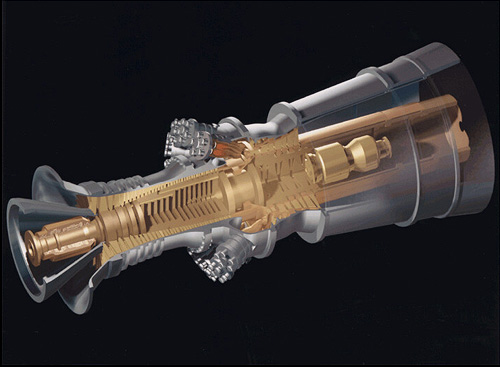
Characteristics and main components
- Gas turbine: compresses air, mixes it with fuel and burns it to produce high-temperature, high-pressure gas that spins the turbine.
- Generator: converts mechanical energy from the turbine into electrical energy.
- Heat recovery systems: in combined-cycle plants, a heat recovery steam generator (HRSG) captures waste heat to drive a steam turbine for additional power.
- Balance of plant: includes transformers, control systems, fuel handling, emissions controls and cooling systems.
Two common configurations are simple-cycle turbines, used for quick-start peaking, and combined-cycle plants, which capture exhaust heat to boost efficiency. Some installations operate as combined heat and power (CHP) or cogeneration plants, supplying both electricity and useful thermal energy to nearby industry or buildings.
Gas turbines and combined-cycle technology were developed and refined during the 20th century, with rapid deployment after the expansion of pipeline networks and improvements in turbine materials and controls. Over recent decades, combined-cycle units have become a preferred choice for new baseload-capable plants because they offer higher thermal efficiency and lower fuel consumption per unit of output.
Environmental impacts are significant considerations: combustion of natural gas produces carbon dioxide and nitrogen oxides, and the industry must also manage greenhouse gases released during production and distribution (notably methane). While natural gas generally emits less CO2 per unit of electricity than coal, it nonetheless contributes to global warming and requires mitigation measures such as improved leak detection, emissions controls, and potentially carbon capture technologies.
In power systems, gas-fired plants serve several roles: flexible peaking plants that respond to short-term demand spikes, reliable mid-merit plants that fill daily demand cycles, and backup capacity for grids with high shares of wind and solar. Their economics are strongly influenced by fuel prices and regulatory frameworks. Emerging options include co-firing with low-carbon fuels or conversion to run on hydrogen or hydrogen blends to reduce lifecycle emissions.
Notable facts and distinctions: combined-cycle plants typically achieve higher net efficiency than simple-cycle turbines; cogeneration facilities can greatly improve overall energy utilization by using waste heat; and although a substantial share of global electricity—on the order of about one quarter—is generated from gas-fired stations, policy and market forces are increasingly driving investments toward lower-carbon solutions and technologies that reduce fugitive emissions.
For further technical and policy context consult general references and industry summaries via natural gas resources, electricity system analyses at electricity planning portals, and materials on greenhouse gas mitigation and global warming.
Questions and answers
Q: What is a gas-fired power plant?
A: A gas-fired power plant is a power plant that generates electricity using natural gas.
Q: What percentage of the world's electricity need is generated using gas-fired power plants?
A: About a quarter of the world's electricity need is generated using gas-fired power plants.
Q: What is the process used by gas-fired power plants to generate electricity?
A: Gas-fired power plants use natural gas that is burnt to generate electricity.
Q: What is the impact of gas-fired power plants on the environment?
A: The use of gas-fired power plants contributes to greenhouse gases, which cause global warming and climate change.
Q: Can renewable energy sources replace gas-fired power plants completely?
A: Yes, renewable energy sources can replace gas-fired power plants completely.
Q: What are some examples of renewable energy sources that can be used to generate electricity?
A: Some examples of renewable energy sources that can be used to generate electricity are solar, wind, hydroelectric, and geothermal power.
Q: Why is it necessary to shift away from gas-fired power plants towards renewable energy sources?
A: It is necessary to shift away from gas-fired power plants towards renewable energy sources as gas-fired power plants contribute to global warming and climate change, while renewable energy sources are clean and sustainable.
Related articles
Author
AlegsaOnline.com Gas-fired power plant Leandro Alegsa
URL: https://en.alegsaonline.com/art/37662