
Gambino crime family
One of New York City's major organized crime families, historically led by figures such as Carlo Gambino and later John Gotti; known for involvement in racketeering, labor influence and high-profile prosecutions.
The Gambino crime family is an organized criminal organization long associated with New York City. It is historically recognized as one of the city's principal syndicates, commonly grouped with the Five Families. The family's name comes from a prominent mid-20th-century leader, Carlo Gambino, whose tenure shaped its modern reputation.
Image gallery
8 Images


Structure and activities
Like other traditional Mafia groups, the Gambino organization has been described as having a hierarchical internal structure with roles such as boss, underboss, consigliere, caporegimes and soldiers. Its reported activities have encompassed extortion, illegal gambling, loan sharking, racketeering and influence over legitimate industries such as construction and labor. Commentators and investigators often refer to this body of work as organized crime within the broader framework of the Cosa Nostra.
The family's operations developed primarily in and around New York City, with links and contacts across the United States and sometimes abroad. Over decades it has adapted to law enforcement pressure, shifts in markets and internal disputes, while maintaining networks that could combine illegal enterprises with attempts to control labor and business opportunities.
Notable figures
- Carlo Gambino — the figure after whom the family is named; he consolidated power in mid-century and set organizational precedents. Carlo Gambino
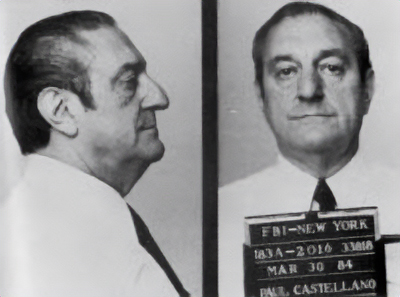
- Paul Castellano — a later boss who steered the group toward white-collar connections and legitimate business fronts.
- John Gotti — a high-profile leader whose trials and media attention brought national focus to the family.
These and other personalities influenced internal politics, alliances and rivalries. Not all members are public figures, and many cases involve long investigations before charges and convictions occur.
Law enforcement efforts, including the use of racketeering statutes and surveillance, produced major prosecutions that disrupted the family's structure at various times. While prosecutions and social changes have diminished the group's visible power compared with its peak, law-enforcement agencies and scholars still consider it a relevant actor in the history of American organized crime.
Beyond criminal investigations, the Gambino family has had a broad cultural footprint: it has been depicted in journalism, film and fiction as an emblem of mid-20th-century Mafia life and its later evolution. For further reading on the group's place among New York's crime organizations, see resources that discuss the Five Families and broader patterns of organized crime in the New York City area and the United States. Additional contextual material on Mafia traditions and structure is available through studies of the Cosa Nostra and biographies of leaders such as Carlo Gambino.
Questions and answers
Q: What is the Gambino crime family?
A: The Gambino crime family is one of the "Five Families" that control organized crime activities in New York City-based within the Mafia.
Q: Who is Carlo Gambino?
A: Carlo Gambino is the person whom the Gambino crime family is named after.
Q: What is the Mafia?
A: The Mafia, also known as Cosa Nostra, refers to an Italian-American criminal organization engaged in various criminal activities, including extortion, racketeering, and murder.
Q: How many families control organized crime activities in New York City?
A: There are "Five Families" that control organized crime activities in New York City.
Q: What kind of activities is the Gambino crime family involved in?
A: The Gambino crime family is involved in organized crime activities such as extortion, racketeering, and murder.
Q: Is the Gambino crime family limited to New York City?
A: Yes, the Gambino crime family is based in New York City.
Q: Who is in control of the Gambino crime family now?
A: The current leader of the Gambino crime family is not publicly known.
Related articles
Author
AlegsaOnline.com Gambino crime family Leandro Alegsa
URL: https://en.alegsaonline.com/art/37364
Sources
- abclocal.go.com : "Emperor's Club: The Investigators look at the web site behind the Spitzer scandal - 3/12/08 - New York News and Tri-State News - 7online.com"
- geocities.com : geocities.com/OrganizedCrimeSyndicates/GambinoFamily.html · webcitation.org
- bop.gov : "Federal Bureau of Prisons"
- mob-news.blogspot.com : "Mob-News: Two more Gambino guilty pleas"
- bop.gov : "Federal Bureau of Prisons"