
Gallium: properties, occurrence, uses and notable characteristics
Gallium (Ga, atomic number 31) is a soft, silvery metal with a low melting point. Widely used in semiconductors, LEDs, specialty alloys and research, it occurs only in trace amounts in ore deposits.
Overview
Gallium is a chemical element with the symbol Ga and atomic number 31. It lies in group 13 of the periodic table and shares chemical kinship with other post‑transition metals such as aluminium, indium and thallium. Gallium is not found in native form in the Earth's crust but occurs in trace amounts within ores of other metals; consult a general periodic table resource or an element listing for placement among the elements (element listing).
Image gallery
10 Images





Physical and chemical characteristics
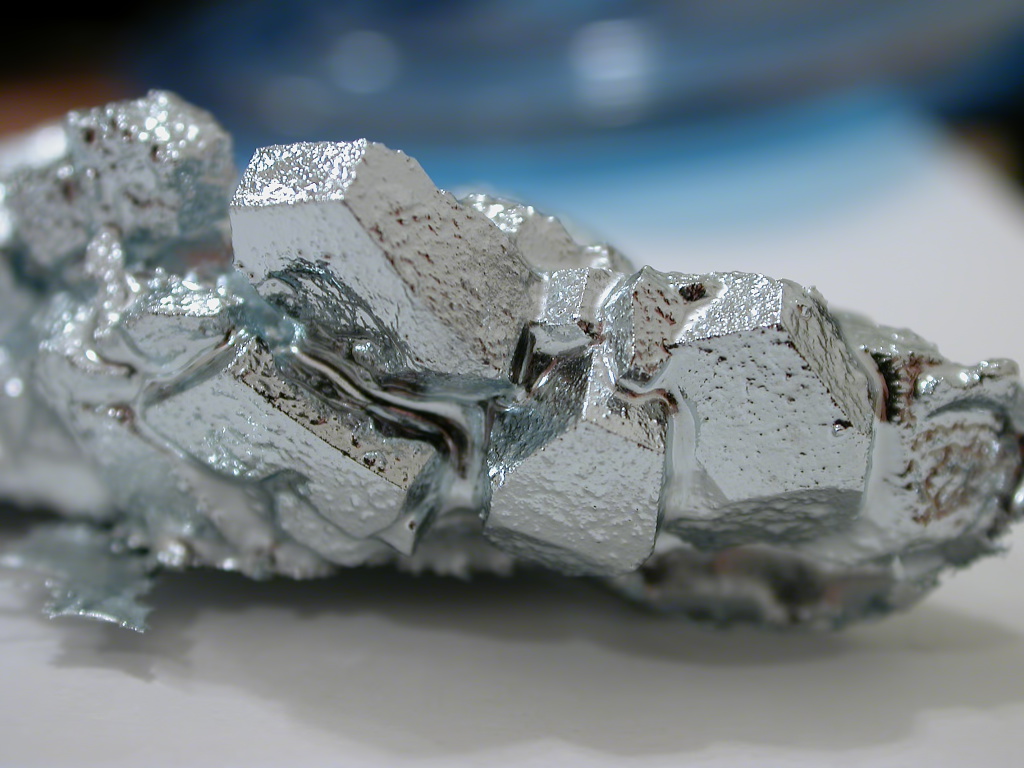
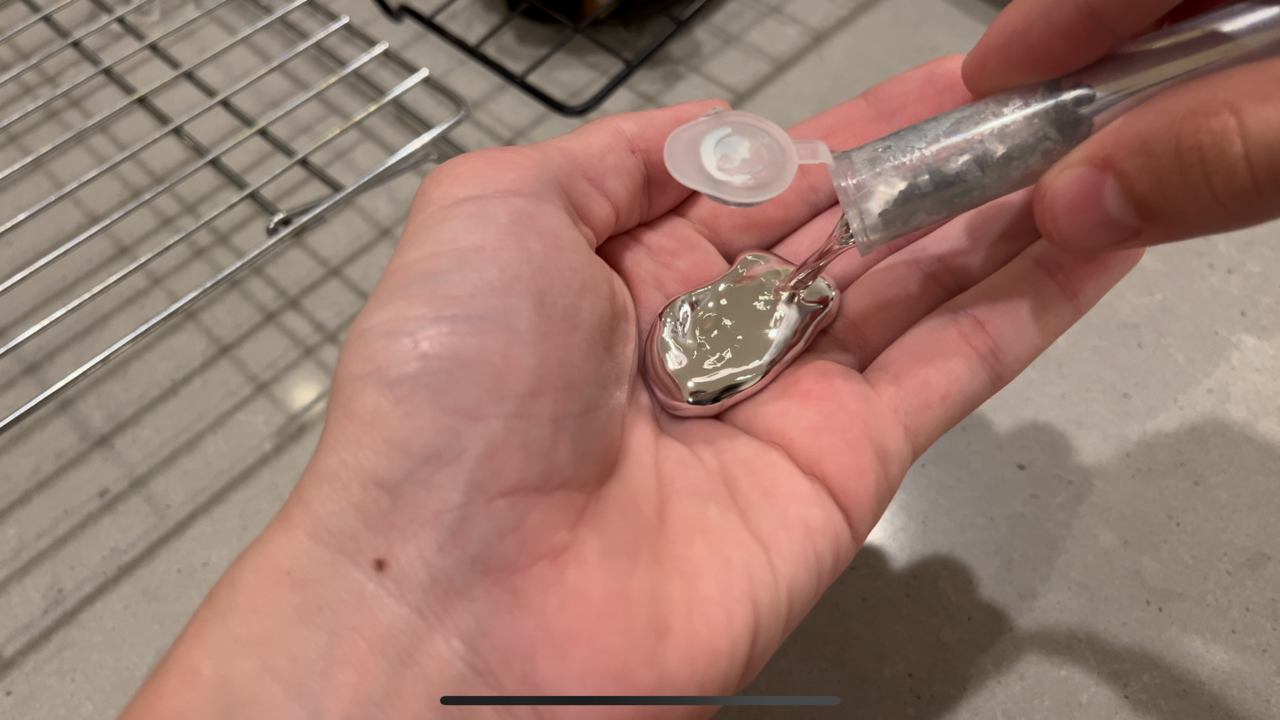
Elemental gallium is silvery and soft. Its melting point is unusually low for a metal (about 29.8 °C or 85.6 °F), so small pieces will melt in the hand at room temperature. In the solid state it is brittle and has a bluish‑gray appearance; as a liquid it is mirror‑like and wets many surfaces. Unlike most metals, gallium expands on solidification. A thin oxide film forms rapidly in air and affects wetting and handling.
Chemically, gallium shows properties intermediate between typical metals and semiconductors. It is classed as a metal (metal) but many of its compounds are important semiconductor materials (semiconductors) and it has electrical behavior often discussed in the context of conductivity (conductivity). Gallium alloys readily with several other metals, and contact with aluminium can produce embrittlement and structural weakness if gallium penetrates the aluminium grain boundaries.
Occurrence and production
Gallium typically occurs in trace concentrations in minerals such as bauxite (aluminium ore) and sphalerite (zinc ore). It is produced commercially as a byproduct of aluminium and zinc refining rather than by dedicated mining. Recovery and purification involve concentration from process liquors and electrochemical or chemical separation techniques. Because it is distributed sparsely, production volumes are modest compared with major industrial metals.
Applications
Most modern uses of gallium derive from its compounds and alloys rather than the elemental metal alone. Prominent applications include:
- Semiconductor devices: gallium arsenide (GaAs), gallium nitride (GaN) and related ternary compounds are central to high‑speed electronics, microwave and radio‑frequency components, and efficient light‑emitting diodes and laser diodes.
- Optoelectronics and lighting: GaN and related materials are the basis for blue and ultraviolet LEDs and for high‑efficiency solid‑state lighting and display technologies.
- Computing and communications: gallium‑based semiconductors are used in high‑frequency and high‑power components for wireless and satellite communications; see introductory materials on computers and electronics.
- Alloys and thermal applications: low‑melting alloys that include gallium, indium and tin serve as non‑toxic liquid‑metal substitutes in some thermal transfer and sensing applications.
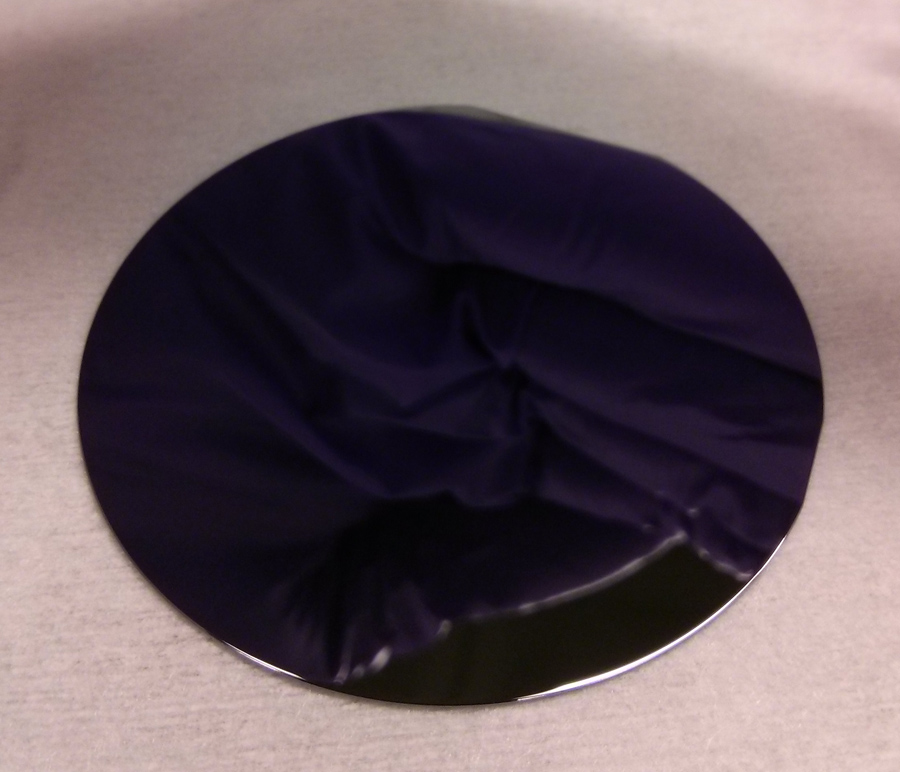
- Optical and reflective research: liquid gallium and gallium alloys provide highly reflective surfaces for specialized mirrors and scientific experiments (mirrors and reflective surfaces).
Isotopes, medical and scientific uses
Natural gallium consists mainly of two stable isotopes. Radioisotopes of gallium are used in research and certain medical imaging techniques and radiopharmaceuticals. High‑purity gallium is also an important material in research laboratories investigating surface physics, liquid metals and novel electronic materials.
Safety, environmental and historical notes
Elemental gallium has relatively low acute toxicity by skin contact, but it is not for ingestion and many soluble gallium compounds may be hazardous; appropriate laboratory safety practices should be followed. Gallium can embrittle structural metals such as aluminium if allowed to penetrate them, which is an important practical consideration for handling and storage. Historically, small amounts of gallium found specialized uses in metallurgy, including stabilizing phases in certain plutonium alloys during mid‑20th‑century research, but the element's principal contemporary importance is in electronics and optoelectronics.
Distinctive traits and further reading
Distinctive features of gallium include its low melting point near room temperature, the expansion upon freezing, the formation of a surface oxide, and the prominence of its compounds in light‑ emitting and high‑frequency devices. For introductory summaries and technical overviews, see general resources on the periodic table and element properties (periodic table resource, element listing) and materials on electronic and optical applications (semiconductors, computers and electronics). For context about neighboring elements and alloys, consult references concerning indium and thallium as well as broad discussions of mirrors and reflective surfaces.
Questions and answers
Q: What is gallium?
A: Gallium is a metal that is chemical element 31 on the periodic table.
Q: What is the unusual property of gallium?
A: Gallium's melting point is 85.58 Fahrenheit, so if it is held in a person's hand, it will melt.
Q: Is gallium safe to hold?
A: Gallium is safe to hold in your hands, but it is not edible.
Q: Can gallium be used in computers?
A: Yes, gallium can be used in computers because it is a semiconductor.
Q: What is the color of purest extracted gallium?
A: Purest extracted gallium is a vibrant silver color.
Q: What is the use of gallium in its liquid form?
A: Gallium is very shiny, so it is used to create mirrors when it is in its liquid form.
Q: What is gallium related to?
A: Gallium is related to aluminium, thallium, and indium.
Related articles
Author
AlegsaOnline.com Gallium: properties, occurrence, uses and notable characteristics Leandro Alegsa
URL: https://en.alegsaonline.com/art/37325