
Galilean moons — the four largest satellites of Jupiter
The Galilean moons are Jupiter's four largest satellites—Io, Europa, Ganymede and Callisto—discovered by Galileo. They differ widely in geology, history and potential for hosting subsurface oceans.
Overview
The term "Galilean moons" refers to the four largest natural satellites of Jupiter discovered with a telescope by Galileo Galilei. These bodies—Io, Europa, Ganymede and Callisto—are substantially larger than Jupiter's many small moons and include the largest moon in the Solar System. Their contrasting surfaces and internal states make them key objects for planetary science and comparative geology.
Image gallery
10 Images







Basic characteristics and context
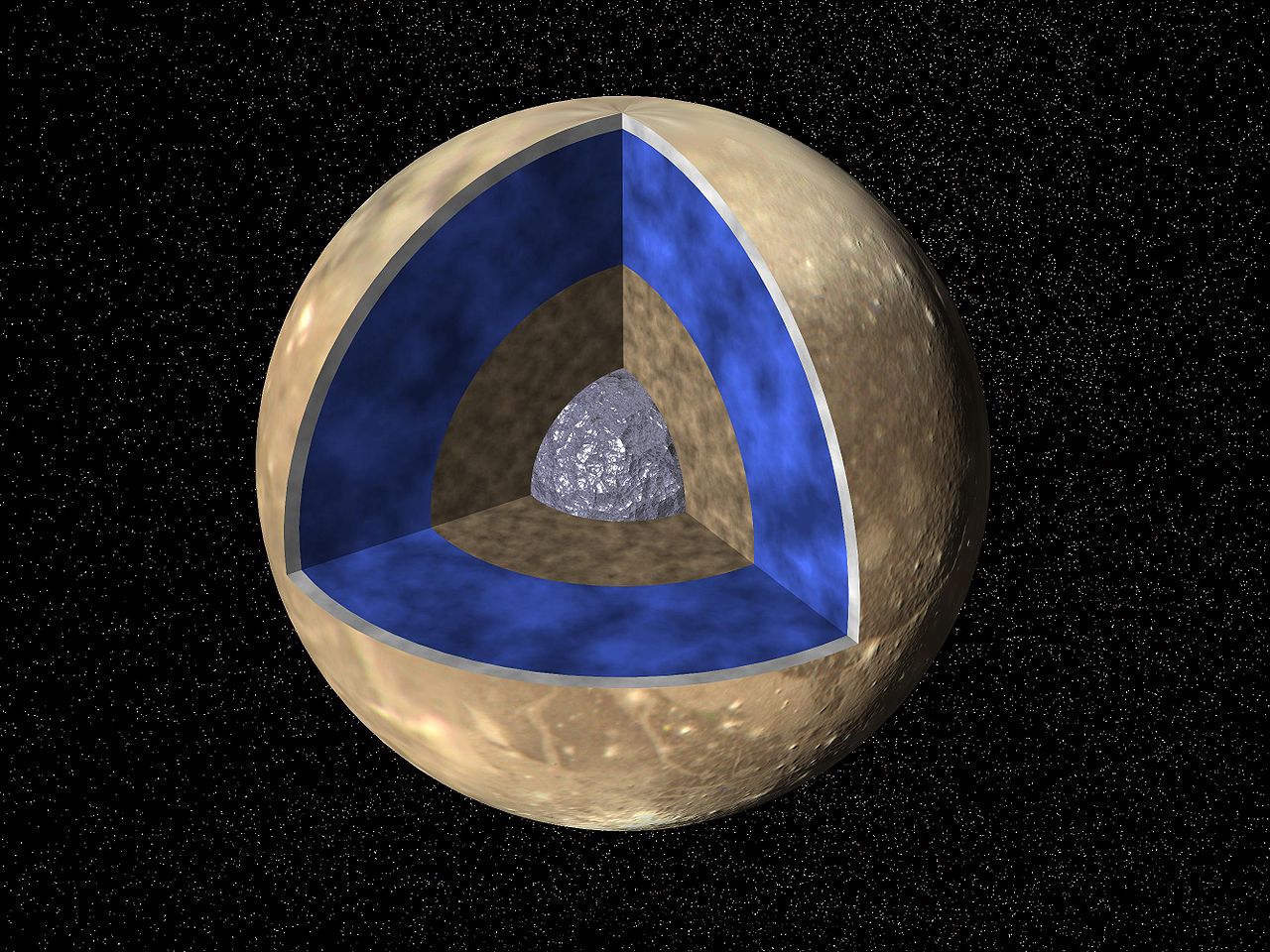
The four moons orbit the giant planet Jupiter and were among the first objects observed with a telescope to show that not everything orbited Earth, an observation important to early astronomy. Physically, they range from the intensely volcanic to the heavily cratered and from geologically young terrains to ancient, untouched surfaces. They are large enough to be spherical and to have complex internal structures.
Orbital dynamics and internal effects
Io, Europa and Ganymede are locked in a resonant orbital pattern that pumps their orbital eccentricities and produces strong tidal heating inside the moons. That heating drives Io's extreme volcanism and probably maintains a subsurface liquid layer beneath Europa's icy crust. Tidal and magnetic interactions also influence surface features, tenuous atmospheres and magnetospheric phenomena around these satellites.
Individual moons
- Io: the most volcanically active world known, with widespread lava flows and a young surface reshaped by eruptions.
- Europa: an ice-covered moon with strong evidence for a global subsurface ocean and a smooth, fractured shell; it is a prime target in the search for possible habitability.
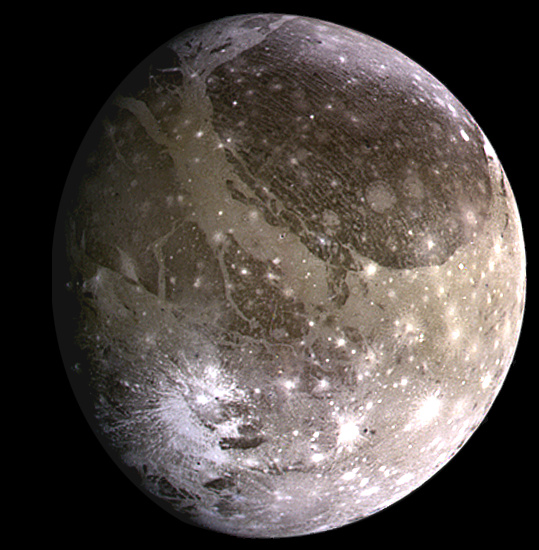
- Ganymede: the largest moon in the Solar System, internally differentiated and unique among moons for having its own intrinsic magnetic field.
- Callisto: characterized by an ancient, heavily cratered surface that preserves a long record of impacts and limited internal differentiation.
Importance and exploration
Because of their size, variety and proximity, the Galilean moons have been central to studies of planetary formation, tidal heating, and astrobiology. They have been observed by ground telescopes and visited by several spacecraft missions; future missions focus on Europa's ocean and Ganymede's interior. Scientific interest continues to grow as these worlds reveal the range of possible planetary environments around gas giants.
For further details on each moon and missions that studied them, see individual entries for Io, Europa, Ganymede, Callisto, information about Galileo, and broader material on Jupiter.
Questions and answers
Q: How many Galilean moons are there?
A: There are four Galilean moons.
Q: Who discovered the Galilean moons of Jupiter?
A: The Galilean moons were discovered by Galileo Galilei.
Q: What are the names of the Galilean moons of Jupiter?
A: The names of the Galilean moons of Jupiter are Io, Europa, Ganymede, and Callisto.
Q: How do the Galilean moons of Jupiter compare to the other moons of Jupiter in terms of size?
A: The Galilean moons of Jupiter are by far the biggest of the many moons of Jupiter.
Q: What is the significance of the Galilean moons?
A: The Galilean moons are significant because they were the first objects found to orbit a planet other than Earth.
Q: Why are the Galilean moons named after Galileo Galilei?
A: The Galilean moons are named after Galileo Galilei because he was the one who discovered them in 1610.
Q: Are there any other moons of Jupiter besides the Galilean moons?
A: Yes, there are many other moons of Jupiter besides the Galilean moons.
Related articles
Author
AlegsaOnline.com Galilean moons — the four largest satellites of Jupiter Leandro Alegsa
URL: https://en.alegsaonline.com/art/37290