
Galactic Empire (Star Wars)
Fictional authoritarian regime that replaces the Republic in Star Wars; created by Palpatine, enforced by Vader and the Imperial military, opposed by the Rebel Alliance and later supplanted by the New Republic.
Overview
The Galactic Empire is the centralized government that dominates much of the fictional franchise setting in Star Wars. Presented in the original films as the primary antagonist, the Empire and its leaders are commonly identified as the villains of that era. It is associated with the figure of Darth Sidious, who rises to supreme power, and with his chief enforcer, Darth Vader. The regime governs the galactic community—countless species and worlds across the galaxy—through intimidation, centralized control and a powerful security apparatus.
Image gallery
2 Images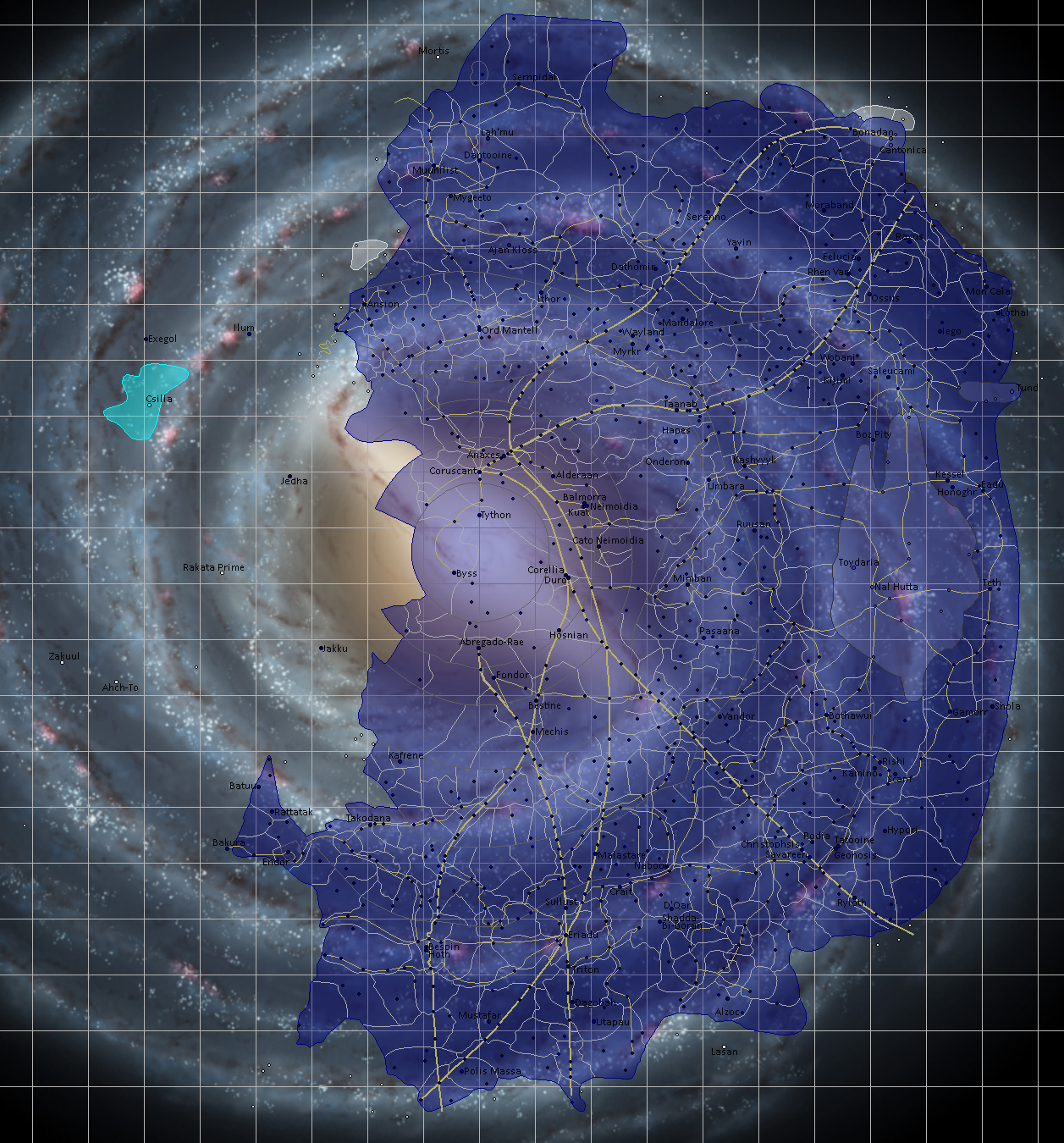

Structure and characteristics
Described within the story as totalitarian, the Empire prioritizes order and uniformity above civil liberties and local autonomy. It fields a vast military and an administrative bureaucracy that replaces earlier republican institutions. In practice this structure relies on regional governors, military governors and administrators—often called governors—alongside career officials and intelligence services. The system has been portrayed as afflicted by inefficiency and corruption, with competing factions and powerful contractors influencing policy and provisioning.
Origins and rise to power
The Empire is shown to have emerged when the democratic Galactic Republic was transformed after a prolonged conflict known as the Clone Wars. During that crisis a number of planets and star systems had seceded or threatened secession. Fears of fragmentation and violence helped a single leader claim extraordinary powers. The dissolution of traditional checks—followed by attempts by the Jedi to arrest that leader—became the pretext for concentrating authority and replacing the Republic with the Empire under a new imperial title.
Repression, economy and enforcement
Maintaining control under the Empire required sustained spending on fleets, ground forces and planetary garrisons, which strained local economies and altered trade patterns. The regime contracted private suppliers and merchants to supply weapons and spaceships, and those commercial actors—including opportunistic merchants—benefited from wartime demand. The Empire also prioritized access to natural resources and strategic worlds. Enforcement included conscription and the transformation of civilians into Imperial soldiers; in later narratives some recruits are said to have been kidnapped or forcibly taken as children—sometimes described as babies—and trained as stormtroopers.
Opposition and collapse
Widespread disaffection led to organized resistance under groups broadly known as the Rebel Alliance. Guerrilla campaigns, intelligence coups and major fleet battles gradually reversed imperial gains. The narrative arc culminates in decisive confrontations that remove the regime's core leadership and permit the formation of successor governments. Even after formal defeat and the loss of institutional centers of power, remnants of the imperial structure and sympathizers continued to pursue renewed dominance by rebuilding fleets or supporting successor movements.
Legacy and later developments
In later depictions the vacuum left by the Empire contributes to new conflicts. Some surviving officers and factions convert imperial methods into new organizations that purchase armaments and weapons or rebuild spaceships using networks of merchants and control of raw resources. These forces are sometimes shown abducting or otherwise recruiting young people to serve as military personnel, including the trope of kidnapped or conscripted babies raised to become stormtroopers. A notable later act associated with this lineage is the destruction of the New Republic capital Hosnian Prime, an event used in stories to mark the resurgence of a militarized successor movement.
- Key figures: Darth Sidious, Darth Vader
- Key institutions: Imperial Navy, regional governors and intelligence services
- Opposition: Rebel Alliance and later democratic restorations
The Galactic Empire remains a central fictional example of how democratic systems can be subverted from within, and it continues to be explored across films, books, television and other media as a touchstone for discussions of power, legitimacy and resistance.
Questions and answers
Q: What is the Galactic Empire?
A: The Galactic Empire is the government that rules the Star Wars galaxy in the Star Wars series. It is a totalitarian government, which means it controls every part of people's lives and uses its military to kill or silence anyone who does not agree with its rule.
Q: How was the Galactic Empire created?
A: The Galactic Empire was created when Darth Sidious overthrew the Galactic Republic by starting the Clone Wars. He used this as an excuse to create a government with much more security and made himself Emperor.
Q: Who tried to stop Darth Sidious from creating the Empire?
A: The only ones who could stop him were the Jedi, a very old group of knights who swore to protect the Republic. They tried to arrest him, but they failed.
Q: What did life look like under the Empire?
A: Life was so terrible under the Empire that many people and aliens joined forces in order to destroy it and bring back freedom and rights people had under the Republic. Paying its large military also made life difficult as it took away resources from other parts of society, making them poor.
Q: What happened after Darth Vader and Emperor died?
A: After Darth Vader and Emperor died,the Empire surrendered to Rebel Alliance which then created New Republic. However some of remaining leaders formed First Order which wanted recreate empire again by buying weapons from merchants in Outer Rim taking over planets with resources for buying more weapons etc..
Q: How did First Order try to recreate empire again? A: First Order tried recreating empire again by buying weapons and spaceships from greedy merchants in Outer Rim, taking over planets with many resources they could use for buying more weapons, kidnapping babies for stormtroopers etc.. They also secretly built superweapon called Starkiller Base which they used blow up capital of New Republic Hosnian Prime .
Related articles
Author
AlegsaOnline.com Galactic Empire (Star Wars) Leandro Alegsa
URL: https://en.alegsaonline.com/art/37242