
Gaia
Gaia: the ancient Greek personification of Earth, the 20th‑century ecological Gaia hypothesis, and the ESA space observatory. Overview of origins, scientific uses, cultural impact, and important distinctions.
Gaia is a multi‑faceted name applied to classical mythology, environmental thought and modern astronomy. In everyday use it can mean the ancient Greek earth goddess who personified the ground beneath human feet, a scientific and philosophical idea that treats Earth as a self‑regulating system, or the European Space Agency mission that maps the Milky Way. Each sense of Gaia draws on the image of Earth as a coherent, interconnected entity, but they belong to very different intellectual traditions.
Image gallery
7 Images

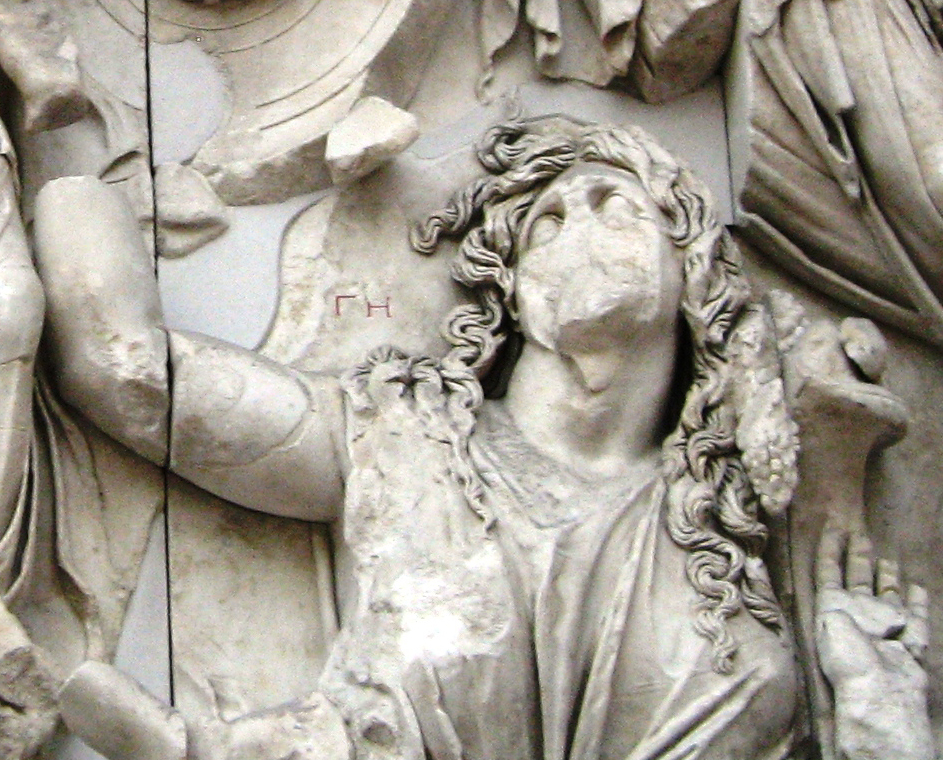



Mythological origins
In Greek myth Gaia (Gē) is a primordial deity: the ancestral mother of many gods, Titans and living creatures. Classical sources such as Hesiod describe her emergence at the dawn of the cosmos and her role as the fertile ground and parent of later generations of divine beings. As a personification, Gaia stood for the material and productive aspects of the world and was invoked in rites, poetry and ancient cosmologies.
Gaia hypothesis and Earth system thinking
In the 20th century the name was adopted for a scientific and philosophical idea: the Gaia hypothesis. Formulated by James Lovelock and developed in dialogue with biologist Lynn Margulis, it proposes that life and the inorganic environment interact to produce stable conditions on Earth. The hypothesis stimulated research into planetary homeostasis, biogeochemical cycles and Earth system science.
- Core idea: living organisms and physical processes form feedback loops that can stabilize conditions such as temperature and atmospheric composition.
- Illustrations: simplified models (for example Daisyworld) show how competing feedbacks can yield regulation without foresight or purpose.
- Reception: influential for conceptualizing Earth as an integrated system; debated when framed as purposeful or teleological.
Gaia space observatory
The European Space Agency reused the name for its Gaia mission, an astrometric observatory launched in December 2013. The spacecraft performs precise measurements of the positions, distances and motions of a vast number of stars, producing a three‑dimensional map of the Milky Way. Its data improve our knowledge of galactic structure, stellar evolution, exoplanet detection and the orbits of solar system objects.
- Primary goals: high‑precision astrometry to determine parallaxes and proper motions; photometric and spectroscopic measurements for characterizing stars.
- Impact: modern astronomy relies on Gaia catalogs for calibrating distances and studying the dynamics of the Galaxy.
Cultural influence and distinctions
Beyond scholarship, Gaia appears in environmental movements, neopagan spirituality, literature and popular culture as a symbol of Earth’s unity and vitality. It is important to distinguish these registers: the mythic Gaia is a deity and cultural figure; the Gaia hypothesis is a scientific framework and research programme that must be evaluated by empirical tests; and the Gaia spacecraft is an observational instrument producing measurable data. Conflating these meanings can lead to confusion between religious metaphor, scientific models and technical missions.
Notable facts: the Gaia hypothesis helped catalyze Earth system science and environmental awareness, while the ESA mission named in its honor has become a cornerstone of contemporary astronomy. Both uses reflect a long cultural tendency to think of Earth as more than a collection of parts — whether as a living presence in myth and spirituality or as an integrated system in science.
Questions and answers
Q: What is Gaia?
A: Gaia is a term that can have multiple meanings.
Q: What are some possible meanings of Gaia?
A: Gaia can refer to the Greek goddess of the Earth, or it can also be used to describe the Earth itself as a living organism.
Q: How is Gaia related to the concept of ecology?
A: The idea of Gaia as a living organism is often used within the field of ecology to describe the interconnectedness of all living things on Earth.
Q: What is the significance of the Greek goddess Gaia?
A: In Greek mythology, Gaia was worshipped as the mother goddess and the giver of life, representing the powers of nature and fertility.
Q: Can the term Gaia be used in a scientific context?
A: Yes, the concept of Gaia as a living organism is sometimes discussed in scientific circles as a hypothesis about the Earth's natural systems.
Q: How has the concept of Gaia been received by the scientific community?
A: The idea of Gaia has been controversial in some scientific circles, with some critics arguing that it is not backed up by empirical evidence.
Q: What is the origin of the term Gaia?
A: The term Gaia comes from Greek mythology, where it was used to refer to the goddess of the Earth.
Author
AlegsaOnline.com Gaia Leandro Alegsa
URL: https://en.alegsaonline.com/art/37214