
Fundamentalist Church of Jesus Christ of Latter-Day Saints (FLDS)
An encyclopedic overview of the FLDS, a Mormon fundamentalist group known for its practice of plural marriage, its history, major communities, leadership controversies and legal scrutiny.
Overview
The Fundamentalist Church of Jesus Christ of Latter-Day Saints (FLDS) is a religious movement that split from the larger Church of Jesus Christ of Latter-day Saints (LDS Church) over the continued practice of plural marriage (polygamy). Members of the FLDS consider themselves heirs to earlier Mormon teachings that sanctioned plural marriage as a religious obligation. The group is small relative to the mainstream LDS Church and is best known publicly for its communal social structure, distinctive leadership, and legal controversies. For background material and differing perspectives, see further reading.
Image gallery
7 Images



Beliefs and practices
The FLDS shares some theological roots with nineteenth-century Mormonism, but emphasizes a set of distinct beliefs and practices that set it apart from the mainstream LDS Church. Central elements include a strong emphasis on obedience to the community's prophet-leader, the practice of plural marriage as a requirement for exaltation in the afterlife, and conservative social norms. The group commonly practices arranged marriages and promotes large families. Many observers and scholars note the role of strict social discipline and internal systems for allocating spouses and resources.
Structure and community life
FLDS communities are organized around a central leader or council that oversees religious instruction, marriage arrangements and property. Daily life in some FLDS settlements has been described as communal with an emphasis on shared labor, religious education, and separation from broader secular influences. Clothing and gender roles tend to be conservative; women often wear modest, plain dress and men follow traditional patriarchal roles. For summaries and community profiles, consult community overview and sociological analysis.
History and leadership
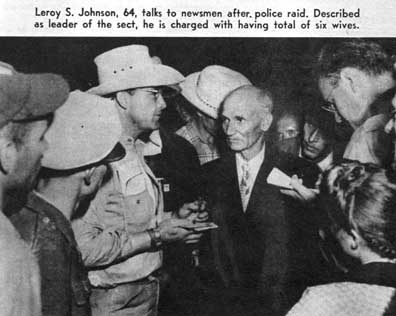
The FLDS traces its origins to those who rejected the LDS Church's 1890 Manifesto and later changes that discouraged or forbade plural marriage. Over the 20th century, a number of independent groups emerged that continued the practice; the FLDS consolidated elements of that tradition and established identifiable communities. In recent decades the group drew international attention because of the role of charismatic leaders who asserted prophetic authority. Leadership controversies, including criminal prosecutions of senior leaders, have shaped public and legal responses to the movement. See legal and historical summaries at historical source and legal overview.
Communities and demographics
FLDS adherents have been concentrated in a few closely knit towns and settlements in the American West and in Canada. The most notable contiguous communities are the twin towns on the Utah–Arizona border often called Short Creek: Hildale, Utah and Colorado City, Arizona. Other reported communities have included locations in Texas, Colorado, South Dakota and in parts of British Columbia. Estimates of membership have varied widely; observers have suggested numbers ranging from a few thousand to around 10,000 at different times. For local profiles and population studies, see regional report and demographic notes.
Legal scrutiny and public attention
The FLDS has been the focus of law-enforcement actions and court cases involving underage marriage, sexual abuse, welfare fraud and other charges in various jurisdictions. Public attention intensified after high-profile prosecutions of top leaders and notable state interventions into FLDS communities. These events prompted debates about religious freedom, child protection, property rights and the proper scope of government action. Reporting and legal documents offer further detail and context; readers should consult multiple sources to understand the complex legal and human issues involved.
Distinctions: The FLDS is distinct from the mainstream LDS Church, which officially renounced polygamy more than a century ago and disavows FLDS teachings and practices. While the FLDS self-identifies as restoring older doctrines, it remains separate in organization, leadership and public reputation.
Questions and answers
Q: What is the Fundamentalist Church of Jesus Christ of Latter Day Saints?
A: The Fundamentalist Church of Jesus Christ of Latter Day Saints (FLDS) is a religious group that broke from the Church of Jesus Christ of Latter Day Saints in the 19th or early 20th century.
Q: Why did the FLDS break from the Church of Jesus Christ of Latter Day Saints?
A: The FLDS broke from the Church of Jesus Christ of Latter Day Saints because they believed that polygamy was an important part of their religion and the Church of Jesus Christ of Latter Day Saints stopped accepting it in 1890.
Q: What does the FLDS teach?
A: The FLDS teaches that a man needs more than one wife to be able to get to heaven.
Q: How many members did the FLDS have in 2009?
A: The FLDS is believed to have had about 10,000 members in 2009.
Q: Where do members of the FLDS live?
A: The FLDS members live in several locations, including the sister cities of Hildale, Utah and Colorado City, Arizona; Eldorado, Texas; Westcliffe, Colorado; Mancos, Colorado; Creston and Bountiful, British Columbia; and Pringle, South Dakota.
Q: What is the relationship between the FLDS and the Church of Jesus Christ of Latter Day Saints?
A: The FLDS broke from the Church of Jesus Christ of Latter Day Saints and is now considered to be a separate organization with its own beliefs and practices.
Q: What is the difference between the FLDS and the Church of Jesus Christ of Latter Day Saints?
A: One of the main differences between the FLDS and the Church of Jesus Christ of Latter Day Saints is that the FLDS practices polygamy, which is not accepted by the Church of Jesus Christ of Latter Day Saints.
Related articles
Author
AlegsaOnline.com Fundamentalist Church of Jesus Christ of Latter-Day Saints (FLDS) Leandro Alegsa
URL: https://en.alegsaonline.com/art/37030
Sources
- attorneygeneral.utah.gov : "The Primer"
- deseretnews.com : Affidavit: FLDS raid spurred by girl's reports of physical, sexual abuse
- thespectrum.com : "52 children taken during raid"
- sltrib.com : "Update: Judge orders all children out of FLDS compound"
- cnn.com : Affidavit: Teen bride's cry for help led to raid
- guardian.co.uk : Children removed from sect in Texas tell of girls forced into sex with older men
- usatoday30.usatoday.com : "Woman linked to phone number in Texas abuse report" · web.archive.org
- dailycamera.com : "Springs woman eyed in Texas raid"