
FTSE 100 Index — United Kingdom large-cap stock market benchmark
A market-capitalization index of the 100 largest companies listed on the London Stock Exchange, used as a barometer of UK large-cap equity performance and as a basis for funds and derivatives.
Overview
The FTSE 100 (commonly pronounced "foot-see") is a leading stock market index that tracks the performance of the 100 largest companies by market value listed on the London Stock Exchange. The name "FTSE" comes from the words Financial Times and Stock Exchange. The index was introduced in January 1984 as a modern successor to earlier UK indices and is widely used as a summary measure of the large-cap segment of the market. It is often compared with other national benchmarks such as the Dow Jones in the United States or the CAC 40 in France.
Image gallery
10 Images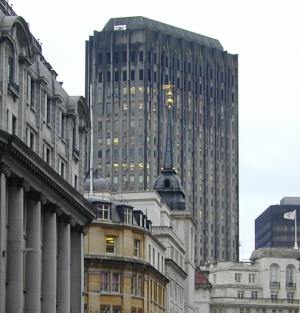


Characteristics and calculation
The FTSE 100 is a market-capitalization weighted index with an adjustment for free float, meaning companies with a larger freely tradable equity base have a greater influence. The index exists in multiple variants: a price return version that reflects movements in share prices and a total return version that reinvests dividends. Values are computed continuously and disseminated in near-real-time; historically, many market feeds have published updates in regular short intervals to support traders and index funds.
Composition, eligibility and reviews
Constituent companies are selected from those listed on the London Stock Exchange and meeting standards for market capitalisation, liquidity and free float. The index is reviewed regularly (typically on a quarterly schedule) to promote or demote stocks based on changing market values, and corporate actions such as mergers or delistings can also trigger immediate changes.
Uses and practical importance
- Benchmark: The FTSE 100 serves as a principal barometer for the large-cap segment of the UK market and a reference point for investors.
- Investment products: Many exchange-traded funds, index funds, futures and options are built to track the FTSE 100, allowing broad exposure or hedging strategies.
- Market analysis: Economists and strategists use it to gauge investor sentiment and compare performance across regions, including comparisons to markets in London and the wider United Kingdom.
History and governance
The index replaced the earlier FT30 in the 1980s and has since been maintained by the specialist index provider often identified as FTSE Russell. It was created to provide a more representative and investable measure of the UK's largest companies and has become integral to both domestic and international investors interested in UK equities.
Notable facts and limitations
Although the FTSE 100 reflects large-cap market moves, it is concentrated in certain sectors (such as finance, energy and consumer goods) and includes many companies with significant international operations. As a result, its movements do not always map neatly to the domestic economy. For detailed index data and methodology explanations consult the FTSE 100 resources and official documentation provided by index administrators.
For further reading and data, use dedicated market portals and official pages that publish constituents, methodology, historical values and derivative contracts linked to the FTSE 100.
Questions and answers
Q: What is the FTSE 100 Index?
A: The FTSE 100 Index is an important stock exchange in London, United Kingdom, which lists the 100 biggest companies in the UK.
Q: What does the term 'FTSE' mean?
A: FTSE stands for Financial Times Stock Exchange.
Q: What is the similarity between the FTSE 100, Dow Jones Industrial Average and CAC 40?
A: The FTSE 100, Dow Jones Industrial Average and CAC 40 are all important stock exchanges in their respective countries.
Q: When did the FTSE 100 take the place of the FT30?
A: The FTSE 100 index replaced the FT30 in January 1984.
Q: How is the FTSE 100 calculated?
A: The FTSE 100 is calculated by computers in real time.
Q: How often is the cost of shares in the companies listed on the FTSE 100 reported?
A: The cost of shares in the companies listed on the FTSE 100 is reported every 15 seconds.
Q: Where is the FTSE 100 located?
A: The FTSE 100 is located in London, United Kingdom.
Related articles
Author
AlegsaOnline.com FTSE 100 Index — United Kingdom large-cap stock market benchmark Leandro Alegsa
URL: https://en.alegsaonline.com/art/36882