
Freyr: Norse god of fertility, prosperity, and fair weather
Freyr, a major Vanir god in Norse myth, is associated with fertility, good harvests, kingship and peace. He owns a golden boar and a magical ship and figures in tales of love, sacrifice, and fate at Ragnarök.
Freyr is a prominent deity in Norse mythology traditionally linked with fertility, prosperous harvests, fair weather and sacral kingship. A member of the Vanir, he is usually described as the son of the sea-god Njörd and the twin brother of the goddess Freyja. In sources that record cult practice and mythic tales he appears as a beneficent, life-affirming figure whose blessings touch agriculture, cattle, peace and male fertility.
Image gallery
9 Images




Characteristics and symbols
In medieval accounts Freyr is associated with several distinctive items and symbols that reinforce his role as a patron of abundance. These include:
- Gullinbursti — a radiant boar often said to be made by dwarven smiths and described as having golden bristles and extraordinary speed.
- Skíðblaðnir — a ship that is always guided by a favorable breeze and can be folded up and carried in a small bag.
- Sword of summer (often called Sümrbranðr in later retellings) — a weapon with magical properties; in the most famous story Freyr gives it away and later is said to go into battle without a replacement.
- His realm is sometimes identified with the land of the light elves, Álfheimr, reflecting a link between fertility, light and supernatural helpers.
Myths and narrative role
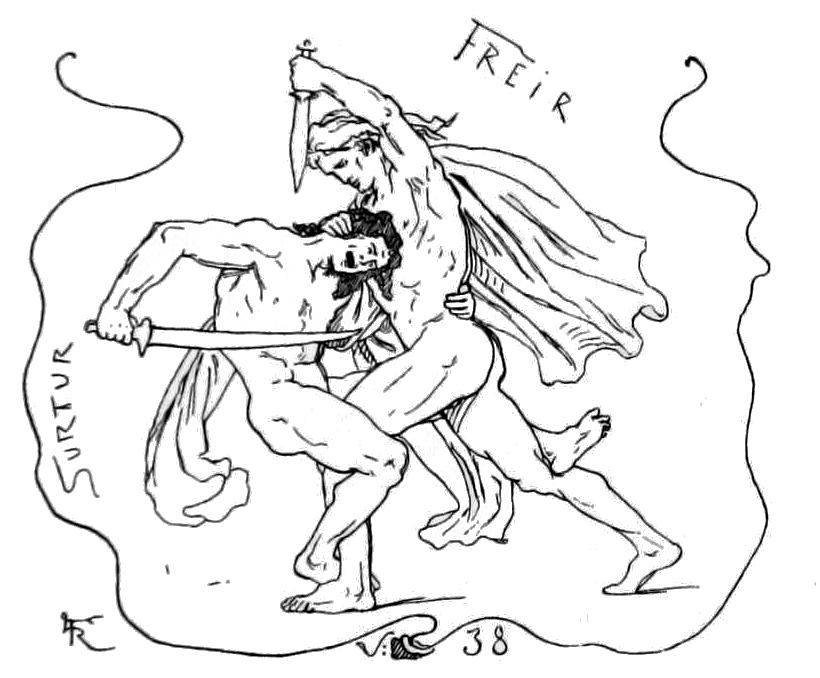
Freyr appears in several well-known mythic episodes. One prominent tale relates how, seated at the all-seeing throne Hliðskjálf, he glimpses the giantess Gerðr and falls deeply in love. He sends his servant Skírnir to secure her hand; the wooing is successful only after Gerðr is threatened, and Freyr rewards his emissary by surrendering his sword. Later tradition records that because he no longer possesses that weapon he will be vulnerable during the final battle of Ragnarök and will fall while fighting the fire-giant Surtr.
These narratives illustrate a recurring theme: Freyr’s attachment to the life-giving and the beautiful can bring both blessing and personal cost. His possessions — the boar and the ship — emphasize mobility, fecundity and prosperity, while the lost sword highlights sacrifice and fate.
Cult, kingship and cultural legacy
Freyr had an important place in the religious landscape of medieval Scandinavia. He belonged to the Vanir, a family of gods often contrasted with the warrior-focused Æsir, and was associated with rulership and fertility rites. In later historical tradition he became linked with certain Swedish royal lineages and local cults; place-names and saga accounts preserve memories of temples and images dedicated to Freyr alongside other principal gods.
Archaeological finds and medieval texts such as the poetic and prose Eddas, as well as saga literature, are the main written sources for Freyr’s attributes and worship. He continues to appear in modern cultural adaptations, scholarly discussions of Germanic religion and in artistic representations that draw on his emblematic boar, ship and ties to the land.
Notable distinctions and further notes
Several points distinguish Freyr within the Norse pantheon:
- He is a Vanir god closely connected to prosperity and the productive world, rather than the strictly martial concerns of many Æsir.
- He is sometimes described as ruling or bestowing Álfheimr, the realm of the elves, reflecting a link between fertility and otherworldly beings.
- His myths combine romantic elements (the Gerðr story) with motifs of sacrifice and eschatological fate (the loss of his sword and his doom at Ragnarök).
For focused study, primary narrative and poetic sources are commonly consulted alongside comparative scholarship on Germanic religion and Scandinavian archaeology. The entries and translations found in modern editions of the Old Norse corpus and reference works on Norse mythology and the Vanir provide accessible starting points. Genealogical references link him to Njörd and to his sister Freyja, while the story of Gerðr and Skírnir appears in materials associated with Hliðskjálf and the giants of Jötunheimr.
Iconographic and literary traces identify his attributes: the boar Gullinbursti, the foldable ship Skíðblaðnir, and the famed sword Sümrbranðr. Freyr’s domain of Álfheimr ties him to the elves and to notions of fertility and prosperity, while later medieval sources suggest cultic resonance in parts of medieval Sweden. He is often mentioned alongside principal gods such as Odin, Thor and Frigg in descriptions of temples and ritual grouping.
Questions and answers
Q: Who is Freyr?
A: Freyr is the god of prosperity, fair weather, and fertility in Norse mythology. He is associated with sacral kingship and virility, and is a member of the Vanir.
Q: Who are Freyr's parents?
A: Freyr's parents are Njördand and his twin sister Freyja.
Q: What does Freyr ride into battle on?
A: Freyr rides into battle on a massive shining boar called Gullinbursti.
Q: What type of ship does he possess?
A: Freyr possesses the mighty ship Skíðblaðnir which was forged by the drawrven brothers collectively known as the Sons of Ivaldi. It is said to always have a favorable breeze and can be folded together and carried in a pouch when not in use.
Q: What weapon did he once wield?
A: Freyr once wielded the legendary sword Sümrbranðr which was said to be able to fight by itself.
Q: How did Frey come across Gerðr? A: When Freyr snuck in and sat on Odin's throne Hliðskjálf (on which one can see anything, anywhere across the Nine Worlds), instead of seeing Freyja (who was recently lost somewhere), he came across Gerðr, a beautiful giantess native to Jötunheimr.
Q: Where is Frey's realm located?
A: Frey's realm is located in Álfheimr, the land of the elves.
Related articles
Author
AlegsaOnline.com Freyr: Norse god of fertility, prosperity, and fair weather Leandro Alegsa
URL: https://en.alegsaonline.com/art/36685